Public Safety Retirees Healthcare Protection Act of 2025
Summary
What This Bill Does
The Public Safety Retirees Healthcare Protection Act amends Internal Revenue Code section 402(l)(2). Under current law, eligible retired public safety officers may exclude up to $3,000 of governmental retirement plan distributions used for qualified health insurance or long-term care insurance premiums. The bill raises that cap to $6,000. The increase applies to taxable years beginning after December 31, 2025.
Who Benefits and How
Retired public safety officers benefit because twice as much qualifying retirement-plan money can be excluded from taxable income for health or long-term care premiums. Retired police officers benefit if they use governmental plan distributions to pay health insurance premiums. Retired firefighters benefit from the same higher exclusion for qualified insurance costs. Public safety retiree associations benefit from a simple tax benefit increase for members with medical or long-term care costs.
Who Bears the Burden and How
IRS forms staff must update instructions, forms, and guidance for the higher section 402(l) exclusion. Governmental retirement plan administrators must communicate the new $6,000 exclusion threshold to eligible retirees. Federal taxpayers bear revenue loss from the larger exclusion. Tax preparers must apply the new amount for taxable years after 2025.
Key Provisions
- Expands the section 402(l)(2) public safety officer insurance-premium exclusion from $3,000 to $6,000.
- Extends the higher exclusion to taxable years beginning after December 31, 2025.
- Modifies tax treatment for qualified health insurance and long-term care insurance premiums paid through eligible retirement distributions.
- Requires IRS and plan administration updates for the new exclusion amount.
Evidence Chain:
This summary is generated from the full bill text using AI analysis. Expand "Detailed Analysis" below for identified beneficiaries/burden bearers with clause-level evidence links.
At a Glance
What This Bill Does
Doubles the annual tax exclusion for eligible retired public safety officer retirement-plan distributions used for health or long-term care insurance from $3,000 to $6,000 beginning in taxable years after 2025.
Key Policy Areas
Tax, Public Safety, Retirement
Primary Purpose
Doubles the annual tax exclusion for eligible retired public safety officer retirement-plan distributions used for health or long-term care insurance from $3,000 to $6,000 beginning in taxable years after 2025.
Policy Domains
Resolution provisions
Identified Gains
- Retired public safety officers
- Retired police officers
- Retired firefighters
- Public safety retiree associations
Identified Costs
- IRS forms staff
- Governmental retirement plan administrators
- Federal taxpayers
- Tax preparers
Sponsors



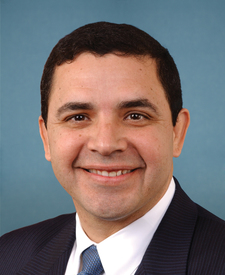
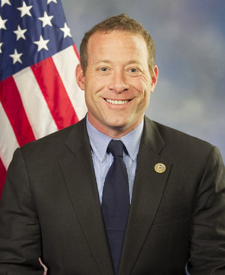
Legislative Progress
In CommitteeMr. Bacon (for himself and Mr. Cuellar) introduced the following …
Referred to the House Committee on Ways and Means.
Introduced in House
Stakeholder Effects
cui bono?How this legislation distributes effects. Mention counts reflect frequency, not effect magnitude.
Retired firefighters, Retired police officers, Retired public safety officers
Bill Structure & Actor Mappings
Who is "The Secretary" in each section?
We use a combination of our own taxonomy and classification in addition to large language models to assess meaning and potential beneficiaries. High confidence means strong textual evidence. Always verify with the original bill text.
Learn more about our methodology