Safer Shrimp Imports Act
Summary
What This Bill Does
The Safer Shrimp Imports Act uses FDA import authority to tighten oversight of foreign shrimp. Within 180 days, the Secretary of Health and Human Services, acting through FDA, must seek arrangements under section 807(a)(1) of the Federal Food, Drug, and Cosmetic Act with foreign governments whose countries have registered facilities that manufacture, process, pack, or hold shrimp for U.S. consumption. Beginning one year after enactment, FDA must refuse admission to shrimp from a country whose government has not entered such an arrangement or agreement, or whose food inspection system does not meet bill criteria. Those criteria require equivalence to FDA inspection for shrimp, sufficient staffing for uniform enforcement, and laws or regulations addressing the conditions under which shrimp is raised and transported to processing establishments. Foreign governments must provide relevant laws, regulations, and information, and HHS must report annually to the Senate HELP Committee and House Energy and Commerce Committee.
Who Benefits and How
U.S. shrimp consumers benefit from import restrictions tied to foreign inspection systems and shrimp production conditions. Domestic shrimp producers benefit competitively if unsafe or weakly inspected foreign shrimp faces refusal at the border. Seafood retailers benefit from clearer federal safety expectations for imported shrimp in U.S. supply chains. Congressional health committees benefit from annual HHS reports on foreign shrimp safety arrangements.
Who Bears the Burden and How
Foreign shrimp processors in noncomplying countries can lose U.S. market access after the one-year deadline. Foreign governments exporting shrimp must negotiate arrangements and document shrimp inspection laws, staffing, and transport rules. Shrimp importers must verify country eligibility and manage refusal risk for shipments from noncompliant systems. FDA food safety staff must seek agreements, evaluate foreign inspection systems, refuse nonqualifying shrimp, and produce annual reports.
Key Provisions
- Requires HHS and FDA to seek foreign-government shrimp safety arrangements within 180 days.
- Requires refusal of shrimp imports from countries without qualifying agreements or equivalent inspection systems after one year.
- Requires foreign inspection systems to cover shrimp raising, transport, processing, staffing, and uniform enforcement.
- Requires annual HHS reports to Senate HELP and House Energy and Commerce.
Evidence Chain:
This summary is generated from the full bill text using AI analysis. Expand "Detailed Analysis" below for identified beneficiaries/burden bearers with clause-level evidence links.
At a Glance
What This Bill Does
Requires FDA to pursue foreign-government shrimp safety arrangements and, after one year, refuse shrimp imports from countries without an agreement or equivalent inspection system covering shrimp production, processing, and transport.
Key Policy Areas
Food Safety, Trade, Seafood
Primary Purpose
Requires FDA to pursue foreign-government shrimp safety arrangements and, after one year, refuse shrimp imports from countries without an agreement or equivalent inspection system covering shrimp production, processing, and transport.
Policy Domains
Resolution provisions
Identified Gains
- U.S. shrimp consumers
- Domestic shrimp producers
- Seafood retailers
- Congressional health committees
Identified Costs
- Foreign shrimp processors
- Foreign governments exporting shrimp
- Shrimp importers
- FDA food safety staff
Sponsors
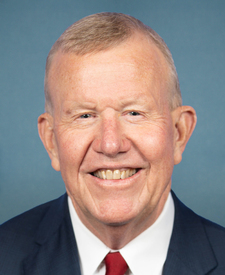
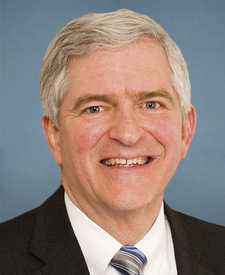


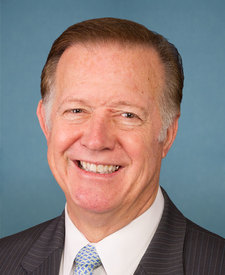
Legislative Progress
In CommitteeMr. Ezell (for himself, Mr. Carter of Louisiana, and Ms. …
Referred to the House Committee on Energy and Commerce.
Introduced in House
Stakeholder Effects
cui bono?How this legislation distributes effects. Mention counts reflect frequency, not effect magnitude.
Domestic shrimp producers, Foreign shrimp processors, Shrimp importers
Positive-direction: Domestic shrimp producers
Negative-direction: Foreign shrimp processors, Shrimp importers
Bill Structure & Actor Mappings
Who is "The Secretary" in each section?
We use a combination of our own taxonomy and classification in addition to large language models to assess meaning and potential beneficiaries. High confidence means strong textual evidence. Always verify with the original bill text.
Learn more about our methodology