Rural Broadband Modernization Act
Summary
What This Bill Does
The Rural Broadband Modernization Act rewrites section 601 of the Rural Electrification Act. USDA must provide grants, loans, and loan guarantees for construction, improvement, or acquisition of rural broadband facilities and equipment. Projects must generally deliver at least 100 Mbps symmetrical throughput to each rural household. USDA must create a single grant-and-loan application process with a single award decision and approve or deny applications within 30 days. Highest priority goes to unserved rural communities without 25/3 service; additional priorities include serving the greatest share of rural households, applicants with five years of rural broadband or utility experience in the state, less grant-heavy financing, communities under 10,000 residents, outmigration and strategic investment plans, low-income areas, isolated areas, precision agriculture on cropland and ranchland, and projects developed with state, local, tribal, nonprofit, anchor-institution, private, and philanthropic stakeholders. Grants are capped at 75 percent of project cost, with 100 percent development-cost grants allowed below seven households per square mile. Eligible projects must have at least 90 percent of households below 100/20 for grants and at least 50 percent below minimum service for loans. The bill authorizes up to $500 million annually for fiscal 2026 through 2030, 3 to 5 percent for technical assistance, state loan reserves, 5-year buildout, and no awards after September 30, 2030.
Who Benefits and How
Unserved rural households benefit because projects must prioritize communities without basic 25/3 broadband and deliver at least 100 Mbps symmetrical service. Rural broadband providers benefit from grants, direct loans, loan guarantees, subsidized loans, and payment-assistance loans for qualifying projects. Precision agriculture producers benefit from priority for fixed and mobile broadband deployment on cropland and ranchland. Tribal governments benefit because they are eligible applicants and can participate in stakeholder-backed rural broadband projects.
Who Bears the Burden and How
USDA Rural Utilities staff must run a 30-day application process, technical assistance, state reserves, buildout requirements, and loan-security reviews. Large broadband providers face a 15 percent annual funding cap if they serve at least 20 percent of U.S. households. Applicants must complete buildout within five years, document unserved status, avoid overlapping broadband grants, and provide matching funds if required. Guaranteed lenders must pay fees sized to reduce subsidy costs without blocking participation.
Key Provisions
- Authorizes USDA grants, loans, and loan guarantees for rural broadband facilities and equipment through fiscal 2030.
- Requires at least 100 Mbps symmetrical throughput for each rural household unless substitute standards are agreed for cost-prohibitive areas.
- Prioritizes unserved rural communities, low-density areas, precision agriculture, low-income communities, and stakeholder-backed projects.
- Provides technical assistance, state loan reserves, 75 percent grant caps, possible 100 percent grants for very low-density areas, and 5-year buildout rules.
Evidence Chain:
This summary is generated from the full bill text using AI analysis. Expand "Detailed Analysis" below for identified beneficiaries/burden bearers with clause-level evidence links.
At a Glance
What This Bill Does
Rewrites USDA rural broadband authority to provide grants, loans, and loan guarantees for at least 100 Mbps symmetrical rural broadband, prioritizing unserved communities, small and distressed rural areas, precision agriculture, stakeholder-backed projects, and technical assistance through fiscal 2030.
Key Policy Areas
Broadband, Rural Development, Agriculture
Primary Purpose
Rewrites USDA rural broadband authority to provide grants, loans, and loan guarantees for at least 100 Mbps symmetrical rural broadband, prioritizing unserved communities, small and distressed rural areas, precision agriculture, stakeholder-backed projects, and technical assistance through fiscal 2030.
Policy Domains
Resolution provisions
Identified Gains
- Unserved rural households
- Rural broadband providers
- Precision agriculture producers
- Tribal governments
Identified Costs
- USDA Rural Utilities staff
- Large broadband providers
- Applicants
- Guaranteed lenders
Sponsors


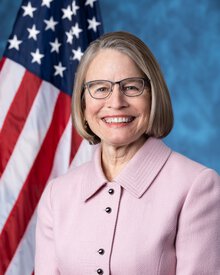

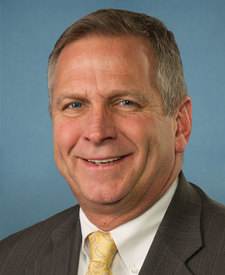
Legislative Progress
In CommitteeMr. Feenstra (for himself, Mrs. Miller-Meeks, Mr. Bost, and Ms. …
Referred to the Committee on Agriculture, and in addition to …
Introduced in House
Stakeholder Effects
cui bono?How this legislation distributes effects. Mention counts reflect frequency, not effect magnitude.
Large broadband providers, Rural broadband providers, Unserved rural households
Positive-direction: Rural broadband providers, Unserved rural households
Negative-direction: Large broadband providers
Tribal governments, USDA Rural Utilities staff
Positive-direction: Tribal governments
Negative-direction: USDA Rural Utilities staff
Bill Structure & Actor Mappings
Who is "The Secretary" in each section?
We use a combination of our own taxonomy and classification in addition to large language models to assess meaning and potential beneficiaries. High confidence means strong textual evidence. Always verify with the original bill text.
Learn more about our methodology