Medicare and Social Security Fair Share Act
Summary
What This Bill Does
The Medicare and Social Security Fair Share Act raises high-income tax contributions for Social Security and Medicare. For OASDI payroll taxes, it keeps the current payroll-tax cap structure but reopens taxable wages above $400,000, leaving the gap between the annual contribution and benefit base and $400,000 outside the OASDI wage base. It adds a further 1.2 percent Medicare tax on wages above $400,000 for single filers and $500,000 for joint filers, with special withholding rules that let employers disregard a spouse's wages and require employees to pay any uncollected amount. It applies similar rules to self-employment income. It also expands section 1411 net investment income tax for high-income individuals by using specified net income, adds a 13.6 percent additional bracket, raises the estate and trust rate from 3.8 percent to 17.4 percent, includes certain foreign corporation income, and directs 71.3 percent of section 1411 revenue to OASI, 10.3 percent to DI, and 28.7 percent to Medicare Hospital Insurance for tax years after 2025.
Who Benefits and How
Social Security trust funds benefit because new section 1411 revenue is allocated to OASI and DI and wages above $400,000 become subject to OASDI tax. Medicare Hospital Insurance benefits because the bill adds high-income Medicare taxes and allocates 28.7 percent of section 1411 revenue to the HI trust fund. Retirees and disabled beneficiaries benefit if added revenue improves program solvency for Social Security and Medicare. Federal budget writers benefit from a dedicated high-income revenue source tied to payroll, self-employment, and investment income.
Who Bears the Burden and How
High-income wage earners owe OASDI tax again above $400,000 and an extra 1.2 percent Medicare tax above the high-income thresholds. High-income self-employed taxpayers owe parallel additional self-employment taxes above $400,000 or $500,000 joint thresholds. High-income investors face expanded specified-net-income rules, a 13.6 percent additional bracket, and a higher 17.4 percent estate and trust rate. Employer payroll departments must adjust withholding and reporting for the reopened OASDI wage base and further additional Medicare tax.
Key Provisions
- Amends payroll tax rules so wages above $400,000 are again subject to Social Security tax.
- Adds 1.2 percent further additional Medicare taxes on high-income wages and self-employment income.
- Expands and raises net investment income taxation for high-income individuals, estates, and trusts.
- Allocates section 1411 revenue to OASI, DI, and Medicare Hospital Insurance trust funds after 2025.
Evidence Chain:
This summary is generated from the full bill text using AI analysis. Expand "Detailed Analysis" below for identified beneficiaries/burden bearers with clause-level evidence links.
At a Glance
What This Bill Does
Reimposes Social Security payroll tax above $400,000, adds 1.2 percent high-income Medicare taxes on wages and self-employment income, expands and raises net-investment-income taxation for high-income taxpayers, and allocates new revenue to Social Security and Medicare trust funds.
Key Policy Areas
Tax, Social Security, Medicare
Primary Purpose
Reimposes Social Security payroll tax above $400,000, adds 1.2 percent high-income Medicare taxes on wages and self-employment income, expands and raises net-investment-income taxation for high-income taxpayers, and allocates new revenue to Social Security and Medicare trust funds.
Policy Domains
Resolution provisions
Identified Gains
- Social Security trust funds
- Medicare Hospital Insurance
- Retirees
- Federal budget writers
Identified Costs
- High-income wage earners
- High-income self-employed taxpayers
- High-income investors
- Employer payroll departments
Legislative Progress
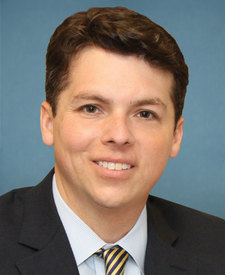
In CommitteeMr. Boyle of Pennsylvania introduced the following bill; which was …
Referred to the House Committee on Ways and Means.
Introduced in House
Stakeholder Effects
cui bono?How this legislation distributes effects. Mention counts reflect frequency, not effect magnitude.
High-income investors, High-income self-employed taxpayers, High-income wage earners
Bill Structure & Actor Mappings
Who is "The Secretary" in each section?
We use a combination of our own taxonomy and classification in addition to large language models to assess meaning and potential beneficiaries. High confidence means strong textual evidence. Always verify with the original bill text.
Learn more about our methodology