Bridge to Medicaid Act of 2025
Summary
What This Bill Does
The Bridge to Medicaid Act targets the coverage gap in states that have not expanded Medicaid to all adults up to 138 percent of poverty. For 2026 through 2028, specified low-income enrollees are treated favorably for ACA cost-sharing reductions: qualified health plans must reduce their cost sharing enough to cover 99 percent of allowed benefit costs, and issuers receive periodic federal payments equal to 12 percent of allowed costs. It creates continuous special enrollment for individuals under 138 percent of poverty who lack minimum essential coverage, adds 2026 and 2027 silver-plan benefits such as non-emergency medical transportation and Social Security Act section 1905(a)(4)(C) services without cost sharing or provider-choice restrictions, and reimburses issuers for those added benefits. It funds culturally and linguistically appropriate outreach in federally operated exchanges in non-expansion states with $105 million for fiscal 2026 through 2028, requires navigator grants using user-fee dollars, adds $65 million for implementation, and temporarily expands premium tax credit eligibility for under-138-percent-poverty taxpayers, including employees offered employer coverage or QSEHRA coverage, while limiting recapture for very low-income taxpayers.
Who Benefits and How
Low-income uninsured adults benefit because marketplace premium tax credits and 99 percent cost-sharing reductions can reach people below 138 percent of poverty in non-expansion states. ACA marketplace issuers benefit from federal reimbursement for 12 percent of allowed costs for specified enrollees and for added Medicaid-style benefits. Navigator organizations benefit from required grant funding to help eligible people enroll in federally operated exchanges. Rural veterans and young adults benefit from culturally and linguistically appropriate outreach targeted to hard-to-reach populations.
Who Bears the Burden and How
HHS marketplace staff must create continuous enrollment, issuer payment, added-benefit, outreach, navigator, and implementation systems. Qualified health plan issuers must reduce cost sharing to 99 percent actuarial value, provide added benefits, notify HHS, and receive federal reconciliation payments. Federal taxpayers bear the cost of open-ended issuer payments, $105 million in outreach funding, and $65 million in implementation funding. Large employers avoid ACA employer penalties for certain under-138-percent-poverty employees receiving credits, shifting more coverage responsibility to federal marketplace subsidies.
Key Provisions
- Expands premium tax credit eligibility below 100 percent of poverty for 2026 through 2028.
- Requires 99 percent cost-sharing reductions and 12 percent issuer payments for specified enrollees under 138 percent of poverty.
- Adds continuous enrollment, non-emergency transportation, Medicaid-style services, outreach, and navigator grants in non-expansion states.
- Limits premium tax credit recapture for taxpayers below 200 percent of poverty and for certain non-filers.
Evidence Chain:
This summary is generated from the full bill text using AI analysis. Expand "Detailed Analysis" below for identified beneficiaries/burden bearers with clause-level evidence links.
At a Glance
What This Bill Does
Temporarily gives low-income adults in non-expansion states Medicaid-like marketplace coverage by making under-138-percent-poverty enrollees eligible for premium tax credits, 99 percent cost-sharing reductions, added transportation and Medicaid-style benefits, outreach funding, and navigator grants for 2026 through 2028.
Key Policy Areas
Health Care, Medicaid, ACA Marketplaces
Primary Purpose
Temporarily gives low-income adults in non-expansion states Medicaid-like marketplace coverage by making under-138-percent-poverty enrollees eligible for premium tax credits, 99 percent cost-sharing reductions, added transportation and Medicaid-style benefits, outreach funding, and navigator grants for 2026 through 2028.
Policy Domains
Resolution provisions
Identified Gains
- Low-income uninsured adults
- ACA marketplace issuers
- Navigator organizations
- Rural veterans
Identified Costs
- HHS marketplace staff
- Qualified health plan issuers
- Federal taxpayers
- Large employers
Sponsors
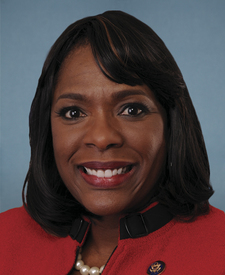

Legislative Progress
In CommitteeMs. Sewell (for herself and Mr. Figures) introduced the following …
Referred to the Committee on Energy and Commerce, and in …
Introduced in House
Stakeholder Effects
cui bono?How this legislation distributes effects. Mention counts reflect frequency, not effect magnitude.
Low-income uninsured adults, Navigator organizations
ACA marketplace issuers, Qualified health plan issuers
Positive-direction: ACA marketplace issuers
Negative-direction: Qualified health plan issuers
Bill Structure & Actor Mappings
Who is "The Secretary" in each section?
We use a combination of our own taxonomy and classification in addition to large language models to assess meaning and potential beneficiaries. High confidence means strong textual evidence. Always verify with the original bill text.
Learn more about our methodology