Stop Child Hunger Act of 2025
Summary
What This Bill Does
The Stop Child Hunger Act expands the Summer Electronic Benefits Transfer for Children Program beyond summer months. It adds school closure periods when a school is closed or operating remotely or hybrid for at least five consecutive weekdays. During those periods, eligible children receive benefits worth at least the value of free breakfast, lunch, and a snack for each closure day. The bill also changes administrative cost sharing: the federal share is 100 percent in fiscal 2026, then falls to 90 percent in 2027, 80 percent in 2028, 70 percent in 2029, 60 percent in 2030, and 50 percent in fiscal 2031 and later. It transfers $50 million on October 1, 2025 for state implementation grants to upgrade data systems.
Who Benefits and How
Eligible children benefit because food assistance would continue during school closure periods when school meals are unavailable or disrupted. Low-income families benefit because EBT benefits help replace breakfast, lunch, and snack value during closures, remote learning, or hybrid schedules. State nutrition agencies benefit from initial federal administrative reimbursement and $50 million in implementation grants for data systems. School meal administrators benefit from a clearer federal benefit formula for closures lasting at least five consecutive weekdays.
Who Bears the Burden and How
USDA Food and Nutrition Service staff must update Summer EBT rules, benefit calculations, grant administration, and state oversight. State nutrition agencies must identify closure periods, coordinate eligibility data, issue benefits, and upgrade systems. Federal taxpayers bear additional benefit and grant costs from extending EBT support beyond summer. School districts must provide accurate closure, remote, hybrid, and eligibility data for benefit administration.
Key Provisions
- Expands Summer EBT eligibility to school closure periods of at least five consecutive weekdays.
- Provides benefits worth at least free breakfast, lunch, and snack value for each closure day.
- Funds $50 million in state implementation grants for data-system upgrades.
- Phases federal administrative reimbursement from 100 percent in fiscal 2026 to 50 percent in fiscal 2031 and later.
Evidence Chain:
This summary is generated from the full bill text using AI analysis. Expand "Detailed Analysis" below for identified beneficiaries/burden bearers with clause-level evidence links.
At a Glance
What This Bill Does
Expands Summer EBT into school closure periods, sets benefits at not less than free breakfast, lunch, and snack value for each closure day, phases down federal administrative reimbursement, and funds state data-system implementation grants.
Key Policy Areas
Nutrition, Education, Children
Primary Purpose
Expands Summer EBT into school closure periods, sets benefits at not less than free breakfast, lunch, and snack value for each closure day, phases down federal administrative reimbursement, and funds state data-system implementation grants.
Policy Domains
Resolution provisions
Identified Gains
- Eligible children
- Low-income families
- State nutrition agencies
- School meal administrators
Identified Costs
- USDA Food and Nutrition Service staff
- State nutrition agencies
- Federal taxpayers
- School districts
Sponsors


Legislative Progress
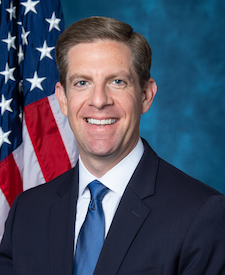
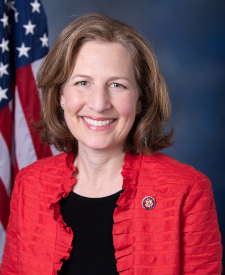
In CommitteeMr. Levin (for himself and Mrs. Hayes) introduced the following …
Referred to the House Committee on Education and Workforce.
Introduced in House
Stakeholder Effects
cui bono?How this legislation distributes effects. Mention counts reflect frequency, not effect magnitude.
Bill Structure & Actor Mappings
Who is "The Secretary" in each section?
We use a combination of our own taxonomy and classification in addition to large language models to assess meaning and potential beneficiaries. High confidence means strong textual evidence. Always verify with the original bill text.
Learn more about our methodology