HEROES Act
Summary
What This Bill Does
The HEROES Act amends the Public Service Loan Forgiveness rules in Higher Education Act section 455(m). Volunteer work as a qualified volunteer firefighter or qualified volunteer emergency medical technician can count as public service if the volunteer provides firefighting, fire prevention, emergency medical, pre-hospital, ambulance, or related emergency response services for a legally recognized fire department, ambulance service, health care facility, or public safety organization and is not already a full-time employee of the same organization for that work. The Education Secretary must determine the minimum volunteer time needed to be treated as a full-time job for PSLF and must ensure the threshold is at least the active-member time required by the relevant local organization. Education must consult firefighter and emergency responder organizations and issue regulations on minimum volunteer time and tracking and verifying that volunteer time.
Who Benefits and How
Volunteer firefighters benefit because qualifying service can count toward Public Service Loan Forgiveness. Volunteer emergency medical technicians benefit because ambulance and pre-hospital care volunteer work can qualify. Rural fire departments benefit if PSLF eligibility helps recruit and retain volunteers. Public safety nonprofits benefit because volunteer service for qualifying public safety organizations can be recognized. Communities relying on volunteer responders benefit from stronger incentives to maintain emergency response capacity.
Who Bears the Burden and How
Department of Education PSLF staff must define minimum volunteer time, write regulations, and administer verification. Fire departments and ambulance services must track volunteer time and active-member status for PSLF documentation. Student loan servicers must process new categories of qualifying public service. Federal student loan accounts bear forgiveness costs for additional qualifying borrowers.
Key Provisions
- Adds volunteer work as a qualified volunteer firefighter or emergency medical technician to PSLF qualifying service.
- Defines qualified volunteer firefighters and emergency medical technicians by services performed and non-full-time status with the same organization.
- Requires Education to set a minimum volunteer time threshold tied to active-member standards.
- Requires regulations on tracking and verifying volunteer time after consultation with responder organizations.
Evidence Chain:
This summary is generated from the full bill text using AI analysis. Expand "Detailed Analysis" below for identified beneficiaries/burden bearers with clause-level evidence links.
At a Glance
What This Bill Does
Adds qualified volunteer firefighters and volunteer emergency medical technicians to Public Service Loan Forgiveness by treating sufficient volunteer service as full-time public service once Education sets minimum time and verification rules.
Key Policy Areas
Student Loans, Public Safety, Education
Primary Purpose
Adds qualified volunteer firefighters and volunteer emergency medical technicians to Public Service Loan Forgiveness by treating sufficient volunteer service as full-time public service once Education sets minimum time and verification rules.
Policy Domains
Resolution provisions
Identified Gains
- Volunteer firefighters
- Volunteer emergency medical technicians
- Rural fire departments
- Public safety nonprofits
- Communities relying on volunteer responders
Identified Costs
- Department of Education PSLF staff
- Fire departments
- Ambulance services
- Student loan servicers
- Federal student loan accounts
Sponsors
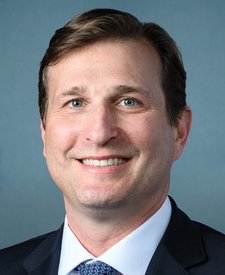


Legislative Progress
In CommitteeMr. Goldman of New York (for himself and Mr. Fields) …
Referred to the House Committee on Education and Workforce.
Introduced in House
Stakeholder Effects
cui bono?How this legislation distributes effects. Mention counts reflect frequency, not effect magnitude.
Fire departments, Public safety nonprofits, Rural fire departments
Positive-direction: Volunteer firefighters
Negative-direction: Fire departments
Bill Structure & Actor Mappings
Who is "The Secretary" in each section?
We use a combination of our own taxonomy and classification in addition to large language models to assess meaning and potential beneficiaries. High confidence means strong textual evidence. Always verify with the original bill text.
Learn more about our methodology