Public Service Worker Protection Act
Summary
What This Bill Does
The Public Service Worker Protection Act changes OSHA's definition of employer so it includes the United States, a state, and a political subdivision of a state. That means public-sector workplaces would no longer be outside the federal OSHA employer definition. The bill preserves section 18 state-plan rules, takes effect 90 days after enactment for most purposes, and gives state or local public workplaces without an approved OSHA state plan 36 months before the changes apply. The practical effect is to bring public employees under workplace safety protections while giving non-state-plan governments time to build compliance systems.
Who Benefits and How
Federal employees benefit because their workplaces are included in the OSHA employer definition. State employees in noncovered workplaces benefit from a path to enforceable workplace safety protections. Local public workers benefit because political subdivisions are explicitly treated as employers. Public-sector unions benefit from stronger statutory leverage over workplace safety hazards.
Who Bears the Burden and How
Federal agency safety offices must comply with OSHA employer obligations. State government employers without approved plans must prepare during the 36-month transition. Local government employers must build safety compliance, training, recordkeeping, and hazard-response capacity. OSHA enforcement staff must account for expanded public-sector coverage while respecting state-plan rules.
Key Provisions
- Expands the OSHA employer definition to include the United States, states, and political subdivisions.
- Preserves OSHA section 18 state-plan authority.
- Sets a 90-day general effective date after enactment.
- Provides a 36-month effective date for state and local public workplaces without an approved state plan.
Evidence Chain:
This summary is generated from the full bill text using AI analysis. Expand "Detailed Analysis" below for identified beneficiaries/burden bearers with clause-level evidence links.
At a Glance
What This Bill Does
Extends Occupational Safety and Health Act employer coverage to federal, state, and local public-sector workplaces while preserving state-plan rules and delaying coverage for non-state-plan public employers.
Key Policy Areas
Labor, Workplace Safety, Public Employees
Primary Purpose
Extends Occupational Safety and Health Act employer coverage to federal, state, and local public-sector workplaces while preserving state-plan rules and delaying coverage for non-state-plan public employers.
Policy Domains
Resolution provisions
Identified Gains
- Federal employees
- State employees
- Local public workers
- Public-sector unions
Identified Costs
- Federal agency safety offices
- State government employers
- Local government employers
- OSHA enforcement staff
Sponsors

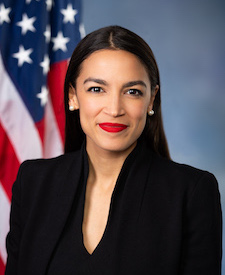
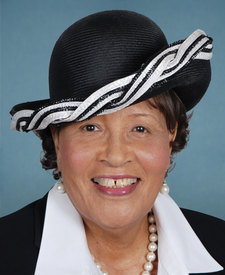
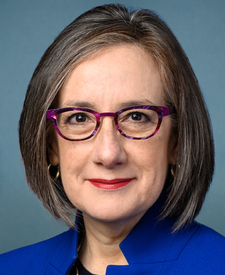
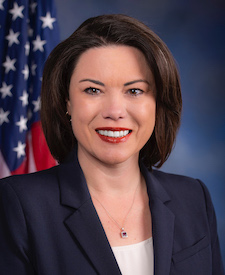
Legislative Progress
In CommitteeMr. Deluzio (for himself, Mr. Fitzpatrick, Ms. Sánchez, Ms. Budzinski, …
Referred to the House Committee on Education and Workforce.
Introduced in House
Stakeholder Effects
cui bono?How this legislation distributes effects. Mention counts reflect frequency, not effect magnitude.
Federal agency safety offices, Local government employers, OSHA enforcement staff
Federal employees, Local public workers, State employees
Bill Structure & Actor Mappings
Who is "The Secretary" in each section?
We use a combination of our own taxonomy and classification in addition to large language models to assess meaning and potential beneficiaries. High confidence means strong textual evidence. Always verify with the original bill text.
Learn more about our methodology