Strengthening Local Processing Act of 2025
Summary
What This Bill Does
The bill requires HACCP guidance and resources for smaller and very small poultry and meat establishments, requires smaller and very small establishment guidance and resources, and expands cooperative interstate shipment program by raising employee cap from 25 to 50, increasing federal cost share from 60% to 80%, requiring USDA outreach to 25% of non-participating states annually (FY2026-2031). It relies on compliance mandates, grants, definition changes, and appropriations. The main policy areas are Agriculture and Education.
Who Benefits and How
Smaller and very small meat and poultry establishments could face lower compliance burdens, Small meat and poultry processors and custom operators could gain revenue opportunities, and Small and very small meat and poultry processing establishments could gain revenue opportunities.
Who Bears the Burden and How
Secretary of Agriculture / USDA would take on compliance duties, USDA Secretary would take on compliance duties, and USDA Agricultural Marketing Service (program administration) would take on compliance duties.
Key Provisions
- Requires HACCP guidance and resources for smaller and very small poultry and meat establishments.
- Requires smaller and very small establishment guidance and resources.
- Expands cooperative interstate shipment program by raising employee cap from 25 to 50, increasing federal cost share from 60% to 80%, requiring USDA outreach to 25% of non-participating states annually (FY2026-2031)...
- Creates the Processing Resilience Grant Program under USDA/AMS awarding competitive grants up to $500K (3-year term) to small meat/poultry processors and those seeking to start processing operations.
- Creates new section 210B of the Agricultural Marketing Act establishing the Processing Resilience Grant Program.
Evidence Chain:
This summary is generated from the full bill text using AI analysis. Expand "Detailed Analysis" below for identified beneficiaries/burden bearers with clause-level evidence links.
At a Glance
What This Bill Does
The bill requires HACCP guidance and resources for smaller and very small poultry and meat establishments, requires smaller and very small establishment guidance and resources, and expands cooperative interstate shipment program by raising employee cap from 25 to 50, increasing federal cost share from 60% to 80%, requiring USDA outreach to 25% of non-participating states annually (FY2026-2031).
Key Policy Areas
Agriculture, Education
Primary Purpose
The bill requires HACCP guidance and resources for smaller and very small poultry and meat establishments, requires smaller and very small establishment guidance and resources, and expands cooperative interstate shipment program by raising employee cap from 25 to 50, increasing federal cost share from 60% to 80%, requiring USDA outreach to 25% of non-participating states annually (FY2026-2031).
Policy Domains
Whole bill
Identified Gains
- Smaller and very small meat and poultry establishments
- Small meat and poultry processors and custom operators
- Small and very small meat and poultry processing establishments
- Small and mid-size meat and poultry processors (25-50 employees)
- Workers seeking careers in meat and poultry processing
Identified Costs
- Secretary of Agriculture / USDA
- USDA Secretary
- USDA Agricultural Marketing Service (program administration)
- USDA Agricultural Marketing Service
- USDA (program administration and outreach)
Sponsors

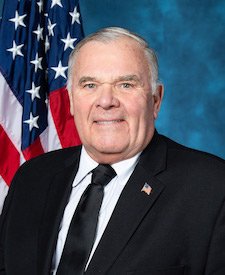

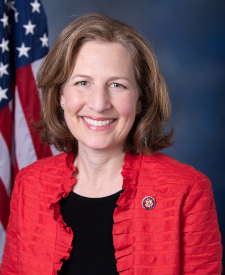
Legislative Progress
In CommitteeMs. Pingree (for herself and Mr. Baird) introduced the following …
Referred to the House Committee on Agriculture.
Introduced in House
Stakeholder Effects
cui bono?How this legislation distributes effects. Mention counts reflect frequency, not effect magnitude.
Entrepreneurs seeking to establish meat/poultry processing operations, Large meat packers (competitive impact from expanded small processor access), Persons seeking to establish new meat/poultry processing operations
Positive-direction: Entrepreneurs seeking to establish meat/poultry processing operations, Persons seeking to establish new meat/poultry processing operations, Small and mid-size meat and poultry processors (25-50 employees), Small and very small meat and poultry processing establishments, Small meat and poultry processing establishments (workforce pipeline), Small meat and poultry processors and custom operators, Small meat processing facilities needing trained workforce, State-inspected slaughter and processing establishments
Negative-direction: Large meat packers (competitive impact from expanded small processor access)
Secretary of Agriculture / USDA, States with meat/poultry inspection programs not yet in CIS, USDA (program administration and outreach)
Positive-direction: States with meat/poultry inspection programs not yet in CIS
Negative-direction: Secretary of Agriculture / USDA, USDA (program administration and outreach), USDA (program administration), USDA Agricultural Marketing Service, USDA Agricultural Marketing Service (program administration), USDA Secretary
Smaller and very small meat and poultry establishments, Smaller and very small poultry and meat establishments
Community colleges, technical schools, and land-grant universities, Educational institutions offering meat/poultry processing training
Aspiring meat and poultry processing workers, Workers seeking careers in meat and poultry processing
Bill Structure & Actor Mappings
Who is "The Secretary" in each section?
We use a combination of our own taxonomy and classification in addition to large language models to assess meaning and potential beneficiaries. High confidence means strong textual evidence. Always verify with the original bill text.
Learn more about our methodology