RESEARCHER Act
Summary
What This Bill Does
The RESEARCHER Act addresses financial instability among graduate researchers and postdoctoral researchers supported by federally funded institutions of higher education. Within six months, the OSTP Director, consulting NSTC, the Committee on STEM Education, PCAST, institutions of higher education, graduate and postdoctoral organizations, and other stakeholders, must develop consistent policy guidelines for federal research agencies. The guidelines must address opportunities to increase stipends, including location indexing; increase postdoctoral stipends in rural, underserved, or EPSCoR states; improve access to medical, dental, and vision care; improve affordable housing and transportation access; reduce food insecurity; and address family-care costs such as child care. OSTP must encourage and monitor agency implementation, and each federal research agency must implement consistent policies and disseminate them to current and potential R&D award recipients within six months after receiving the guidelines. The bill adds graduate and postdoctoral stipend and financial-instability data to CHIPS and Science Act data collection, directs NSF to competitively fund institutions or nonprofits to collect and analyze demographic data, requires NSF to contract with the National Academies for a study of stipend adequacy relative to health, housing, transportation, food, and family-care costs over at least the prior five years, and requires GAO to assess agency implementation within three years.
Who Benefits and How
Graduate researchers benefit from federal guidelines aimed at higher, location-adjusted stipends and better access to health care, housing, transportation, food, and child care support. Postdoctoral researchers benefit from stipend-improvement guidance, including special attention to rural, underserved, and EPSCoR-state research positions. Institutions of higher education benefit from clearer federal expectations and potential NSF-funded data work on researcher financial instability. NSF data grantees benefit from competitive awards to collect and analyze demographic financial-instability data. Congress benefits from OSTP, National Academies, and GAO reports on guideline implementation and researcher cost burdens.
Who Bears the Burden and How
OSTP must develop, update, monitor, and report on policy guidelines for federal research agencies. Federal research agencies must implement consistent financial-instability policies and disseminate them to R&D award recipients. NSF must fund data collection and contract with the National Academies for a researcher financial-instability study. Institutions of higher education may need to provide stipend, demographic, and financial-instability data for federally funded researchers. GAO must assess implementation and recommend additional policy and data-collection changes.
Key Provisions
- Requires OSTP guidelines on graduate and postdoctoral researcher financial instability within six months.
- Directs federal research agencies to implement and disseminate consistent policies within six months after receiving guidelines.
- Adds stipend amounts and financial-instability data to federal R&D award data collection.
- Authorizes NSF awards for demographic data collection and analysis on researcher financial instability.
- Requires National Academies and GAO reports on cost burdens, implementation, and needed policy changes.
Evidence Chain:
This summary is generated from the full bill text using AI analysis. Expand "Detailed Analysis" below for identified beneficiaries/burden bearers with clause-level evidence links.
At a Glance
What This Bill Does
Requires OSTP to issue guidelines on graduate researcher and postdoctoral researcher financial instability, pushes federal research agencies to implement them, adds stipend data collection, and orders NSF, National Academies, and GAO research and reports.
Key Policy Areas
Science, Higher Education, Research Workforce
Primary Purpose
Requires OSTP to issue guidelines on graduate researcher and postdoctoral researcher financial instability, pushes federal research agencies to implement them, adds stipend data collection, and orders NSF, National Academies, and GAO research and reports.
Policy Domains
Resolution provisions
Identified Gains
- Graduate researchers
- Postdoctoral researchers
- Institutions of higher education
- NSF data grantees
- Congress
Identified Costs
- OSTP
- Federal research agencies
- NSF
- National Academies study staff
- Institutions reporting stipend data
- GAO
Sponsors
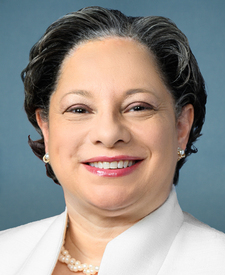
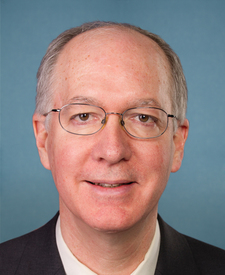



Legislative Progress
In CommitteeMs. McClellan (for herself, Ms. DelBene, Ms. Tlaib, Ms. Pingree, …
Referred to the House Committee on Science, Space, and Technology.
Introduced in House
Stakeholder Effects
cui bono?How this legislation distributes effects. Mention counts reflect frequency, not effect magnitude.
Graduate researchers, Institutions of higher education, Postdoctoral researchers
NSF data grantees, National Academies study staff
Positive-direction: NSF data grantees
Negative-direction: National Academies study staff
Bill Structure & Actor Mappings
Who is "The Secretary" in each section?
We use a combination of our own taxonomy and classification in addition to large language models to assess meaning and potential beneficiaries. High confidence means strong textual evidence. Always verify with the original bill text.
Learn more about our methodology