Ocean Regional Opportunity and Innovation Act of 2025
Summary
What This Bill Does
The Ocean Regional Opportunity and Innovation Act builds a federal framework for regional blue-economy clusters. It defines the Blue Economy broadly to include Great Lakes, ocean, bay, estuary, and coastal industries such as living resources, marine construction, transportation, offshore energy, offshore minerals, shipbuilding, tourism, recreation, subsistence and commercial fishing, seafood processing, kelp and shellfish aquaculture, coastal resilience, and other Commerce-designated sectors. Within one year, the Commerce Secretary must designate at least seven eligible nonprofit-led Ocean Innovation Clusters composed of business organizations, academic institutions including minority- and Tribal-serving institutions, nonprofits, federal, state, or local government entities, Indian Tribes, or Native Hawaiian organizations. At least one cluster must be in each of the five National Marine Fisheries Service regional office regions, the Great Lakes region, and the Gulf of Mexico region. Sea Grant, NOAA, and EDA must each assign partnership managers, Commerce must coordinate with DOE, MARAD, EPA, BOEM, USDA, the Coast Guard, and other agencies, and the clusters focus on new entrants, intellectual property, seafood supply chains, advanced research, technology development, regulatory communication, small-business scaling, workforce training, ocean energy, and bioprospecting. The bill also creates competitive grants for Ocean Innovation Clusters, with two-year terms, renewals, a 10 million dollar cap per grant, and 10 million dollars authorized annually for fiscal years 2026 through 2030.
Who Benefits and How
Ocean Innovation Clusters benefit because they receive federal designation, agency liaisons, and eligibility for competitive operating grants. Coastal communities benefit from cluster projects focused on economic diversification, climate resilience, disaster recovery, and underused coastline assets. Small Blue Economy businesses benefit from support for economies of scale, workforce development, technology infrastructure, and business planning. Seafood supply chain companies benefit from cluster work on full use of harvested resources, processing, transportation, and value-added products. Tribal communities benefit because eligible clusters can include Indian Tribes and must consider underserved and Tribal populations. Blue Economy entrepreneurs benefit from Ocean Innovation Centers with workspaces, laboratories, shared technology, internships, apprenticeships, and cross-sector networks.
Who Bears the Burden and How
The Department of Commerce must designate at least seven clusters, run grant competitions, and coordinate many federal agencies. NOAA, Sea Grant, and EDA must assign partnership managers to serve as liaisons for every cluster. DOE, MARAD, EPA, BOEM, USDA, and Coast Guard offices must coordinate technical knowledge exchange and cross-sector collaboration. Ocean Innovation Clusters must manage centers, build partnerships, support data measurement, and work toward membership-based self-sufficiency. Federal appropriators face a 10 million dollar annual authorization for grants from fiscal years 2026 through 2030.
Key Provisions
- Defines the Blue Economy and Ocean Innovation Cluster eligibility.
- Requires Commerce to designate at least seven regional Ocean Innovation Clusters within one year.
- Directs Sea Grant, NOAA, and EDA partnership managers to connect clusters with federal objectives.
- Requires Ocean Innovation Centers for cross-sector collaboration in every cluster region.
- Authorizes competitive grants up to 10 million dollars each and 10 million dollars annually for fiscal years 2026 through 2030.
Evidence Chain:
This summary is generated from the full bill text using AI analysis. Expand "Detailed Analysis" below for identified beneficiaries/burden bearers with clause-level evidence links.
At a Glance
What This Bill Does
Creates at least seven Commerce-designated Ocean Innovation Clusters and authorizes competitive grants of up to 10 million dollars each, with 10 million dollars per year authorized for fiscal years 2026 through 2030.
Key Policy Areas
Oceans, Economic Development, Grants
Primary Purpose
Creates at least seven Commerce-designated Ocean Innovation Clusters and authorizes competitive grants of up to 10 million dollars each, with 10 million dollars per year authorized for fiscal years 2026 through 2030.
Policy Domains
Resolution provisions
Identified Gains
- Ocean Innovation Clusters
- Coastal communities
- Small Blue Economy businesses
- Seafood supply chain companies
- Tribal communities
- Blue Economy entrepreneurs
Identified Costs
- Department of Commerce
- NOAA
- Sea Grant program
- EDA
- DOE
- MARAD
- EPA
- BOEM
- USDA
- Coast Guard
- Federal appropriators
Sponsors



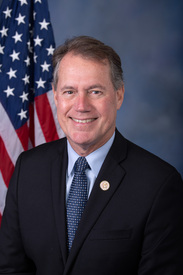
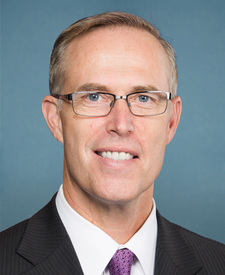
Legislative Progress
In CommitteeMs. Pingree (for herself, Ms. Salazar, Ms. Bonamici, Ms. Barragán, …
Referred to the Subcommittee on Economic Development, Public Buildings, and …
Referred to the Subcommittee on Coast Guard and Maritime Transportation.
Referred to the Committee on Natural Resources, and in addition …
Introduced in House
Stakeholder Effects
cui bono?How this legislation distributes effects. Mention counts reflect frequency, not effect magnitude.
Department of Commerce, EDA, NOAA
Positive-direction: Tribal communities
Negative-direction: Department of Commerce, EDA, NOAA, Sea Grant program
Seafood supply chain companies
Bill Structure & Actor Mappings
Who is "The Secretary" in each section?
We use a combination of our own taxonomy and classification in addition to large language models to assess meaning and potential beneficiaries. High confidence means strong textual evidence. Always verify with the original bill text.
Learn more about our methodology