Child and Dependent Care Tax Credit Enhancement Act of 2025
Summary
What This Bill Does
The Child and Dependent Care Tax Credit Enhancement Act rewrites several section 21 rules. It raises the applicable percentage to 50 percent, reduced by one percentage point for each 2,000 dollars of adjusted gross income above 125,000 dollars, but not below a phaseout percentage that itself falls from 20 percent toward zero after adjusted gross income exceeds 400,000 dollars. It increases eligible expense limits from 3,000 dollars to 8,000 dollars for one qualifying individual and from 6,000 dollars to 16,000 dollars for two or more. It updates married-filing-separately treatment so each spouse is measured as if filing jointly while preventing total credits above the joint-return amount. After 2025, the 125,000 dollar threshold and expense limits are indexed for inflation and rounded down to the nearest 100 dollars. For taxpayers with a U.S. principal place of abode for more than half the year, the credit is treated as refundable under subpart C. The changes apply to taxable years beginning after December 31, 2024.
Who Benefits and How
Families paying for child care benefit from higher eligible expense caps and a 50 percent maximum credit rate. Lower-income working parents benefit because the credit becomes refundable when the abode rule is satisfied. Families with two or more qualifying individuals benefit because the expense cap rises to 16,000 dollars. Married parents filing separately benefit from clearer rules that preserve the joint-return ceiling.
Who Bears the Burden and How
The Internal Revenue Service must administer refundability, new phaseouts, inflation indexing, rounding, and married-filing-separately rules. Federal taxpayers bear the revenue cost of a larger and refundable child-care credit. Tax software providers must update section 21 computations for tax years after 2024. High-income households see the phaseout percentage fall toward zero once adjusted gross income exceeds 400,000 dollars.
Key Provisions
- Expands the applicable credit percentage to 50 percent with phaseouts starting above 125,000 dollars.
- Raises child and dependent care expense limits to 8,000 dollars for one qualifying individual and 16,000 dollars for two or more.
- Provides inflation indexing after 2025 for the 125,000 dollar threshold and expense limits.
- Makes the credit refundable for qualifying taxpayers with a U.S. principal place of abode.
- Applies the changes to taxable years beginning after December 31, 2024.
Evidence Chain:
This summary is generated from the full bill text using AI analysis. Expand "Detailed Analysis" below for identified beneficiaries/burden bearers with clause-level evidence links.
At a Glance
What This Bill Does
Expands and makes refundable the Child and Dependent Care Tax Credit by raising the maximum rate to 50 percent, increasing expense limits to 8,000 dollars and 16,000 dollars, changing phaseouts, indexing amounts, and applying the changes after 2024.
Key Policy Areas
Tax, Child Care, Families
Primary Purpose
Expands and makes refundable the Child and Dependent Care Tax Credit by raising the maximum rate to 50 percent, increasing expense limits to 8,000 dollars and 16,000 dollars, changing phaseouts, indexing amounts, and applying the changes after 2024.
Policy Domains
Resolution provisions
Identified Gains
- Families paying for child care
- Lower-income working parents
- Families with two qualifying individuals
- Married parents filing separately
Identified Costs
- Internal Revenue Service
- Federal taxpayers
- Tax software providers
- High-income households
Sponsors
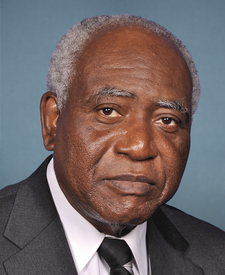


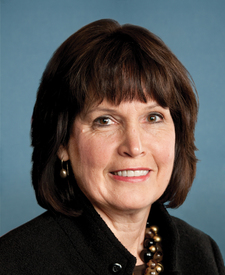

Legislative Progress
In CommitteeMr. Davis of Illinois (for himself, Ms. DelBene, Ms. Sánchez, …
Referred to the House Committee on Ways and Means.
Introduced in House
Stakeholder Effects
cui bono?How this legislation distributes effects. Mention counts reflect frequency, not effect magnitude.
Families paying for child care, Families with two qualifying individuals, Lower-income working parents
Bill Structure & Actor Mappings
Who is "The Secretary" in each section?
We use a combination of our own taxonomy and classification in addition to large language models to assess meaning and potential beneficiaries. High confidence means strong textual evidence. Always verify with the original bill text.
Learn more about our methodology