To divert Federal funding away from supporting the presence of police in schools and toward evidence-based and trauma-informed services that address the needs of marginalized students and improve academic outcomes, and for other purposes.
Analysis under review: This bill has generated analysis that may be too generic or incomplete. Clause-level evidence remains available below.
Summary
What This Bill Does
This bill, To divert Federal funding away from supporting the presence of police in schools and toward evidence-based and trauma-informed services that address the needs of marginalized students and improve academic outcomes, and for other purposes., changes federal law or congressional policy affecting law enforcement, courts, victims, and regulated public-safety actors. The main policy domain is Criminal Justice, Government Operations, Immigration.
Who Benefits and How
law enforcement, courts, victims, and regulated public-safety actors may benefit from new authority, funding, eligibility, regulatory clarity, or reduced risk created by the bill.
Who Bears the Burden and How
federal implementing agencies, law enforcement, courts, victims, and regulated public-safety actors may take on implementation duties, reporting obligations, compliance costs, or oversight responsibilities.
Key Provisions
- Section H9FA494AA5E394356959704A4A0D90D9A: 1. Short title This Act may be cited as the Counseling Not Criminalization in Schools Act.
- Section H98F7D55592B1448980A5B1B962A63F3E: 2. Findings Congress finds the following: Over the last 50 years, our Nation’s schools have become sites for increased criminalization and surveillance of...
- Section H43675BD6E698452DBF7C8A8F44B7DA9D: 3. Purpose It is the purpose of this Act to— address the needs of marginalized students, ensure schools are welcoming for students, and improve academic...
- Section H70A854EFA79A4D48A597DF7D39BECAEE: 4. Definitions In this Act: The terms elementary school, evidence-based, local educational agency, parent, professional development, school leader, secondary...
- Section HD17F90F6D69E476289C9A49CB6E52A2A: 5. Prohibition of Federal funds for police in schools Notwithstanding the Omnibus Crime Control and Safe Streets Act of 1968 (34 U.S.C. 10101 et seq.),...
Evidence Chain:
This summary is generated from the full bill text using AI analysis. Expand "Detailed Analysis" below for identified beneficiaries/burden bearers with clause-level evidence links.
At a Glance
What This Bill Does
This bill, To divert Federal funding away from supporting the presence of police in schools and toward evidence-based and trauma-informed services that address the needs of marginalized students and improve academic outcomes, and for other purposes., changes federal law or congressional policy affecting law enforcement, courts, victims, and regulated public-safety actors.
Key Policy Areas
Criminal Justice, Government Operations, Immigration
Primary Purpose
This bill, To divert Federal funding away from supporting the presence of police in schools and toward evidence-based and trauma-informed services that address the needs of marginalized students and improve academic outcomes, and for other purposes., changes federal law or congressional policy affecting law enforcement, courts, victims, and regulated public-safety actors.
Policy Domains
Whole bill
Identified Gains
- law enforcement, courts, victims, and regulated public-safety actors
Identified Costs
- federal implementing agencies
- law enforcement, courts, victims, and regulated public-safety actors
Sponsors
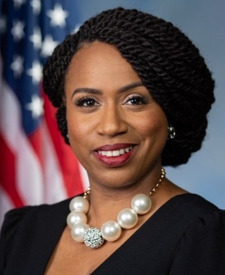

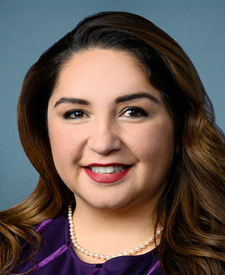

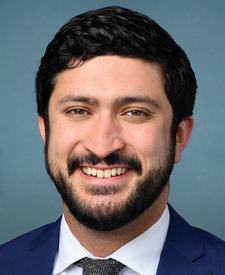
Legislative Progress
IntroducedMs. Pressley (for herself, Ms. Omar, Ms. Lee of Pennsylvania, …
Impact analysis is available but no clear stakeholder effects identified. View clause-level analysis →
Bill Structure & Actor Mappings
Who is "The Secretary" in each section?
- "the_commission"
- → The commission identified in the operative section
- "secretary_of_education"
- → Secretary of Education
- "secretary_of_homeland_security"
- → Secretary of Homeland Security
Key Definitions
Terms defined in this bill
a service delivery approach that— recognizes and responds to the impacts of trauma with evidence-based supports and intervention
We use a combination of our own taxonomy and classification in addition to large language models to assess meaning and potential beneficiaries. High confidence means strong textual evidence. Always verify with the original bill text.
Learn more about our methodology