Retirement Savings for Americans Act of 2025
Summary
What This Bill Does
The Retirement Savings for Americans Act creates a federal retirement savings structure for workers who lack employer retirement coverage. It establishes the American Worker Retirement Fund in Treasury, with individual participant accounts, investment options modeled partly on the Thrift Savings Plan, and an American Worker Retirement Investment Board to set policies. Qualifying workers are employees or self-employed independent contractors without an existing retirement plan or automatic enrollment IRA; participating employers must enroll qualifying workers unless they opt out, with a default 3 percent contribution. Participants may contribute through payroll or tax refunds, former participants may receive annuities, lump sums, installment payments, loans, or direct transfers to existing retirement plans, and accounts receive spousal and survivor protections similar to the TSP. The bill also creates a Government Match Tax Credit: generally 1 percent of gross income plus a match equal to 100 percent of contributions up to 3 percent of income and 50 percent of contributions from 3 percent to 5 percent, subject to phaseout rules tied to Census median personal income. Governance provisions create a presidentially appointed, Senate-confirmed board, an Executive Director, an Investment Advisory Council, asset-manager limits of $500 billion or 10 percent of Fund assets, fiduciary duties, bonding, subpoenas, insurance, and restrictions on securities voting rights.
Who Benefits and How
Workers without workplace retirement plans benefit because they receive access to a federal account, automatic enrollment, payroll contributions, and TSP-like investment options. Low- and moderate-income participants benefit from the government match tax credit that adds Treasury-funded contributions to their accounts. Independent contractors benefit because businesses contracting with them may elect to enroll them without affecting worker-classification status. Asset managers benefit from a new pool of federally governed retirement assets, subject to contract and concentration limits.
Who Bears the Burden and How
Participating employers must enroll qualifying workers, deposit contributions, integrate payroll withholding, and face penalties for enrollment or deposit failures. The Department of the Treasury must help establish enrollment, administer the government match tax credit, and deposit matching contributions into participant accounts. The American Worker Retirement Investment Board must select investments, set policy, appoint an Executive Director, manage fiduciary rules, and oversee financial literacy requirements. Federal taxpayers bear the cost of refundable government match tax credits and federal administration funded through the new structure.
Key Provisions
- Creates the American Worker Retirement Fund with individual accounts, protected assets, investment options, loans, distributions, and TSP-like tax treatment.
- Requires automatic enrollment for qualifying workers without existing workplace retirement coverage, with a default 3 percent contribution and opt-out rights.
- Provides a government match tax credit based on 1 percent of gross income plus matched participant contributions up to 5 percent of income, subject to phaseout.
- Establishes a new investment board, Executive Director, advisory council, asset-manager limits, fiduciary duties, bonding, subpoenas, spousal protections, and survivor rights.
Evidence Chain:
This summary is generated from the full bill text using AI analysis. Expand "Detailed Analysis" below for identified beneficiaries/burden bearers with clause-level evidence links.
At a Glance
What This Bill Does
Creates the American Worker Retirement Fund for workers without workplace retirement coverage, with automatic enrollment, participant accounts, Treasury-funded government match tax credits, investment options, a new investment board, fiduciary rules, and spousal protections.
Key Policy Areas
Retirement, Tax, Labor
Primary Purpose
Creates the American Worker Retirement Fund for workers without workplace retirement coverage, with automatic enrollment, participant accounts, Treasury-funded government match tax credits, investment options, a new investment board, fiduciary rules, and spousal protections.
Policy Domains
Resolution provisions
Identified Gains
- Workers without retirement plans
- Low-income retirement savers
- Independent contractors
- Asset managers
Identified Costs
- Participating employers
- Department of the Treasury
- American Worker Retirement Investment Board
- Federal taxpayers
Sponsors
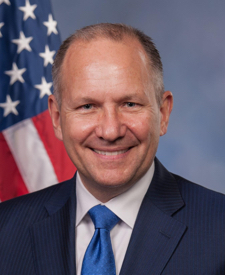




Legislative Progress
In CommitteeMr. Smucker (for himself, Ms. Sewell, Ms. Malliotakis, Ms. Tenney, …
Referred to the Committee on Education and Workforce, and in …
Introduced in House
Stakeholder Effects
cui bono?How this legislation distributes effects. Mention counts reflect frequency, not effect magnitude.
Independent contractors, Workers without retirement plans
American Worker Retirement Investment Board, Department of the Treasury
Bill Structure & Actor Mappings
Who is "The Secretary" in each section?
We use a combination of our own taxonomy and classification in addition to large language models to assess meaning and potential beneficiaries. High confidence means strong textual evidence. Always verify with the original bill text.
Learn more about our methodology