Impact Aid Infrastructure Partnership Act
Summary
What This Bill Does
The Impact Aid Infrastructure Partnership Act creates a new $250 million per year grant program (for 4 years, totaling $1 billion) to help schools in areas with large amounts of non-taxable Federal land -- such as military bases, Indian reservations, and national parks -- build, renovate, and repair their school buildings. These 'federally impacted' school districts often cannot raise enough money through local property taxes because so much of the land in their area is owned by the Federal government and therefore exempt from taxation.
The program has two tracks: 75% of the money goes to competitive grants that prioritize schools with the most dangerous or deteriorated facilities (buildings that violate health codes, have poor air quality, contain hazardous materials, or lack safe drinking water). The remaining 25% is distributed through a formula based on the number of federally-connected students. Schools with no ability to issue bonds receive full Federal funding; other schools must contribute a local match of 10-25% depending on how heavily they are impacted by Federal property.
Who Benefits and How
- Federally impacted local educational agencies (school districts): Receive direct construction funding they cannot generate through local taxes due to the presence of non-taxable Federal land in their jurisdictions.
- Students and staff at federally impacted schools: Benefit from improved school facilities that meet health and safety standards, including better ventilation, safe drinking water, and removal of hazardous materials.
- Tribal communities and Native American students: Benefit from targeted provisions for teacher housing on Indian Treaty and Federal trust land, as well as schools serving children residing on such land.
- Rural communities near Federal land: Schools in these communities receive priority consideration for their higher construction costs due to geographic remoteness and labor/transportation cost premiums.
- Construction industry (contractors, architects, engineers): Benefit from $1 billion in new school construction, renovation, and repair projects over 4 years.
Who Bears the Burden and How
- Federal taxpayers: Fund the $250 million annual appropriation authorization.
- Department of Education: Bears new administrative responsibilities for managing the grant program, establishing facility condition priority listings, reviewing applications, making payment determinations, and annual reporting to Congress.
- Local educational agencies with some bonding capacity: Must provide a non-Federal cost share of 10-25% of the total project cost to receive competitive grant funds.
Key Provisions
- Authorizes $250 million per year for 4 years, split 75/25 between competitive and formula grants (Sec. 3)
- Establishes two-tier facility condition priority: first tier for buildings violating health codes, second tier for buildings in poor condition (Sec. 4)
- Includes teacher housing construction for schools on Indian/Federal trust land (Secs. 4, 8)
- Requires sliding-scale local match: 10% for agencies with 80%+ learning opportunity threshold, 20% for 50-80%, 25% for below 50% (Sec. 8)
- Full Federal payment for agencies with no bonding capacity or grants of $5 million or less (Sec. 8)
- Grant funds may only supplement, not supplant, existing non-Federal construction funding (Sec. 9)
- Annual reporting to Congress on projects carried out (Sec. 9)
Evidence Chain:
This summary is generated from the full bill text using AI analysis. Expand "Detailed Analysis" below for identified beneficiaries/burden bearers with clause-level evidence links.
At a Glance
What This Bill Does
Authorizes $1 billion over 4 years ($250 million per year) in new Federal construction grants for federally impacted local educational agencies under the Impact Aid program, split between competitive grants (75%) for schools with the worst facility conditions and formula grants (25%) for broader distribution, with sliding-scale local matching requirements based on federal property burden.
Key Policy Areas
Education, Infrastructure
Primary Purpose
Authorizes $1 billion over 4 years ($250 million per year) in new Federal construction grants for federally impacted local educational agencies under the Impact Aid program, split between competitive grants (75%) for schools with the worst facility conditions and formula grants (25%) for broader distribution, with sliding-scale local matching requirements based on federal property burden.
Policy Domains
Impact Aid Infrastructure Partnership Act - Education Construction Grants
Identified Gains
- Federally impacted local educational agencies
- Students and staff at federally impacted schools
- Tribal communities and schools on Indian land
- Construction industry (contractors, architects, engineers)
- Rural communities near Federal land
Identified Costs
- Federal taxpayers
- Department of Education
- Local educational agencies with partial bonding capacity
Sponsors


Legislative Progress
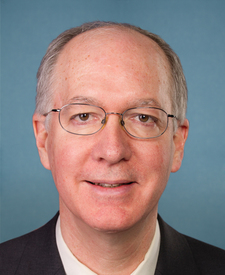
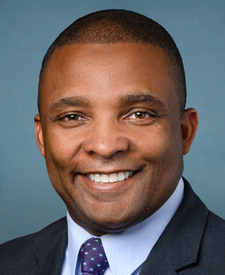
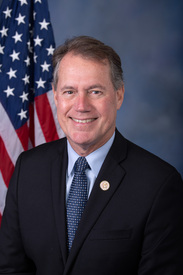
In CommitteeMr. Garamendi (for himself, Mr. Obernolte, Ms. Brownley, Ms. Strickland, …
Referred to the House Committee on Education and Workforce.
Introduced in House
Impact analysis is available but no clear stakeholder effects identified. View clause-level analysis →
Bill Structure & Actor Mappings
Who is "The Secretary" in each section?
- "the_secretary"
- → Secretary of Education
- "local_educational_agency"
- → A school district eligible for Impact Aid payments under sections 7002 or 7003 of the Elementary and Secondary Education Act of 1965, as defined in section 7013 of that Act
Key Definitions
Terms defined in this bill
Has the meaning given the term in section 7013 of the Elementary and Secondary Education Act of 1965 (20 U.S.C. 7713).
As described in subparagraph (B)(i) of section 7003(b)(3) of the Elementary and Secondary Education Act of 1965 (20 U.S.C. 7703(b)(3)); used to determine the local matching requirement.
We use a combination of our own taxonomy and classification in addition to large language models to assess meaning and potential beneficiaries. High confidence means strong textual evidence. Always verify with the original bill text.
Learn more about our methodology