Keep STEM Talent Act of 2025
Summary
What This Bill Does
The Keep STEM Talent Act has two linked immigration pieces. First, it requires a foreign student seeking F-1 status to pursue a master's or higher STEM degree at a U.S. institution of higher education to apply for admission before beginning the advanced degree program. The Secretaries of Homeland Security and State must establish procedures to verify academic credentials, conduct comprehensive background checks, and interview covered students in a way equivalent to applicants seeking admission from outside the United States, while processing applications timely enough to allow graduate study. They must report annually to the House and Senate Judiciary Committees on implementation, visa application volumes, processing times, security outcomes, and economic impacts. Second, the bill adds a lawful permanent resident category for aliens who earned a master's or higher STEM degree while physically present in the United States from an accredited U.S. institution, have a job offer or employment from a U.S. employer directly related to the degree at above the median wage for the occupation and area, and have approved labor certification, plus accompanying or following spouses and children. It allows covered STEM students to obtain, extend, or change F status despite seeking lawful permanent residence, while preserving existing F-1 and 214(b) rules for other students.
Who Benefits and How
International STEM graduate students benefit from a lawful permanent resident path if they earn a U.S. master's or higher STEM degree, secure related above-median-wage work, and obtain labor certification. U.S. employers hiring advanced STEM graduates benefit from a retention pathway for workers trained in U.S. universities. Universities with STEM graduate programs benefit if clearer dual-intent treatment and permanent-residence eligibility make U.S. graduate study more attractive. Spouses and children of qualifying STEM graduates benefit because they can accompany or follow to join the principal applicant.
Who Bears the Burden and How
Foreign STEM students must apply for admission before beginning advanced degree programs and undergo credential verification, background checks, and interviews. The Department of Homeland Security and State Department must create admission procedures, process applications timely, and submit annual implementation reports. U.S. employers must offer work directly related to the STEM degree at pay above the median wage and rely on approved labor certification. Labor certification administrators must process covered STEM-worker certifications before permanent residence eligibility applies.
Key Provisions
- Requires advanced STEM F-1 students to seek admission before starting a U.S. master's or higher STEM program.
- Requires academic credential verification, comprehensive background checks, interviews, timely processing, and annual DHS-State reports.
- Creates lawful permanent resident status for qualifying U.S.-educated advanced STEM degree holders with related above-median-wage work and approved labor certification.
- Provides dual-intent treatment for covered advanced STEM students while preserving existing rules for other F-1 students.
Evidence Chain:
This summary is generated from the full bill text using AI analysis. Expand "Detailed Analysis" below for identified beneficiaries/burden bearers with clause-level evidence links.
At a Glance
What This Bill Does
Requires foreign students pursuing U.S. master's or higher STEM degrees to seek admission before starting the program with credential checks, background checks, and interviews, while creating lawful permanent resident status for qualifying U.S.-educated advanced STEM graduates with related job offers above median wage and approved labor certification.
Key Policy Areas
Immigration, STEM Workforce, Higher Education
Primary Purpose
Requires foreign students pursuing U.S. master's or higher STEM degrees to seek admission before starting the program with credential checks, background checks, and interviews, while creating lawful permanent resident status for qualifying U.S.-educated advanced STEM graduates with related job offers above median wage and approved labor certification.
Policy Domains
Resolution provisions
Identified Gains
- International STEM graduate students
- U.S. employers hiring STEM graduates
- Universities with STEM graduate programs
- Spouses of qualifying graduates
Identified Costs
- Foreign STEM students
- Department of Homeland Security
- State Department
- Labor certification administrators
Sponsors


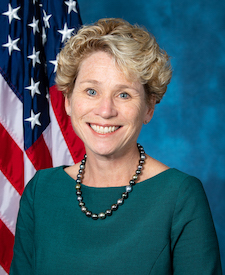
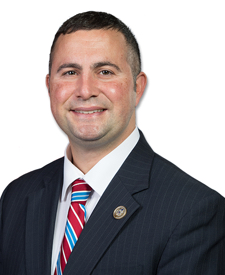

Legislative Progress
In CommitteeMr. Foster (for himself, Mr. Lawler, Ms. Houlahan, and Ms. …
Referred to the House Committee on the Judiciary.
Introduced in House
Stakeholder Effects
cui bono?How this legislation distributes effects. Mention counts reflect frequency, not effect magnitude.
Department of Homeland Security, State Department
Bill Structure & Actor Mappings
Who is "The Secretary" in each section?
We use a combination of our own taxonomy and classification in addition to large language models to assess meaning and potential beneficiaries. High confidence means strong textual evidence. Always verify with the original bill text.
Learn more about our methodology