To amend the Internal Revenue Code of 1986 to provide special rules for purposes of determining if financial guaranty insurance companies are qualifying insurance corporations under the passive foreign investment company rules.
Summary
What This Bill Does
This bill adjusts the passive foreign investment company rules for a narrow insurance market: financial guaranty insurance and reinsurance companies. It lets a financial guaranty insurer include unearned premium reserves in applicable insurance liabilities if GAAP prevents ordinary loss-reserve reporting except above unearned premium reserves, if its financial statement reports at least 15-to-1 financial guaranty exposure or 9-to-1 state or local bond exposure, and if its liabilities are tied to risks within the NAIC Financial Guaranty Insurance Guideline single-risk limits. It treats qualifying financial guaranty insurers as satisfying the alternative facts-and-circumstances test, clarifies when separately determined financial statement amounts count as reported, requires U.S. owners of specified non-publicly traded foreign corporations claiming non-PFIC status to report information to Treasury, and creates a grace-period rule for certain stock held in financial guarantee insurance companies.
Who Benefits and How
Financial guaranty insurers benefit because unearned premium reserves can help them meet qualifying insurance corporation tests under the PFIC rules. U.S. investors in qualifying financial guaranty insurers benefit from clearer treatment of holding periods and possible PFIC election revocation guidance. Municipal bond insurance markets benefit if financial guaranty insurers avoid PFIC treatment that could discourage investment in bond insurance capacity. Insurance tax attorneys benefit from statutory definitions for financial guaranty exposure, state or local bond exposure, and NAIC guideline compliance.
Who Bears the Burden and How
The Internal Revenue Service must evaluate the exposure ratios, NAIC guideline limits, financial-statement reporting, owner reports, and transition rules. U.S. owners of specified non-publicly traded foreign corporations must report information when claiming the corporation is not a PFIC. Treasury rule writers must issue guidance on companies that cease to be treated as passive foreign investment companies. Foreign insurers that do not meet the financial guaranty requirements remain exposed to PFIC classification.
Key Provisions
- Amends section 1297 to count unearned premium reserves for qualifying financial guaranty insurance companies.
- Requires 15-to-1 financial guaranty exposure or 9-to-1 state or local bond exposure and NAIC single-risk-limit treatment.
- Requires U.S. owners of specified non-publicly traded foreign corporations to report information to Treasury when claiming non-PFIC status.
- Directs Treasury guidance on transition, election revocation, and post-PFIC treatment for qualified financial guarantee insurers.
Evidence Chain:
This summary is generated from the full bill text using AI analysis. Expand "Detailed Analysis" below for identified beneficiaries/burden bearers with clause-level evidence links.
At a Glance
What This Bill Does
Creates special passive foreign investment company rules allowing qualifying financial guaranty insurers to count unearned premium reserves as applicable insurance liabilities, requires reporting by owners of specified non-publicly traded foreign corporations, and provides transition guidance for qualifying financial guaranty insurance companies.
Key Policy Areas
Tax, Insurance, Financial Services
Primary Purpose
Creates special passive foreign investment company rules allowing qualifying financial guaranty insurers to count unearned premium reserves as applicable insurance liabilities, requires reporting by owners of specified non-publicly traded foreign corporations, and provides transition guidance for qualifying financial guaranty insurance companies.
Policy Domains
Resolution provisions
Identified Gains
- Financial guaranty insurers
- U.S. investors
- Municipal bond insurance markets
- Insurance tax attorneys
Identified Costs
- Internal Revenue Service
- U.S. owners of foreign corporations
- Treasury rule writers
- Foreign insurers
Sponsors
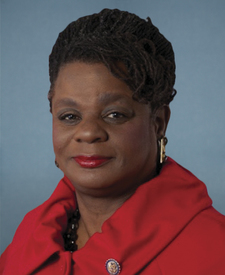


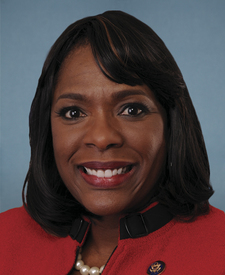
Legislative Progress
In CommitteeMs. Moore of Wisconsin (for herself and Mr. Smith of …
Referred to the House Committee on Ways and Means.
Introduced in House
Stakeholder Effects
cui bono?How this legislation distributes effects. Mention counts reflect frequency, not effect magnitude.
Financial guaranty insurers, U.S. investors, U.S. owners of foreign corporations
Positive-direction: Financial guaranty insurers, U.S. investors
Negative-direction: U.S. owners of foreign corporations
Bill Structure & Actor Mappings
Who is "The Secretary" in each section?
We use a combination of our own taxonomy and classification in addition to large language models to assess meaning and potential beneficiaries. High confidence means strong textual evidence. Always verify with the original bill text.
Learn more about our methodology