EASE Act of 2025
Summary
What This Bill Does
The EASE Act amends the Social Security Act's CMMI model list to require testing of a Specialty Health Care Services Access Model. Under the model, HHS enters agreements with one or more nonprofit provider networks to furnish specialty health care services, as specified by the Secretary, through digital modalities such as telehealth and remote technologies in coordination with eligible individuals' primary care providers. A selected network must include at least 50 Federally qualified health centers, rural health clinics, critical access hospitals, or rural emergency hospitals; at least half must be in rural areas; the network must be a 501(c)(3) nonprofit; it must have a record of supporting care in rural and underserved communities across multiple regions; and it must be able to collect, exchange, and evaluate model data. Eligible individuals include Medicare Part A or B beneficiaries and Medicaid or CHIP beneficiaries, including pregnancy-related assistance, located in rural or underserved areas. Funding is subject to restrictions from Public Law 117-328 for Public Health Service Act sections 330 through 340 programs.
Who Benefits and How
Rural Medicare beneficiaries benefit from specialty care access through telehealth or remote technologies coordinated with primary care providers. Medicaid and CHIP beneficiaries in underserved areas benefit from a CMMI model focused on specialty services that may be scarce locally. Federally qualified health centers and rural clinics benefit if their networks are selected to furnish specialty care under the model. Primary care providers in underserved communities benefit from specialty consultation support through networked digital modalities.
Who Bears the Burden and How
The CMS Innovation Center must include and test the Specialty Health Care Services Access Model. Selected nonprofit provider networks must include at least 50 qualifying safety-net sites, maintain data exchange and evaluation capacity, and coordinate with primary care. Federal taxpayers fund any model payments, agreements, and administrative costs through CMMI or allocated program funds. Specialty providers participating in the model must adapt workflows to deliver care through telehealth and remote technologies.
Key Provisions
- Requires CMMI to include a Specialty Health Care Services Access Model in its model portfolio.
- Directs HHS to contract with nonprofit provider networks using digital modalities to furnish specialty care coordinated with primary care.
- Requires selected networks to include at least 50 FQHCs, rural health clinics, critical access hospitals, or rural emergency hospitals, with at least half rural.
- Limits eligible individuals to Medicare, Medicaid, or CHIP beneficiaries located in rural or underserved areas.
Evidence Chain:
This summary is generated from the full bill text using AI analysis. Expand "Detailed Analysis" below for identified beneficiaries/burden bearers with clause-level evidence links.
At a Glance
What This Bill Does
Requires the Center for Medicare and Medicaid Innovation to test a Specialty Health Care Services Access Model using nonprofit provider networks of at least 50 safety-net sites, half rural, to furnish specialty care by telehealth or other digital modalities to Medicare, Medicaid, and CHIP beneficiaries in rural or underserved areas.
Key Policy Areas
Medicare, Medicaid, Telehealth
Primary Purpose
Requires the Center for Medicare and Medicaid Innovation to test a Specialty Health Care Services Access Model using nonprofit provider networks of at least 50 safety-net sites, half rural, to furnish specialty care by telehealth or other digital modalities to Medicare, Medicaid, and CHIP beneficiaries in rural or underserved areas.
Policy Domains
Resolution provisions
Identified Gains
- Rural Medicare beneficiaries
- Underserved Medicaid beneficiaries
- Federally qualified health centers
- Primary care providers in rural areas
Identified Costs
- CMS Innovation Center
- Nonprofit provider networks
- Federal taxpayers
- Specialty providers using telehealth
Sponsors

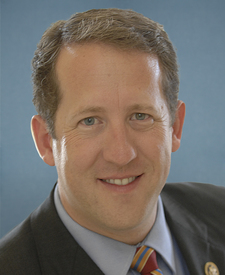

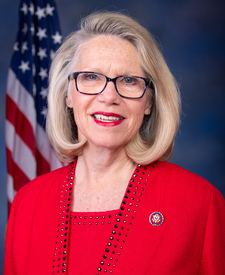
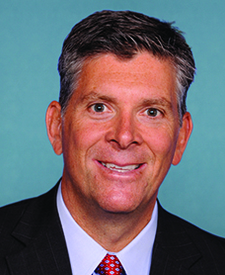
Legislative Progress
In CommitteeMr. Arrington (for himself, Ms. Salinas, and Mr. LaHood) introduced …
Referred to the Committee on Energy and Commerce, and in …
Introduced in House
Stakeholder Effects
cui bono?How this legislation distributes effects. Mention counts reflect frequency, not effect magnitude.
Rural Medicare beneficiaries, Underserved Medicaid beneficiaries
Bill Structure & Actor Mappings
Who is "The Secretary" in each section?
We use a combination of our own taxonomy and classification in addition to large language models to assess meaning and potential beneficiaries. High confidence means strong textual evidence. Always verify with the original bill text.
Learn more about our methodology