United States Leadership in Immersive Technology Act of 2025
Summary
What This Bill Does
The United States Leadership in Immersive Technology Act creates federal coordination for augmented reality, virtual reality, and mixed reality. The findings frame immersive technology as a CHIPS and Science Act key technology area, a critical technology recognized by the National Science and Technology Council and Defense Department, a likely next computing platform, and a field where the United States faces competition from countries including China. Commerce must designate a principal advisor on immersive technology, in consultation with House and Senate commerce committees, to support recommendations on improvement, deployment, security, and interagency coordination. Within 180 days, Commerce must establish an Immersive Technology Advisory Panel with federal officials from OSTP, Defense, Energy, State, Labor, Education, HHS, VA, Transportation, Agriculture, and 6 to 10 outside experts from academia, think tanks, private technology firms, civil society, or other sectors. The panel must meet at least every four months, assess economic impact, and recommend policies on competitiveness, standards, strategic investment, cybersecurity, commercialization, privacy, data, allied collaboration, and ethical safeguards. Within two years, the panel must study industry conditions and effects on competitiveness and national security, including sector impacts in manufacturing, energy, public safety, health care, urban planning, construction, automotive, agriculture, workforce development, retail, education, and entertainment, then Commerce must submit recommendations to Congress and publish the report on a White House website.
Who Benefits and How
Immersive technology companies benefit from a federal advisory structure focused on commercialization, standards, cybersecurity, and global leadership. Small and medium-sized businesses benefit if the study identifies ways immersive technology can support essential services and workforce development. National security agencies benefit from a coordinated assessment of immersive technology risks, benefits, and competition with China. Privacy and accessibility advocates benefit because the advisory panel must address safeguards for data, privacy, accessibility, digital identity, and intellectual property. Congressional commerce committees benefit from a public report with recommendations for congressional action.
Who Bears the Burden and How
The Commerce Secretary must designate the principal advisor, appoint advisory panel leadership and experts, and provide technical and administrative support. Immersive Technology Advisory Panel members must meet at least every four months and complete the two-year study. Federal agency designees must coordinate across Commerce, OSTP, Defense, Energy, State, Labor, Education, HHS, VA, Transportation, and Agriculture. Technology firms may face future standards, privacy, cybersecurity, or commercialization recommendations shaped by the panel.
Key Provisions
- Requires Commerce to designate a principal advisor on immersive technology.
- Creates an Immersive Technology Advisory Panel within 180 days with federal officials and outside experts.
- Directs the panel to recommend policies on competitiveness, standards, investment, cybersecurity, privacy, commercialization, and allied collaboration.
- Requires a two-year study of immersive technology's economic competitiveness and national security effects.
- Requires Commerce to report recommendations to Congress and publish the report on a White House website.
Evidence Chain:
This summary is generated from the full bill text using AI analysis. Expand "Detailed Analysis" below for identified beneficiaries/burden bearers with clause-level evidence links.
At a Glance
What This Bill Does
Requires Commerce to designate a principal advisor on immersive technology, establish an Immersive Technology Advisory Panel within 180 days, and submit a public report to Congress after a two-year study on immersive technology's economic competitiveness, national security, privacy, standards, workforce, and sector impacts.
Key Policy Areas
Technology, Commerce, National Security, Innovation
Primary Purpose
Requires Commerce to designate a principal advisor on immersive technology, establish an Immersive Technology Advisory Panel within 180 days, and submit a public report to Congress after a two-year study on immersive technology's economic competitiveness, national security, privacy, standards, workforce, and sector impacts.
Policy Domains
Resolution provisions
Identified Gains
- Immersive technology companies
- Small businesses using immersive tools
- National security agencies
- Privacy advocates
- Congressional commerce committees
Identified Costs
- Commerce Secretary
- Immersive Technology Advisory Panel members
- Federal agency designees
- Technology firms facing standards
Sponsors

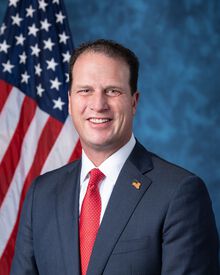
Legislative Progress
In CommitteeMs. DelBene (for herself and Mr. Pfluger) introduced the following …
Referred to the House Committee on Energy and Commerce.
Introduced in House
Stakeholder Effects
cui bono?How this legislation distributes effects. Mention counts reflect frequency, not effect magnitude.
Immersive Technology Advisory Panel members, Immersive technology companies
Bill Structure & Actor Mappings
Who is "The Secretary" in each section?
We use a combination of our own taxonomy and classification in addition to large language models to assess meaning and potential beneficiaries. High confidence means strong textual evidence. Always verify with the original bill text.
Learn more about our methodology