CFPB Dual Mandate and Economic Analysis Act
Summary
What This Bill Does
The CFPB Dual Mandate and Economic Analysis Act adds an internal economic-review office to the Consumer Financial Protection Bureau. The new Office of Economic Analysis must review all proposed CFPB guidance, orders, rules, and regulations, assess impacts on consumer choice, price, and access to credit products, and publish reports in the Federal Register. It must also review each existing CFPB rule, regulation, guidance, and order after 1, 2, 5, and 10 years, measure whether the action solved the problem it was intended to address, and publish those reviews. Before issuing a covered action, the CFPB Director must consider the Office's assessment and, if disagreeing with any part, publish a statement explaining why. Proposed rules must identify the problem being solved and the metrics for judging success, including changes to consumer access and cost.
Who Benefits and How
Consumer credit users benefit because CFPB rules would have to measure effects on access, price, and choice. CFPB regulated companies benefit from published economic assessments that can reveal costs or access tradeoffs before rules take effect. Consumer lenders benefit from recurring reviews after 1, 2, 5, and 10 years that test whether CFPB actions solved their stated problems. Congressional oversight committees benefit from Federal Register reports that document CFPB economic reasoning and performance metrics.
Who Bears the Burden and How
The CFPB Director must consider economic reviews, explain disagreements, and identify problem statements and success metrics in proposed rules. CFPB Office of Economic Analysis staff must review proposed and existing Bureau actions and publish Federal Register reports. Federal Register staff must process additional CFPB review publications. Consumer advocates may bear delay or dilution of CFPB protections if economic-review requirements slow rulemaking.
Key Provisions
- Creates a CFPB Office of Economic Analysis.
- Requires review of proposed CFPB guidance, orders, rules, and regulations for choice, price, and credit-access effects.
- Requires reviews of existing CFPB actions after 1, 2, 5, and 10 years.
- Directs the CFPB Director to consider Office reviews or publish disagreement statements.
- Requires proposed rules to identify the problem being solved and metrics for measuring success.
Evidence Chain:
This summary is generated from the full bill text using AI analysis. Expand "Detailed Analysis" below for identified beneficiaries/burden bearers with clause-level evidence links.
At a Glance
What This Bill Does
Creates a CFPB Office of Economic Analysis to review proposed and existing Bureau guidance, orders, rules, and regulations for effects on consumer choice, prices, and credit access, and requires the CFPB Director to consider those reviews or explain disagreements.
Key Policy Areas
Consumer Finance, Regulation, Administrative Procedure
Primary Purpose
Creates a CFPB Office of Economic Analysis to review proposed and existing Bureau guidance, orders, rules, and regulations for effects on consumer choice, prices, and credit access, and requires the CFPB Director to consider those reviews or explain disagreements.
Policy Domains
Resolution provisions
Identified Gains
- Consumer credit users
- CFPB regulated companies
- Consumer lenders
- Congressional oversight committees
Identified Costs
- CFPB Director
- CFPB economic analysis staff
- Federal Register staff
- Consumer advocates
Sponsors
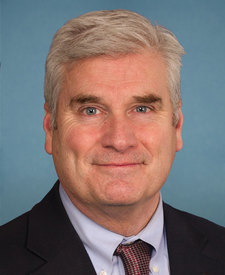
Legislative Progress
In CommitteeMr. Emmer introduced the following bill; which was referred to …
Referred to the House Committee on Financial Services.
Introduced in House
Stakeholder Effects
cui bono?How this legislation distributes effects. Mention counts reflect frequency, not effect magnitude.
CFPB regulated companies, Consumer credit users, Consumer lenders
CFPB Director, Congressional oversight committees
CFPB economic analysis staff, Federal Register staff
Bill Structure & Actor Mappings
Who is "The Secretary" in each section?
We use a combination of our own taxonomy and classification in addition to large language models to assess meaning and potential beneficiaries. High confidence means strong textual evidence. Always verify with the original bill text.
Learn more about our methodology