Countering Transnational Repression Act of 2025
Summary
What This Bill Does
The Countering Transnational Repression Act of 2025 responds to threats by foreign governments or their agents against people in the United States and abroad. Congress states that hostile foreign governments use threats, intimidation, harassment, surveillance, stalking, silencing, physical harm, and kidnapping to target individuals. The bill establishes a Transnational Repression Working Group within the Department of Homeland Security, coordinated with the Office of Intelligence and Analysis, to analyze and monitor transnational repression and related terrorism threats. The Director of Homeland Security Investigations appoints the working group director, who reports to the DHS Secretary and HSI Director. HSI must provide enough employees and at least one employee dedicated to privacy-law compliance. The group may use detailees from the intelligence community or other federal agencies. It must review information from federal, state, local, tribal, territorial partners and the National Network of Fusion Centers, incorporate it when appropriate, and disseminate threat information back to those partners. For seven years, HSI, through the working group and in coordination with I&A, ODNI, and FBI as appropriate, must report annually to congressional homeland security committees on incidents, attempted incidents, quantitative data, foreign-government roles, federal disruption efforts, and relevant matters. Unclassified portions must be posted publicly, with classified annexes limited to protecting intelligence sources and methods. DHS must also conduct research, development, and operational testing of technologies and techniques to help partners counter transnational repression, while protecting constitutional rights, privacy, civil rights, civil liberties, and lawful speech.
Who Benefits and How
Diaspora communities and dissidents targeted by foreign governments benefit from a DHS office focused on identifying and disrupting threats, surveillance, harassment, stalking, kidnapping plots, and related terrorism. Federal, state, local, tribal, and territorial law enforcement partners benefit from threat-information dissemination and DHS research support. Fusion centers benefit from a formal channel for sharing and receiving transnational repression information. Congressional homeland security committees benefit from annual public and classified assessments for seven years. Privacy and civil-liberties offices benefit from statutory requirements for dedicated compliance staffing and limits protecting lawful speech.
Who Bears the Burden and How
Homeland Security Investigations must staff, direct, and report on the working group. The DHS Office of Intelligence and Analysis must coordinate monitoring and information sharing. ODNI and FBI must support annual assessments when appropriate. Federal agencies and intelligence-community components may provide detailees with relevant expertise. State, local, tribal, territorial, and fusion-center partners must share information that can be reviewed and incorporated. Foreign government agents involved in transnational repression face increased monitoring, public reporting, investigation, and disruption risk.
Key Provisions
- Establishes a Transnational Repression Working Group within DHS.
- Requires coordination with the Office of Intelligence and Analysis on monitoring and analysis.
- Requires HSI to appoint a director, provide sufficient staff, and dedicate at least one employee to privacy-law compliance.
- Authorizes detailees from the intelligence community and other federal agencies.
- Requires review and dissemination of information from federal, state, local, tribal, territorial, and fusion-center partners.
- Requires annual assessments to Congress for seven years, with public unclassified portions and limited classified annexes.
- Directs DHS research, development, and operational testing for countering transnational repression.
- Protects constitutional rights, privacy, civil rights, civil liberties, and lawful speech.
Evidence Chain:
This summary is generated from the full bill text using AI analysis. Expand "Detailed Analysis" below for identified beneficiaries/burden bearers with clause-level evidence links.
At a Glance
What This Bill Does
Creates a DHS Transnational Repression Working Group inside Homeland Security Investigations to analyze, monitor, and share information on foreign-government threats, harassment, surveillance, stalking, kidnapping, and terrorism tied to transnational repression; requires annual public and classified assessments for seven years; authorizes detailees; mandates privacy and civil-liberties staffing; and directs DHS research and operational testing to support federal, state, local, tribal, territorial, and fusion-center partners.
Key Policy Areas
Homeland Security, Civil Rights, Foreign Affairs
Primary Purpose
Creates a DHS Transnational Repression Working Group inside Homeland Security Investigations to analyze, monitor, and share information on foreign-government threats, harassment, surveillance, stalking, kidnapping, and terrorism tied to transnational repression; requires annual public and classified assessments for seven years; authorizes detailees; mandates privacy and civil-liberties staffing; and directs DHS research and operational testing to support federal, state, local, tribal, territorial, and fusion-center partners.
Policy Domains
House resolution provisions
Identified Gains
- Diaspora communities targeted by foreign governments
- Dissidents targeted by foreign governments
- Federal law enforcement partners
- State law enforcement partners
- Tribal law enforcement partners
- Fusion centers
- Congressional homeland security committees
- Privacy and civil-liberties offices
Identified Costs
- Homeland Security Investigations
- DHS Office of Intelligence and Analysis
- Office of the Director of National Intelligence
- Federal Bureau of Investigation
- Federal agency detailees
- Fusion-center partners
- Foreign government agents involved in transnational repression
Sponsors
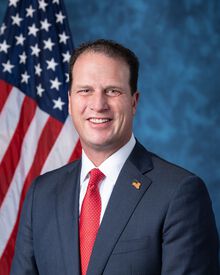




Legislative Progress
ReportedOrdered to be Reported by Voice Vote.
Committee Consideration and Mark-up Session Held
Forwarded by Subcommittee to Full Committee by Voice Vote.
Forwarded by Subcommittee to Full Committee by Voice Vote.
Introduced in House
Referred to the Subcommittee on Counterterrorism and Intelligence.
Referred to the Committee on Homeland Security, and in addition …
Mr. Pfluger (for himself, Mr. Magaziner, Mr. Evans of Colorado, …
Stakeholder Effects
cui bono?How this legislation distributes effects. Mention counts reflect frequency, not effect magnitude.
DHS Office of Intelligence and Analysis, Fusion centers, Homeland Security Investigations
Positive-direction: Fusion centers
Negative-direction: DHS Office of Intelligence and Analysis, Homeland Security Investigations
Diaspora communities targeted by foreign governments, Dissidents targeted by foreign governments
Foreign government agents involved in transnational repression
Bill Structure & Actor Mappings
Who is "The Secretary" in each section?
- "dhs"
- → Department of Homeland Security
- "fbi"
- → Federal Bureau of Investigation
- "hsi"
- → Homeland Security Investigations
- "odni"
- → Office of the Director of National Intelligence
We use a combination of our own taxonomy and classification in addition to large language models to assess meaning and potential beneficiaries. High confidence means strong textual evidence. Always verify with the original bill text.
Learn more about our methodology