MATCH IT Act of 2025
Summary
What This Bill Does
The MATCH IT Act addresses patient misidentification in electronic health records. Congress's findings cite matching rates within facilities as low as 80 percent, duplicate and overlaid records, unnecessary repeat tests, denied claims, average duplicate-care costs of about $1,950 per inpatient stay and more than $1,700 per emergency department visit, and more than $6.7 billion in annual health-system costs. Within 180 days, HHS must develop a definition and standards for accurate patient matching that account for duplicate records, overlaid records, multiple matches, and mismatch rates, then update them at least every three years. ONC must review the United States Core Data for Interoperability, identify and adopt a minimum data set needed to support 99.9 percent matching, create or update data standards within one year, consult providers, EHR vendors, health IT vendors, patient groups, NIST, CDC, DOD, NIH, VA, SSA, IHS, OCR, and public health authorities, and incorporate the data set into health IT certification within 180 days after finalization. HHS must add the data set to Medicare promoting-interoperability requirements within 24 months, while CMS must create a voluntary bonus measure for eligible providers meeting a 90 percent or adjusted match-rate threshold and protect voluntary attestations from public disclosure.
Who Benefits and How
Patients benefit because better matching reduces duplicate records, overlaid records, repeat tests, privacy breaches, and treatment based on the wrong record. Clinicians benefit from more reliable access to the right medical record at the point of care. Hospitals benefit if fewer denied claims and duplicate services reduce costs tied to inaccurate identification. Health information networks benefit from a common patient-matching data set and standards in USCDI. Eligible Medicare providers benefit from a voluntary promoting-interoperability bonus measure without public disclosure of attestations.
Who Bears the Burden and How
HHS and ONC must define match rates, update standards every three years, adopt USCDI data elements, and revise certification criteria. EHR vendors must adapt certified health IT products to include the patient-matching minimum data set. Hospitals and providers must implement data collection and reporting workflows if they pursue the voluntary measure. CMS must run rulemaking, annual rate reviews, and voluntary anonymous patient-match reporting.
Key Provisions
- Requires HHS patient-match definitions and standards within 180 days.
- Requires ONC to adopt a USCDI minimum data set and data standards for patient matching.
- Requires health IT certification and Medicare interoperability program updates after the data set is finalized.
- Creates a voluntary Medicare patient-match bonus measure with anonymous reporting and nonpublic attestations.
- Protects entities from being forced to meet a 99.9 percent match rate.
Evidence Chain:
This summary is generated from the full bill text using AI analysis. Expand "Detailed Analysis" below for identified beneficiaries/burden bearers with clause-level evidence links.
At a Glance
What This Bill Does
Requires HHS and ONC to create patient-matching definitions, standards, a USCDI minimum data set, health IT certification updates, Medicare interoperability requirements, and voluntary patient-match reporting and bonus measures.
Key Policy Areas
Health IT, Patient Safety, Medicare, Interoperability
Primary Purpose
Requires HHS and ONC to create patient-matching definitions, standards, a USCDI minimum data set, health IT certification updates, Medicare interoperability requirements, and voluntary patient-match reporting and bonus measures.
Policy Domains
Resolution provisions
Identified Gains
- Patients
- Clinicians
- Hospitals
- Health information networks
- Eligible Medicare providers
Identified Costs
- HHS Office of the National Coordinator
- EHR vendors
- Hospitals
- Centers for Medicare and Medicaid Services
Sponsors


Legislative Progress
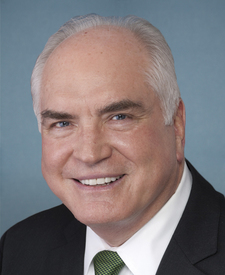
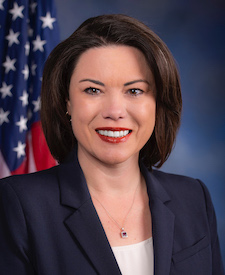
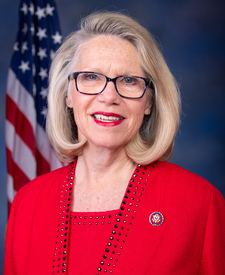
In CommitteeMr. Kelly of Pennsylvania (for himself, Mr. Foster, and Mr. …
Referred to the Committee on Energy and Commerce, and in …
Introduced in House
Stakeholder Effects
cui bono?How this legislation distributes effects. Mention counts reflect frequency, not effect magnitude.
Clinicians, Eligible Medicare providers, Hospitals
Centers for Medicare and Medicaid Services, HHS Office of the National Coordinator
Bill Structure & Actor Mappings
Who is "The Secretary" in each section?
We use a combination of our own taxonomy and classification in addition to large language models to assess meaning and potential beneficiaries. High confidence means strong textual evidence. Always verify with the original bill text.
Learn more about our methodology