Congressional Trade Authority Act of 2025
Summary
What This Bill Does
The Congressional Trade Authority Act sharply limits unilateral section 232 tariff and quota authority. It narrows covered articles to those tied to military equipment, energy resources, or critical infrastructure essential to national security, and defines national security as protection from foreign aggression rather than general welfare. It gives the Secretary of Defense the lead investigation role, requires a Commerce import assessment, and requires Defense and Commerce to jointly report findings and recommendations. A presidential import-adjustment proposal would take effect only if Congress enacts a joint resolution of approval within 60 days under fast-track House Ways and Means and Senate Finance procedures. The bill also creates a United States International Trade Commission exclusion process for covered articles, requires ITC economic-impact reports, requires annual GAO audits of exclusions, limits approved actions to three years, and applies approval requirements to recent section 232 actions with duty reversion and liquidation/reliquidation procedures if approval is not enacted.
Who Benefits and How
Congress benefits because section 232 tariffs and quotas would require affirmative approval rather than unilateral presidential action. Import-dependent manufacturers benefit from an ITC exclusion process when tariffs would cause severe economic harm or block critical infrastructure contracts. Low- and middle-income consumers benefit from exclusion criteria that account for unreasonable price increases on day-to-day items. Businesses affected by recent section 232 tariffs benefit if unapproved actions terminate and duty rates revert.
Who Bears the Burden and How
The President loses unilateral authority to impose or continue section 232 import restrictions without congressional approval. The Defense Department must lead national-security import investigations and coordinate with Commerce. The International Trade Commission must administer exclusions, publish procedures, explain denials, and report on economic effects. Customs and Border Protection must handle duty reversion, liquidation, reliquidation, and refund processing for terminated actions. Domestic industries protected by section 232 tariffs may face more exclusions or termination of import restrictions.
Key Provisions
- Restricts section 232 to covered articles tied to military equipment, energy resources, or critical infrastructure.
- Requires Defense-led investigations, Commerce assessments, and joint findings before presidential import adjustments.
- Requires a joint resolution of congressional approval within 60 days before proposed section 232 actions have force and effect.
- Creates an ITC exclusion process, GAO audits, economic-impact reports, three-year sunsets, and review of recent section 232 actions.
Evidence Chain:
This summary is generated from the full bill text using AI analysis. Expand "Detailed Analysis" below for identified beneficiaries/burden bearers with clause-level evidence links.
At a Glance
What This Bill Does
Rewrites section 232 national-security import authority by narrowing covered articles and national security, shifting investigations to the Defense Secretary with Commerce input, requiring congressional approval within 60 days for presidential import adjustments, creating an ITC exclusion process, mandating economic-impact reports and GAO audits, sunsetting approved actions after three years, and forcing recent section 232 actions to receive approval or terminate.
Key Policy Areas
Trade, Tariffs, National Security, Congressional Oversight
Primary Purpose
Rewrites section 232 national-security import authority by narrowing covered articles and national security, shifting investigations to the Defense Secretary with Commerce input, requiring congressional approval within 60 days for presidential import adjustments, creating an ITC exclusion process, mandating economic-impact reports and GAO audits, sunsetting approved actions after three years, and forcing recent section 232 actions to receive approval or terminate.
Policy Domains
Resolution provisions
Identified Gains
- Congress
- Import-dependent manufacturers
- Low- and middle-income consumers
- Businesses affected by recent section 232 tariffs
Identified Costs
- President of the United States
- Department of Defense
- International Trade Commission
- Customs and Border Protection
- Protected domestic industries
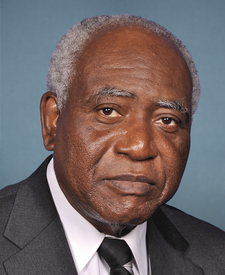
Sponsors




Legislative Progress
In CommitteeMr. Beyer (for himself, Ms. DelBene, Mr. Schneider, Mr. Panetta, …
Referred to the Committee on Ways and Means, and in …
Introduced in House
Stakeholder Effects
cui bono?How this legislation distributes effects. Mention counts reflect frequency, not effect magnitude.
Congress, Customs and Border Protection, International Trade Commission
Import-dependent manufacturers, Protected domestic industries
Positive-direction: Import-dependent manufacturers
Negative-direction: Protected domestic industries
Bill Structure & Actor Mappings
Who is "The Secretary" in each section?
We use a combination of our own taxonomy and classification in addition to large language models to assess meaning and potential beneficiaries. High confidence means strong textual evidence. Always verify with the original bill text.
Learn more about our methodology