Military Helicopter Training Safety Act of 2025
Summary
What This Bill Does
The Military Helicopter Training Safety Act is an aviation-safety oversight bill focused on military rotary-wing aircraft. Within 90 days, the Secretary of Defense must report on the feasibility of installing traffic alert and collision avoidance systems in each military helicopter and similar rotary-wing aircraft. The report must cover costs, effects on civilian airspace safety, cockpit configuration changes, combat, training, and domestic security implications, and alternative technologies if full installation is infeasible. The Secretary must also report within 90 days on installing ADS-B IN capability in the same aircraft fleet, using the same kind of feasibility and mission-impact analysis. The bill does not directly buy equipment, but it forces the Defense Department to produce a fleet-wide safety modernization assessment.
Who Benefits and How
Military helicopter crews benefit because the reports focus on collision-avoidance and traffic-awareness technology for rotary-wing aircraft. Civilian pilots and airspace users benefit from a Defense Department review of equipment that could reduce military-civilian collision risk. Congressional defense committees benefit from cost, feasibility, mission-impact, and alternative-technology information before considering procurement. Aviation safety technology vendors benefit if the reports identify a path toward TCAS or ADS-B IN installation across military rotary-wing fleets.
Who Bears the Burden and How
The Department of Defense must complete two 90-day feasibility reports with cost, cockpit, training, combat, and domestic security analysis. Military aviation program offices must evaluate aircraft configurations and technology alternatives across rotary-wing fleets. Operational commanders must consider how added safety equipment may affect combat, training, and domestic security missions. Federal taxpayers may later bear equipment and integration costs if Congress funds recommended installations.
Key Provisions
- Requires a 90-day Defense Department report on traffic alert and collision avoidance systems for military rotary-wing aircraft.
- Requires the report to address costs, civilian airspace safety, cockpit configuration, combat, training, domestic security, and alternatives.
- Requires a parallel 90-day report on ADS-B IN capability for military rotary-wing aircraft.
- Provides Congress with safety modernization evidence without directly mandating procurement.
Evidence Chain:
This summary is generated from the full bill text using AI analysis. Expand "Detailed Analysis" below for identified beneficiaries/burden bearers with clause-level evidence links.
At a Glance
What This Bill Does
Requires the Secretary of Defense to report within 90 days on the feasibility, cost, cockpit, combat, training, domestic-security, and alternative options for installing traffic alert and collision avoidance systems and ADS-B IN capability in military rotary-wing aircraft.
Key Policy Areas
Defense, Aviation Safety, Military Oversight
Primary Purpose
Requires the Secretary of Defense to report within 90 days on the feasibility, cost, cockpit, combat, training, domestic-security, and alternative options for installing traffic alert and collision avoidance systems and ADS-B IN capability in military rotary-wing aircraft.
Policy Domains
Resolution provisions
Identified Gains
- Military helicopter crews
- Civilian pilots and airspace users
- Congressional defense committees
- Aviation safety technology vendors
Identified Costs
- Department of Defense
- Military aviation program offices
- Operational commanders
- Federal taxpayers
Sponsors

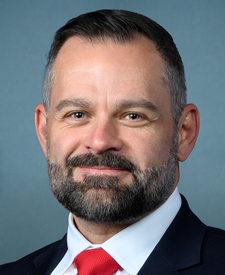

Legislative Progress
In CommitteeMr. Barrett (for himself and Mrs. Kiggans of Virginia) introduced …
Referred to the House Committee on Armed Services.
Introduced in House
Stakeholder Effects
cui bono?How this legislation distributes effects. Mention counts reflect frequency, not effect magnitude.
Military aviation program offices, Military helicopter crews
Positive-direction: Military helicopter crews
Negative-direction: Military aviation program offices
Aviation safety technology vendors, Civilian pilots and airspace users
Bill Structure & Actor Mappings
Who is "The Secretary" in each section?
We use a combination of our own taxonomy and classification in addition to large language models to assess meaning and potential beneficiaries. High confidence means strong textual evidence. Always verify with the original bill text.
Learn more about our methodology