Apprenticeship Opportunity Act
Summary
What This Bill Does
The Apprenticeship Opportunity Act amends the TANF work and eligibility rules in the Social Security Act. A state receiving a TANF grant must disregard all income received because of the first year of an apprenticeship registered under the National Apprenticeship Act when determining eligibility for assistance under the state TANF program. If HHS determines that a state violated the disregard requirement during a fiscal year, the state's family assistance grant for the immediately succeeding fiscal year is reduced by 1 percent. The rule takes effect on the first day of the first federal fiscal year that begins after enactment.
Who Benefits and How
TANF recipients entering registered apprenticeships benefit because first-year apprenticeship income will not immediately make them ineligible for assistance. Low-income workers benefit because the bill reduces the benefit cliff during the first year of apprenticeship training. Registered apprenticeship sponsors benefit if TANF participants can enroll without losing cash assistance right away. Workforce agencies benefit from a clearer bridge between TANF and registered apprenticeship programs.
Who Bears the Burden and How
State TANF agencies must update eligibility systems and caseworker guidance to disregard covered apprenticeship income. The Department of Health and Human Services must monitor compliance and apply the 1 percent penalty when states violate the rule. Noncompliant states risk a reduction in the next fiscal year's family assistance grant. TANF caseworkers must verify whether income is tied to the first year of a registered apprenticeship.
Key Provisions
- Requires states to disregard first-year registered apprenticeship income for TANF eligibility.
- Creates a 1 percent family assistance grant penalty for state violations.
- Applies the rule beginning with the first federal fiscal year after enactment.
- Connects TANF eligibility policy to National Apprenticeship Act registered programs.
Evidence Chain:
This summary is generated from the full bill text using AI analysis. Expand "Detailed Analysis" below for identified beneficiaries/burden bearers with clause-level evidence links.
At a Glance
What This Bill Does
Requires states to disregard income from the first year of a registered apprenticeship when determining TANF eligibility and penalizes noncompliant states by reducing the next fiscal year's family assistance grant by 1 percent.
Key Policy Areas
TANF, Apprenticeships, Workforce
Primary Purpose
Requires states to disregard income from the first year of a registered apprenticeship when determining TANF eligibility and penalizes noncompliant states by reducing the next fiscal year's family assistance grant by 1 percent.
Policy Domains
Resolution provisions
Identified Gains
- TANF recipients entering apprenticeships
- Low-income workers
- Registered apprenticeship sponsors
- Workforce agencies
Identified Costs
- State TANF agencies
- Department of Health and Human Services
- Noncompliant states
- TANF caseworkers
Sponsors


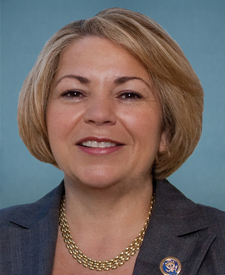


Legislative Progress
In CommitteeMs. DelBene (for herself, Ms. Sánchez, Ms. Sewell, and Ms. …
Referred to the House Committee on Ways and Means.
Introduced in House
Stakeholder Effects
cui bono?How this legislation distributes effects. Mention counts reflect frequency, not effect magnitude.
Noncompliant states, State TANF agencies
Bill Structure & Actor Mappings
Who is "The Secretary" in each section?
We use a combination of our own taxonomy and classification in addition to large language models to assess meaning and potential beneficiaries. High confidence means strong textual evidence. Always verify with the original bill text.
Learn more about our methodology