School Bus Safety Act of 2025
Summary
What This Bill Does
The School Bus Safety Act directs the Transportation Secretary and safety agencies to make new school buses safer and help schools pay for upgrades. Within one year, DOT must require school buses over 10,000 pounds to have three-point safety belts at each designated seating position, require fire suppression systems addressing engine fires, strengthen firewall standards so hazardous gas or flame cannot pass into passenger compartments, and toughen interior flammability and smoke emission standards using aircraft and passenger rail benchmarks. DOT must also require automatic emergency braking, event data recorders, and electronic stability control, and amend commercial driver training rules to require at least eight hours of behind-the-wheel instruction on public roads with a trained CDL school-bus-endorsed instructor. FMCSA and FRA must complete the moderate-to-severe obstructive sleep apnea rulemaking for safety-sensitive personnel. NHTSA must study motion-activated systems detecting pedestrians, bicyclists, and other road users near buses and then issue rules within one year after the study, and must study passenger seat-belt alert systems. DOT must create a grant program for states to make subgrants to local educational agencies to buy buses with three-point belts or other safety features and retrofit existing buses, with such sums as necessary authorized.
Who Benefits and How
Students riding school buses benefit from seat belts, fire protection, emergency braking, stability control, and other required safety features. Parents benefit from stronger national safety standards and potential retrofits for buses already owned by school districts. Local educational agencies benefit from state subgrants to buy or modify buses with covered safety features. School bus manufacturers benefit from clear federal standards for safety equipment in new buses.
Who Bears the Burden and How
The Department of Transportation must complete several school bus safety rulemakings within one year. NHTSA must study pedestrian detection and passenger belt-alert systems and issue follow-on rules where required. School bus manufacturers must equip new buses with mandated safety technologies after effective dates. Local educational agencies and states must administer grants, procurement, and retrofit projects. Federal taxpayers bear the cost of the authorized safety grant program.
Key Provisions
- Requires three-point belts, fire suppression, firewall, flammability, smoke, braking, data recorder, and stability rules for school buses.
- Requires at least eight hours of behind-the-wheel training for school bus operators.
- Directs FMCSA and FRA to finish the obstructive sleep apnea safety-sensitive personnel rulemaking.
- Requires NHTSA studies and follow-on rules for pedestrian detection and passenger belt-alert systems.
- Creates state grants for local school bus safety purchases and retrofits.
Evidence Chain:
This summary is generated from the full bill text using AI analysis. Expand "Detailed Analysis" below for identified beneficiaries/burden bearers with clause-level evidence links.
At a Glance
What This Bill Does
Requires Transportation Department school bus safety rules for three-point belts, fire suppression, firewalls, flammability and smoke standards, automatic emergency braking, event data recorders, electronic stability control, school-bus driver behind-the-wheel instruction, sleep-apnea evaluation rules, pedestrian detection studies and rules, passenger belt-alert studies, and state grants for safety-equipped or retrofitted school buses.
Key Policy Areas
Transportation Safety, Education, School Buses
Primary Purpose
Requires Transportation Department school bus safety rules for three-point belts, fire suppression, firewalls, flammability and smoke standards, automatic emergency braking, event data recorders, electronic stability control, school-bus driver behind-the-wheel instruction, sleep-apnea evaluation rules, pedestrian detection studies and rules, passenger belt-alert studies, and state grants for safety-equipped or retrofitted school buses.
Policy Domains
Resolution provisions
Identified Gains
- Students riding school buses
- Parents
- Local educational agencies
- School bus manufacturers
Identified Costs
- Department of Transportation
- NHTSA
- School bus manufacturers
- State transportation agencies
- Federal taxpayers
Sponsors
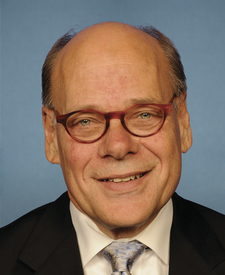

Legislative Progress
In CommitteeMr. Cohen introduced the following bill; which was referred to …
Referred to the Subcommittee on Highways and Transit.
Referred to the Committee on Transportation and Infrastructure, and in …
Introduced in House
Stakeholder Effects
cui bono?How this legislation distributes effects. Mention counts reflect frequency, not effect magnitude.
Local educational agencies, Students riding school buses
Bill Structure & Actor Mappings
Who is "The Secretary" in each section?
We use a combination of our own taxonomy and classification in addition to large language models to assess meaning and potential beneficiaries. High confidence means strong textual evidence. Always verify with the original bill text.
Learn more about our methodology