To establish an Office of Fair Lending Testing to test for compliance with the Equal Credit Opportunity Act, to strengthen the Equal Credit Opportunity Act, to ensure that persons injured by discriminatory practices, including organizations that have diverted resources to address discrimination and whose mission has been frustrated by illegal acts, can seek relief under such Act and to provide for criminal penalties for violating such Act, and for other purposes.
Analysis under review: This bill has generated analysis that may be too generic or incomplete. Clause-level evidence remains available below.
Summary
What This Bill Does
This bill strengthens protections against lending discrimination by creating a new Office of Fair Lending Testing within the Consumer Financial Protection Bureau (CFPB) that will actively test whether lenders discriminate against borrowers. It also adds criminal penalties for lending discrimination and expands the Equal Credit Opportunity Act to protect people from discrimination based on their ZIP code or census tract.
Who Benefits and How
Borrowers in historically underserved communities benefit from expanded protections - they can no longer be denied credit solely because of where they live (redlining). Civil rights organizations and fair lending advocates gain standing to sue lenders who discriminate, even if they themselves were not direct victims. Prospective borrowers benefit from proactive government testing that will catch discriminatory practices before they affect more people.
Who Bears the Burden and How
Banks, credit unions, and other lenders face increased compliance obligations and the risk of criminal penalties (up to $50,000 fines and 1 year imprisonment for individual violations, or up to $100,000 per violation and 20 years for pattern/practice violations). Bank executives and board directors face personal liability including fines up to 100% of their compensation and up to 5 years imprisonment if they knowingly cause discriminatory lending patterns.
Key Provisions
- Creates Office of Fair Lending Testing to conduct undercover testing of lenders for discrimination
- Adds ZIP code and census tract as protected classes under the Equal Credit Opportunity Act
- Establishes criminal penalties: up to $50,000/1 year for individual violations; $100,000 per violation/20 years for pattern violations
- Requires CFPB to review and approve loan applications to ensure compliance
- Expands who can sue for discrimination to include organizations whose mission is harmed by discrimination
Evidence Chain:
This summary is generated from the full bill text using AI analysis. Expand "Detailed Analysis" below for identified beneficiaries/burden bearers with clause-level evidence links.
At a Glance
What This Bill Does
Establishes a federal Office of Fair Lending Testing to proactively detect lending discrimination and strengthens the Equal Credit Opportunity Act by expanding protected classes, adding criminal penalties, and requiring CFPB review of loan applications.
Key Policy Areas
Consumer Protection, Financial Regulation, Civil Rights, Criminal Justice
Primary Purpose
Establishes a federal Office of Fair Lending Testing to proactively detect lending discrimination and strengthens the Equal Credit Opportunity Act by expanding protected classes, adding criminal penalties, and requiring CFPB review of loan applications.
Policy Domains
Fair Lending for All Act
Identified Gains
- Borrowers in underserved communities
- Minority borrowers
- Civil rights organizations
- Fair lending advocates
Identified Costs
- Banks and credit unions
- Mortgage lenders
- Consumer finance companies
- Bank executives and directors
Sponsors
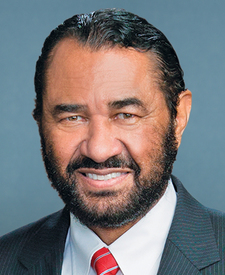
Legislative Progress
IntroducedMr. Green of Texas introduced the following bill; which was …
Stakeholder Effects
cui bono?How this legislation distributes effects. Mention counts reflect frequency, not effect magnitude.
Bank executives and board directors, Bank executives and board members, Banks and mortgage lenders
Discrimination victims, Minority and underserved borrowers, Prospective borrowers
Civil rights and fair lending advocacy organizations
Bill Structure & Actor Mappings
Who is "The Secretary" in each section?
- "the_bureau"
- → Bureau of Consumer Financial Protection (CFPB)
- "the_office"
- → Office of Fair Lending Testing
- "the_director"
- → Director of the Bureau of Consumer Financial Protection
- "the_secretary"
- → Secretary of Housing and Urban Development
- "the_attorney_general"
- → Attorney General of the United States
Key Definitions
Terms defined in this bill
Any person who claims to have been injured by a discriminatory credit practice or believes that such person will be injured by a discriminatory credit practice
We use a combination of our own taxonomy and classification in addition to large language models to assess meaning and potential beneficiaries. High confidence means strong textual evidence. Always verify with the original bill text.
Learn more about our methodology