SOLAR Act
Summary
What This Bill Does
The SOLAR Act limits USDA support for solar development on farmland. It defines covered farmland by reference to the Farmland Protection Policy Act and defines conversion as activity that causes the farmland to fail state agricultural-production, activity, or use requirements. The Agriculture Secretary may not provide financial assistance for a project that would convert covered farmland for solar energy production. The ban does not apply when the conversion is under 5 acres, when it is under 50 acres and most of the energy is for on-farm use, or when each county and municipality where the project is sited has approved or supported it. The bill is a land-use filter on federal rural energy money, not a general ban on solar projects.
Who Benefits and How
Farmers preserving production land benefit because USDA funding would not subsidize most solar conversions of covered farmland. County governments benefit because local approval can decide whether larger solar projects remain eligible for USDA support. Municipal governments benefit from a formal approval role for projects sited within their jurisdictions. On-farm solar users benefit because projects under 50 acres remain eligible when most energy serves the farm.
Who Bears the Burden and How
Solar developers bear the burden because USDA-backed projects converting covered farmland lose eligibility unless an exception applies. The Department of Agriculture must screen financial-assistance applications for farmland conversion and local approval. Renewable energy financiers may face fewer USDA-supported ground-mounted solar projects on productive farmland. Project applicants must document acreage, on-farm energy use, and county or municipal support to qualify for exceptions.
Key Provisions
- Prohibits USDA financial assistance for projects that convert covered farmland to solar energy production.
- Creates exceptions for conversions under 5 acres and on-farm-use projects under 50 acres.
- Authorizes local approval by each county and municipality to preserve eligibility.
- Requires USDA applicants to account for farmland-conversion status before receiving assistance.
Evidence Chain:
This summary is generated from the full bill text using AI analysis. Expand "Detailed Analysis" below for identified beneficiaries/burden bearers with clause-level evidence links.
At a Glance
What This Bill Does
Bars USDA financial assistance for ground-mounted solar projects that convert covered farmland, with exceptions for small projects, primarily on-farm-use projects under 50 acres, and locally approved projects.
Key Policy Areas
Agriculture, Energy, Land Use
Primary Purpose
Bars USDA financial assistance for ground-mounted solar projects that convert covered farmland, with exceptions for small projects, primarily on-farm-use projects under 50 acres, and locally approved projects.
Policy Domains
Resolution provisions
Identified Gains
- Farmers
- County governments
- Municipal governments
- On-farm solar users
Identified Costs
- Solar developers
- Department of Agriculture
- Renewable energy financiers
- Project applicants
Sponsors




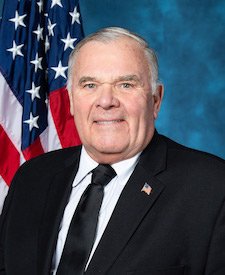
Legislative Progress
In CommitteeReferred to the Subcommittee on Commodity Markets, Digital Assets, and …
Mr. Bost (for himself, Mr. Austin Scott of Georgia, Mr. …
Referred to the House Committee on Agriculture.
Introduced in House
Stakeholder Effects
cui bono?How this legislation distributes effects. Mention counts reflect frequency, not effect magnitude.
County governments, Municipal governments
Bill Structure & Actor Mappings
Who is "The Secretary" in each section?
We use a combination of our own taxonomy and classification in addition to large language models to assess meaning and potential beneficiaries. High confidence means strong textual evidence. Always verify with the original bill text.
Learn more about our methodology