China Financial Threat Mitigation Act of 2025
Summary
What This Bill Does
The China Financial Threat Mitigation Act of 2025 directs the Secretary of the Treasury to conduct a study and issue a report within one year on how the financial sector of the People's Republic of China could affect the United States and global financial systems. Treasury must consult the Chair of the Federal Reserve Board, SEC Chair, CFTC Chair, and Secretary of State. The report must assess significant PRC financial-sector risks, describe current U.S. government policies to protect U.S. and global financial stability, evaluate the transparency, completeness, and reliability of Chinese economic data, and recommend additional actions for the U.S. government and U.S. representatives at relevant international organizations to strengthen monitoring and mitigation. Treasury must transmit the report to House Financial Services, House Foreign Affairs, Senate Banking, Senate Foreign Relations, and appropriate U.S. representatives at international organizations, and publish the unclassified report on Treasury's website while allowing a classified annex.
Who Benefits and How
U.S. financial institutions with China exposure, U.S. investors in Chinese markets, bank regulators, securities regulators, commodities regulators, congressional financial-services committees, congressional foreign-affairs committees, Treasury international-finance staff, and U.S. representatives at international organizations benefit from a structured public and classified assessment of PRC financial risk, Chinese data reliability, and policy options. The study can help investors and regulators understand whether Chinese banking, securities, real-estate, debt, or data-integrity problems could spill into U.S. markets.
Who Bears the Burden and How
The Department of the Treasury, Federal Reserve Board staff, Securities and Exchange Commission staff, Commodity Futures Trading Commission staff, State Department staff, classified annex reviewers, Treasury website staff, and international-organization representatives must coordinate the study, evaluate opaque PRC financial data, identify existing U.S. protective policies, draft recommendations, brief congressional recipients, and publish the unclassified report within one year.
Key Provisions
- Requires Treasury to study U.S. exposure to the PRC financial sector within one year.
- Requires consultation with the Federal Reserve Board, SEC, CFTC, and State Department.
- Requires assessment of PRC financial-sector risks to U.S. and global financial systems.
- Requires evaluation of Chinese economic-data transparency, completeness, and reliability.
- Directs recommendations for additional U.S. and international monitoring or mitigation actions.
- Requires transmission to House and Senate financial and foreign-affairs committees and publication of the unclassified report.
Evidence Chain:
This summary is generated from the full bill text using AI analysis. Expand "Detailed Analysis" below for identified beneficiaries/burden bearers with clause-level evidence links.
At a Glance
What This Bill Does
Requires the Treasury Secretary, after consulting the Federal Reserve, SEC, CFTC, and State Department, to study and publicly report within one year on U.S. exposure to PRC financial-sector risks, Chinese economic-data reliability, current U.S. protective policies, and additional international monitoring or mitigation actions.
Key Policy Areas
Financial Regulation, China, International Finance
Primary Purpose
Requires the Treasury Secretary, after consulting the Federal Reserve, SEC, CFTC, and State Department, to study and publicly report within one year on U.S. exposure to PRC financial-sector risks, Chinese economic-data reliability, current U.S. protective policies, and additional international monitoring or mitigation actions.
Policy Domains
Substantive provisions
Identified Gains
- U.S. financial institutions with China exposure
- U.S. investors in Chinese markets
- Bank regulators
- Securities regulators
- Commodities regulators
- Congressional financial-services committees
- Treasury international-finance staff
Identified Costs
- Department of the Treasury
- Federal Reserve Board staff
- Securities and Exchange Commission staff
- Commodity Futures Trading Commission staff
- State Department staff
- Classified annex reviewers
- Treasury website staff
Sponsors
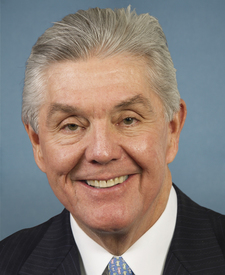
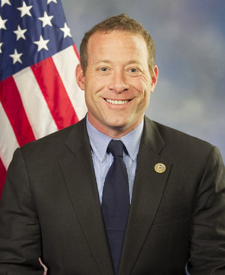

Legislative Progress
Passed HouseReceived; read twice and referred to the Committee on Banking, …
Passed House (inferred from eh version)
Received in the Senate and Read twice and referred to …
Motion to reconsider laid on the table Agreed to without …
On motion to suspend the rules and pass the bill, …
Passed/agreed to in House: On motion to suspend the rules …
DEBATE - The House proceeded with forty minutes of debate …
Considered under suspension of the rules. (consideration: CR H3620-3621)
Mr. Williams (TX) moved to suspend the rules and pass …
Additional sponsor: Mr. Lawler
Stakeholder Effects
cui bono?How this legislation distributes effects. Mention counts reflect frequency, not effect magnitude.
Commodity Futures Trading Commission, Congressional financial-services committees, Department of the Treasury
Positive-direction: Congressional financial-services committees
Negative-direction: Commodity Futures Trading Commission, Department of the Treasury, Federal Reserve Board, Securities and Exchange Commission, State Department
U.S. financial institutions with China exposure, U.S. investors in Chinese markets
Bill Structure & Actor Mappings
Who is "The Secretary" in each section?
We use a combination of our own taxonomy and classification in addition to large language models to assess meaning and potential beneficiaries. High confidence means strong textual evidence. Always verify with the original bill text.
Learn more about our methodology