Leveling the Playing Field 2.0 Act
Summary
What This Bill Does
The Leveling the Playing Field 2.0 Act is a large trade-remedy enforcement bill. It changes how the U.S. International Trade Commission evaluates material injury when imports shift through successive antidumping or countervailing duty investigations. It requires the Department of Commerce to initiate and move faster on successive investigations, lets Commerce account for third-country subsidies and distorted foreign costs, and lets currency undervaluation count as a countervailable subsidy when supported by a petition. It also strengthens anti-circumvention tools: Commerce can require importer certifications at entry, decide whether merchandise is covered by an antidumping or countervailing duty proceeding without being bound by CBP tariff classifications, and CBP can require nonresident importers to hold U.S. assets and bonds sufficient to cover possible duties. The bill is designed to make trade remedies harder to evade through country-shifting, input subsidies, currency manipulation, nonresident importer structures, or customs protests.
Who Benefits and How
Domestic manufacturers benefit because trade-remedy agencies get stronger tools to preserve antidumping and countervailing duty protection after imports shift suppliers, countries, or product forms. U.S. manufacturing workers benefit if stronger duty enforcement reduces import competition from subsidized, dumped, or duty-evading merchandise. Department of Commerce trade officials benefit from faster successive investigations, currency-undervaluation review authority, and broader cost-distortion tools. CBP officers benefit from importer certifications, asset requirements, and bonding rules that make duty collection more enforceable. The U.S. International Trade Commission benefits from explicit direction to use recent and concurrent injury records in successive investigations.
Who Bears the Burden and How
Foreign exporters face higher risk that subsidies, distorted costs, currency undervaluation, or downstream processing will trigger duties. U.S. importers must maintain certifications, respond to Commerce and CBP inquiries, and absorb more duty-liability risk. Nonresident importers must keep U.S. assets and bonds sufficient to cover potential antidumping or countervailing duties. Department of Commerce Enforcement and Compliance staff must administer faster investigations, broader cost methodologies, circumvention inquiries, and currency-undervaluation reviews. Customs officers must enforce importer certifications, asset requirements, evasion-review procedures, and duty-liability safeguards at entry.
Key Provisions
- Requires injury analysis to account for recent and concurrent antidumping or countervailing duty investigations.
- Creates special initiation and deadline rules for successive trade-remedy investigations.
- Authorizes Commerce to address cross-border subsidies, distorted costs, and currency undervaluation as countervailable benefits.
- Requires importer certifications and nonresident importer assets or bonds to secure potential duty liability.
- Limits customs protests and expands confidential-information procedures in antidumping and countervailing duty evasion cases.
Evidence Chain:
This summary is generated from the full bill text using AI analysis. Expand "Detailed Analysis" below for identified beneficiaries/burden bearers with clause-level evidence links.
At a Glance
What This Bill Does
Strengthens antidumping and countervailing duty law by tightening successive investigations, cross-border subsidy rules, cost-distortion calculations, circumvention inquiries, importer certification, nonresident importer asset requirements, currency-undervaluation reviews, and customs evasion procedures.
Key Policy Areas
Trade, Manufacturing, Customs Enforcement
Primary Purpose
Strengthens antidumping and countervailing duty law by tightening successive investigations, cross-border subsidy rules, cost-distortion calculations, circumvention inquiries, importer certification, nonresident importer asset requirements, currency-undervaluation reviews, and customs evasion procedures.
Policy Domains
Resolution provisions
Identified Gains
- Domestic manufacturers
- Department of Commerce trade officials
- CBP officers
- U.S. International Trade Commission
Identified Costs
- Foreign exporters
- U.S. importers
- Nonresident importers
- Commerce enforcement staff
- Customs officers
Sponsors


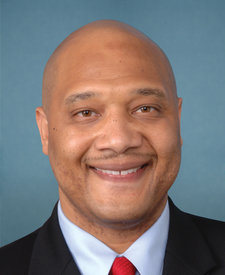
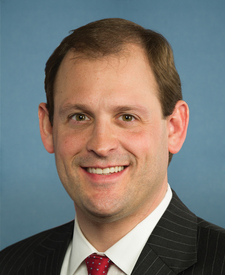
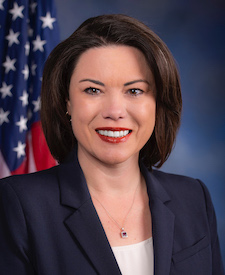
Legislative Progress
In CommitteeMs. Van Duyne (for herself, Ms. Sewell, Mrs. Miller of …
Referred to the House Committee on Ways and Means.
Introduced in House
Stakeholder Effects
cui bono?How this legislation distributes effects. Mention counts reflect frequency, not effect magnitude.
Foreign exporters, Nonresident importers, Trade-remedy petitioners
Domestic manufacturers, U.S. manufacturing workers
Department of Commerce, U.S. International Trade Commission
Bill Structure & Actor Mappings
Who is "The Secretary" in each section?
We use a combination of our own taxonomy and classification in addition to large language models to assess meaning and potential beneficiaries. High confidence means strong textual evidence. Always verify with the original bill text.
Learn more about our methodology