To provide funding to summer youth employment programs to expand the availability of subsidized jobs for youths and to develop innovative program activities that improve academic, economic, and criminal justice outcomes for youths, and for other purposes.
Analysis under review: This bill has generated analysis that may be too generic or incomplete. Clause-level evidence remains available below.
Summary
What This Bill Does
This bill creates a new federal program to fund summer jobs for young people under age 25. It authorizes $200-240 million per year from 2026-2030 (about $1.1 billion total) for grants to states, cities, and nonprofits to run summer employment programs that include job training, mentoring, and career counseling.
Who Benefits and How
Young people, especially in areas with high unemployment and crime, benefit from paid summer jobs at minimum wage or higher for at least 4 weeks, plus coaching, mentoring, and connections to future education and job opportunities. States, local governments, and nonprofits that run workforce programs can apply for competitive grants. Employers who participate receive training and technical assistance to structure jobs for young workers.
Who Bears the Burden and How
Federal taxpayers fund the $1.1 billion program. The Department of Labor must administer the grants, establish an Advisory Board, and conduct evaluations. Grant recipients must meet detailed program requirements including mentoring, wage standards, and outcome tracking.
Key Provisions
- Creates competitive grants for summer youth employment programs paying at least minimum wage for 4+ weeks
- Prioritizes areas with high youth unemployment and violent crime rates
- Requires programs to include mentoring, job matching, career counseling, and post-program support
- Establishes an Advisory Board within the Department of Labor to oversee and evaluate programs
- Mandates rigorous impact evaluations measuring graduation rates, employment, and crime outcomes
Evidence Chain:
This summary is generated from the full bill text using AI analysis. Expand "Detailed Analysis" below for identified beneficiaries/burden bearers.
At a Glance
What This Bill Does
Authorizes over $1 billion in federal funding for summer youth employment programs to improve academic outcomes, employment rates, and reduce crime among young people.
Key Policy Areas
Workforce Development, Youth Programs, Education, Crime Prevention
Primary Purpose
Authorizes over $1 billion in federal funding for summer youth employment programs to improve academic outcomes, employment rates, and reduce crime among young people.
Policy Domains
Strengthening Communities through Summer Employment Act
Identified Gains
Contextual inference, no direct clause citation- Youth under 25
- Workforce development organizations
- State and local governments
- Nonprofit youth service organizations
- Employers participating in youth programs
Contextual inference, no direct clause citation
Identified Costs
Contextual inference, no direct clause citation- Federal taxpayers
- Department of Labor
- Grant recipients (compliance requirements)
Contextual inference, no direct clause citation
Sponsors
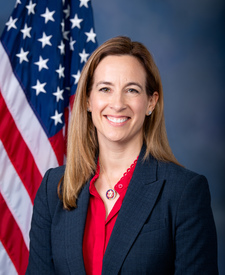

Legislative Progress
IntroducedMs. Sherrill (for herself and Mr. Fitzpatrick) introduced the following …
Stakeholder Effects
cui bono?How this legislation distributes effects. Mention counts reflect frequency, not effect magnitude.
Existing summer youth employment program operators, Grant recipient organizations, Grant recipients receiving technical assistance
Positive-direction: Existing summer youth employment program operators, Grant recipients receiving technical assistance, Nonprofit youth employment organizations, Nonprofit youth service organizations
Negative-direction: Grant recipient organizations
Department of Labor, Local workforce development boards, State and local workforce development agencies
Positive-direction: Local workforce development boards, State and local workforce development agencies, State workforce development boards
Negative-direction: Department of Labor
Independent research organizations, Nonprofit evaluation organizations, Program evaluation experts appointed to Advisory Board
Youth participants receiving enhanced services, Youth under age 25 in high-unemployment areas
Career counseling and job training providers, Community colleges offering Learn and Earn programs
Employers in in-demand industries (IT, healthcare, life sciences), Employers participating in youth programs
Bill Structure & Actor Mappings
Who is "The Secretary" in each section?
- "the_secretary"
- → Secretary of Labor
Key Definitions
Terms defined in this bill
A State (or State board) or unit of general local government (or a local board), or a nonprofit organization, or a consortium of any of such entities
The Secretary of Labor
Any State of the United States, the District of Columbia, the Commonwealth of Puerto Rico, the Virgin Islands, Guam, American Samoa, and the Commonwealth of the Northern Mariana Islands
Have the meanings given such terms in section 3 of the Workforce Innovation and Opportunity Act (29 U.S.C. 3102)
We use a combination of our own taxonomy and classification in addition to large language models to assess meaning and potential beneficiaries. High confidence means strong textual evidence. Always verify with the original bill text.
Learn more about our methodology