To amend chapter 8 of title 5, United States Code, to provide that major rules of the executive branch shall have no force or effect unless a joint resolution of approval is enacted into law.
Analysis under review: This bill has generated analysis that may be too generic or incomplete. Clause-level evidence remains available below.
Summary
What This Bill Does
The REINS Act requires Congress to vote on and approve all major federal regulations before they can take effect. Currently, federal agencies can issue regulations after a public comment period without Congressional approval. This bill changes that by requiring a joint resolution of approval from both the House and Senate for any rule with an annual economic impact of $100 million or more.
Who Benefits and How
Industries and businesses benefit significantly, as they gain the ability to lobby Congress to block regulations that would impose new costs or requirements on them. This creates an additional hurdle for new environmental, safety, labor, and financial regulations. Congressional members gain direct control over regulatory policy, increasing their power relative to executive agencies.
Who Bears the Burden and How
Federal regulatory agencies (EPA, OSHA, SEC, etc.) face a major new procedural burden - they must submit detailed reports to Congress and wait for approval before major rules take effect. Public interest and consumer groups may find it harder to see protective regulations implemented, as Congress could simply decline to vote on rules. The general public may experience delays in health, safety, and environmental protections that would otherwise be implemented by agencies.
Key Provisions
- Major rules (\M+ economic impact) cannot take effect until Congress passes a joint resolution of approval
- Agencies must submit cost-benefit analyses, job impact studies, and other data to Congress and GAO before rules take effect
- Creates expedited procedures for Congressional consideration with strict timelines
- Nonmajor rules can be disapproved by Congress through a separate procedure
- Exempts monetary policy rules by the Federal Reserve
Evidence Chain:
This summary is generated from the full bill text using AI analysis. Expand "Detailed Analysis" below for identified beneficiaries/burden bearers.
At a Glance
What This Bill Does
Requires Congressional approval before major federal regulations can take effect, fundamentally shifting regulatory authority from executive agencies back to Congress.
Key Policy Areas
Government Operations, Regulatory Policy, Administrative Law
Primary Purpose
Requires Congressional approval before major federal regulations can take effect, fundamentally shifting regulatory authority from executive agencies back to Congress.
Policy Domains
Chapter 8 - Congressional Review
Identified Gains
Contextual inference, no direct clause citation- Regulated industries
- Business interests
- Congressional members
Contextual inference, no direct clause citation
Identified Costs
Contextual inference, no direct clause citation- Federal regulatory agencies
- Public interest groups
- Environmental/consumer advocates
Contextual inference, no direct clause citation
Sponsors



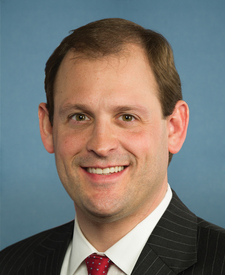

Legislative Progress
IntroducedMrs. Cammack (for herself, Mr. Edwards, Mr. Higgins of Louisiana, …
Stakeholder Effects
cui bono?How this legislation distributes effects. Mention counts reflect frequency, not effect magnitude.
Comptroller General, Congress, Congress (legislative branch)
Positive-direction: Congress, Congress (legislative branch), Federal courts
Negative-direction: Comptroller General, Federal regulatory agencies, Government Accountability Office
Businesses subject to federal regulation, Industries facing rules with 100M+ economic impact, Large corporations in heavily regulated industries
Consumer protection advocates, Environmental advocacy groups, Public interest litigants
Financial markets, Financial services industry
Federal Open Market Committee, Federal Reserve Board of Governors
Bill Structure & Actor Mappings
Who is "The Secretary" in each section?
- "federal_agency"
- → Any federal agency as defined in 5 USC 551(1)
- "the_administrator"
- → Administrator of the Office of Information and Regulatory Affairs (OIRA)
- "the_comptroller_general"
- → Comptroller General of the United States (GAO)
Key Definitions
Terms defined in this bill
Any agency as that term is defined in section 551(1) of title 5 USC
Any rule, including an interim final rule, that has resulted in or is likely to result in: (A) an annual effect on the economy of \ million or more; (B) a major increase in costs or prices for consumers, individual industries, Federal, State, or local government agencies, or geographic regions; or (C) significant adverse effects on competition, employment, investment, productivity, innovation, or the ability of United States-based enterprises to compete with foreign-based enterprises
Any rule that is not a major rule
As defined in section 551, excluding rules of particular applicability, agency management/personnel rules, and agency organization/procedure rules that do not substantially affect non-agency parties
We use a combination of our own taxonomy and classification in addition to large language models to assess meaning and potential beneficiaries. High confidence means strong textual evidence. Always verify with the original bill text.
Learn more about our methodology