John R. Lewis Voting Rights Advancement Act of 2025
Summary
What This Bill Does
The John R. Lewis Voting Rights Advancement Act of 2025 is a comprehensive Voting Rights Act enforcement bill. It updates section 2 vote-dilution, denial, and abridgment standards; creates a retrogression rule for voting changes after January 1, 2021; establishes new coverage criteria for States and political subdivisions based on voting-rights violations over 25 years; requires preclearance for covered practices tied to demographic and language-minority characteristics; mandates public notice for federal-election voting changes made within 180 days of an election; allows aggrieved persons as well as the Attorney General to sue; creates a preventive-relief standard; authorizes Attorney General documentary demands; defines Indian lands, Indian tribes, and related voting contexts; clarifies attorneys' fees; and provides grants to small jurisdictions for notice compliance.
Who Benefits and How
Voters of color benefit because vote dilution, denial, abridgment, and retrogression claims receive clearer federal standards. Language minority communities benefit because covered-practice preclearance and definitions protect communities needing language-access safeguards. Tribal communities benefit because the bill defines Indian lands and tribal governments for Voting Rights Act enforcement. Civil rights attorneys benefit because aggrieved persons can bring enforcement actions and seek preventive relief. Small jurisdictions benefit from grants that help pay for notice obligations under the Voting Rights Act.
Who Bears the Burden and How
State election agencies with repeated voting-rights violations must obtain preclearance before implementing covered voting changes. County election offices must identify covered practices and publish accessible notices for late-cycle federal-election changes. Department of Justice Civil Rights Division attorneys must make coverage determinations, enforce preclearance, and process information demands. Bureau of the Census staff must support determinations involving voting-age population and demographic characteristics. Political subdivision clerks under coverage bear compliance costs for litigation, preclearance submissions, notice, and record production.
Key Provisions
- Amends section 2 of the Voting Rights Act to clarify vote-dilution and discriminatory-effect claims.
- Creates a retrogression standard for voting changes that diminish protected voters' electoral ability.
- Restores preclearance coverage formulas based on recent voting-rights violations by States and political subdivisions.
- Requires public notice for federal-election voting changes made within 180 days of an election.
- Authorizes aggrieved persons, DOJ enforcement tools, attorneys' fees, and grants for small jurisdictions.
Evidence Chain:
This summary is generated from the full bill text using AI analysis. Expand "Detailed Analysis" below for identified beneficiaries/burden bearers with clause-level evidence links.
At a Glance
What This Bill Does
Rebuilds Voting Rights Act protections by updating vote-dilution and retrogression standards, restoring preclearance formulas, requiring notice of voting changes, expanding private enforcement, and funding small-jurisdiction compliance.
Key Policy Areas
Voting Rights, Civil Rights, Elections
Primary Purpose
Rebuilds Voting Rights Act protections by updating vote-dilution and retrogression standards, restoring preclearance formulas, requiring notice of voting changes, expanding private enforcement, and funding small-jurisdiction compliance.
Policy Domains
Resolution provisions
Identified Gains
- Voters of color
- Language minority communities
- Tribal communities
- Civil rights attorneys
- Small jurisdictions
Identified Costs
- State election agencies
- County election offices
- DOJ Civil Rights Division attorneys
- Bureau of the Census staff
- Political subdivision clerks
Sponsors
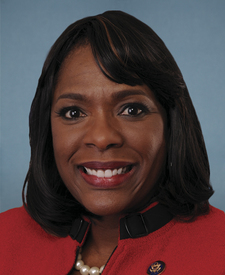

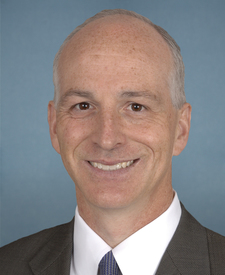

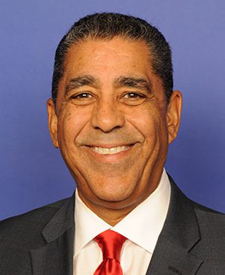
Legislative Progress
In CommitteeMs. Sewell (for herself, Mr. Jeffries, Ms. Clark of Massachusetts, …
Referred to the House Committee on the Judiciary.
Introduced in House
Stakeholder Effects
cui bono?How this legislation distributes effects. Mention counts reflect frequency, not effect magnitude.
County election offices, DOJ Civil Rights Division attorneys, State election agencies
Positive-direction: Tribal communities
Negative-direction: County election offices, DOJ Civil Rights Division attorneys, State election agencies
Bill Structure & Actor Mappings
Who is "The Secretary" in each section?
We use a combination of our own taxonomy and classification in addition to large language models to assess meaning and potential beneficiaries. High confidence means strong textual evidence. Always verify with the original bill text.
Learn more about our methodology