Modern Worker Empowerment Act
Summary
What This Bill Does
The Modern Worker Empowerment Act changes federal labor classification rules. It amends the Fair Labor Standards Act so an individual is treated as an independent contractor rather than an employee if the hiring person does not exercise significant control over the details of how the work is performed, apart from control over the final result, and the worker has entrepreneurial opportunities and risks such as using managerial skill, business acumen, or professional judgment. The bill says several factors may not be used to classify someone as an employee: requiring compliance with legal, statutory, or regulatory requirements; requiring health and safety standards stricter than otherwise applicable standards; requiring insurance; or requiring contractually agreed performance standards such as deadlines. It then applies the same FLSA test to employee classification under the National Labor Relations Act. The amendments apply to determinations made on or after enactment.
Who Benefits and How
Gig-economy platforms, franchisors, contractors, and businesses using independent workers benefit because the bill narrows federal employee-classification tests and prevents certain control-like requirements from counting against contractor status. Independent workers who prefer contractor status benefit from a federal test that emphasizes entrepreneurial discretion and control over work details. Businesses that require safety, insurance, legal compliance, or deadlines benefit because those requirements could no longer by themselves support employee status. Labor-law defendants benefit because the same FLSA test applies under the NLRA, reducing variation across federal statutes.
Who Bears the Burden and How
Workers seeking employee status bear a higher burden because some common indicators of company control are excluded from the classification analysis. The Department of Labor and National Labor Relations Board must apply the new statutory test in investigations, guidance, and enforcement. Unions and worker advocates bear a burden because fewer workers may qualify as employees for federal wage-and-hour protections or NLRA organizing rights. Courts must interpret terms such as significant control, entrepreneurial opportunities, and entrepreneurial risks. States with stricter classification rules may face pressure from businesses seeking federal-law consistency, although the bill directly changes federal law.
Key Provisions
- Creates an FLSA independent-contractor test based on lack of significant control over work details and entrepreneurial opportunity or risk.
- Excludes legal-compliance, heightened health and safety, insurance, and deadline requirements from proving employee status.
- Applies the FLSA independent-contractor test to National Labor Relations Act employee classification.
- Applies to classification determinations made on or after enactment.
- Provides businesses a clearer federal safe harbor for contractor relationships that include compliance, safety, insurance, or deadline terms.
- Requires federal labor enforcers and courts to focus on work-detail control and entrepreneurial opportunity rather than ordinary contract safeguards.
Evidence Chain:
This summary is generated from the full bill text using AI analysis. Expand "Detailed Analysis" below for identified beneficiaries/burden bearers with clause-level evidence links.
At a Glance
What This Bill Does
Adds a federal independent-contractor test to the Fair Labor Standards Act and applies the same test under the National Labor Relations Act, treating a worker as an independent contractor when the hiring person lacks significant control over work details and the worker has entrepreneurial opportunities and risks, while barring several safety, insurance, legal-compliance, and performance-standard factors from proving employee status.
Key Policy Areas
Labor, Employment, Business Regulation
Primary Purpose
Adds a federal independent-contractor test to the Fair Labor Standards Act and applies the same test under the National Labor Relations Act, treating a worker as an independent contractor when the hiring person lacks significant control over work details and the worker has entrepreneurial opportunities and risks, while barring several safety, insurance, legal-compliance, and performance-standard factors from proving employee status.
Policy Domains
House resolution provisions
Identified Gains
- Gig-economy platforms
- Franchisors
- Businesses using independent workers
- Independent workers preferring contractor status
- Labor-law defendants
Identified Costs
- Workers seeking employee status
- Department of Labor
- National Labor Relations Board
- Unions
- Worker advocates
- Courts
Sponsors




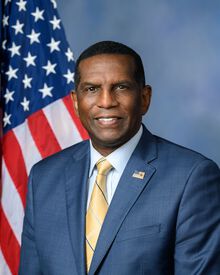
Legislative Progress
ReportedPlaced on the Union Calendar, Calendar No. 431.
Reported (Amended) by the Committee on Education and Workforce. H. …
Additional sponsors: Mr. Kean, Mr. Grothman, Ms. Stefanik, Mr. Burlison, …
Placed on the Union Calendar, Calendar No. 431.
Committee Consideration and Mark-up Session Held
Ordered to be Reported in the Nature of a Substitute …
Introduced in House
Referred to the House Committee on Education and Workforce.
Mr. Kiley of California (for himself, Mr. Rutherford, Mr. Moolenaar, …
Stakeholder Effects
cui bono?How this legislation distributes effects. Mention counts reflect frequency, not effect magnitude.
Businesses using independent workers, Independent workers preferring contractor status, Workers seeking employee status
Positive-direction: Businesses using independent workers, Independent workers preferring contractor status
Negative-direction: Workers seeking employee status
Department of Labor, National Labor Relations Board
Bill Structure & Actor Mappings
Who is "The Secretary" in each section?
- "dol"
- → Department of Labor
- "nlrb"
- → National Labor Relations Board
We use a combination of our own taxonomy and classification in addition to large language models to assess meaning and potential beneficiaries. High confidence means strong textual evidence. Always verify with the original bill text.
Learn more about our methodology