Honoring Our Fallen Heroes Act of 2025
Summary
What This Bill Does
The Honoring Our Fallen Heroes Act updates public safety officer benefits for cancer-related deaths and disabilities. It defines carcinogens by reference to International Agency for Research on Cancer Group 1 or Group 2A agents reasonably linked to exposure-related cancer, lists covered cancers including bladder, brain, breast, cervical, colon, colorectal, esophageal, kidney, leukemia, lung, melanoma, mesothelioma, multiple myeloma, non-Hodgkin lymphoma, ovarian, prostate, skin, stomach, testicular, thyroid, WTC-related health conditions, and later additions. It also adds technical amendments to the Safeguarding America's First Responders Act defining line-of-duty action and applying the change to death and disability claims on or after January 1, 2020, with a three-year filing window after enactment for newly covered claims.
Who Benefits and How
Families of fallen public safety officers benefit if exposure-related cancer deaths qualify for federal benefits. Disabled public safety officers benefit if cancer-related disability claims fit the expanded line-of-duty framework. Firefighters and law enforcement officers benefit from recognition that carcinogen exposure can cause covered line-of-duty harm. Public safety unions benefit from a broader benefits definition for members exposed to carcinogens during duty.
Who Bears the Burden and How
The Bureau of Justice Assistance Public Safety Officers' Benefits office must evaluate more cancer and exposure-related claims. Federal taxpayers bear the cost of additional death and disability benefits for qualifying claims. Claim reviewers must apply cancer definitions, IARC classifications, WTC-related conditions, and retroactive filing rules. Public safety agencies must document line-of-duty actions and exposure history for affected officers.
Key Provisions
- Adds exposure-related cancer concepts to public safety officer benefit rules.
- Expands covered cancers by incorporating WTC-related health conditions and later updates.
- Provides a clarified line-of-duty action definition for Safeguarding America's First Responders Act claims.
- Authorizes certain death and disability claims dating back to January 1, 2020, with a three-year filing window.
Evidence Chain:
This summary is generated from the full bill text using AI analysis. Expand "Detailed Analysis" below for identified beneficiaries/burden bearers with clause-level evidence links.
At a Glance
What This Bill Does
Expands public safety officer death and disability benefits for exposure-related cancers and clarifies line-of-duty action coverage for claims dating back to January 1, 2020.
Key Policy Areas
Public Safety, Benefits, Health Care
Primary Purpose
Expands public safety officer death and disability benefits for exposure-related cancers and clarifies line-of-duty action coverage for claims dating back to January 1, 2020.
Policy Domains
Resolution provisions
Identified Gains
- Families of fallen public safety officers
- Disabled public safety officers
- Firefighters
- Public safety unions
Identified Costs
- BJA benefits office
- Federal taxpayers
- Claim reviewers
- Public safety agencies
Sponsors
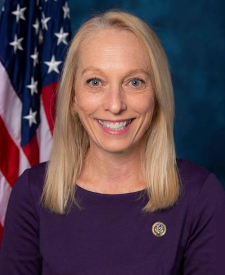




Legislative Progress
In CommitteeMs. Scanlon (for herself, Mr. Gimenez, Mr. Fitzpatrick, and Mr. …
Referred to the House Committee on the Judiciary.
Introduced in House
Stakeholder Effects
cui bono?How this legislation distributes effects. Mention counts reflect frequency, not effect magnitude.
Disabled public safety officers, Families of fallen public safety officers
Bill Structure & Actor Mappings
Who is "The Secretary" in each section?
We use a combination of our own taxonomy and classification in addition to large language models to assess meaning and potential beneficiaries. High confidence means strong textual evidence. Always verify with the original bill text.
Learn more about our methodology