ANCHOR Act
Summary
What This Bill Does
Requires the National Science Foundation to develop a plan to improve cybersecurity and telecommunications capabilities across the U.S. Academic Research Fleet.
Who Benefits and How
Research universities, vessel operators, and the scientific community could gain a clearer roadmap for securing research vessels and improving onboard communications and data systems.
Who Bears the Burden and How
NSF must develop the plan in consultation with agencies and fleet operators, and future implementation may require additional technology spending and operational adjustments.
Key Provisions
- Requires an NSF plan for cybersecurity and telecommunications improvements in the U.S. Academic Research Fleet.
- Directs assessment of vessel-by-vessel needs and vulnerabilities.
- Calls for consultation with relevant agencies and vessel operators.
- Includes cost and capability considerations for future upgrades.
Evidence Chain:
This summary is generated from the full bill text using AI analysis. Expand "Detailed Analysis" below for identified beneficiaries/burden bearers.
At a Glance
What This Bill Does
Requires the National Science Foundation to develop a plan to improve cybersecurity and telecommunications capabilities across the U.S. Academic Research Fleet.
Key Policy Areas
Research, Cybersecurity, Maritime, Science
Primary Purpose
Requires the National Science Foundation to develop a plan to improve cybersecurity and telecommunications capabilities across the U.S. Academic Research Fleet.
Policy Domains
Main Provisions
Identified Gains
Contextual inference, no direct clause citation- Research fleet operators, universities, and the broader scientific community
Contextual inference, no direct clause citation
Identified Costs
Contextual inference, no direct clause citation- NSF administrators and vessel operators responsible for planning and eventual implementation work
Contextual inference, no direct clause citation
Sponsors


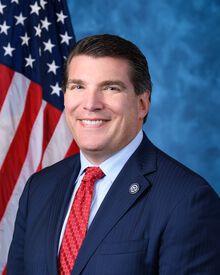


Legislative Progress
Passed HouseReceived; read twice and referred to the Committee on Commerce, …
Passed House (inferred from eh version)
Received in the Senate and Read twice and referred to …
Considered as unfinished business. (consideration: CR H2168)
Motion to reconsider laid on the table Agreed to without …
On motion to suspend the rules and pass the bill …
Passed/agreed to in House: On motion to suspend the rules …
Considered under suspension of the rules. (consideration: CR H2113-2115)
At the conclusion of debate, the chair put the question …
DEBATE - The House proceeded with forty minutes of debate …
Stakeholder Effects
cui bono?How this legislation distributes effects. Mention counts reflect frequency, not effect magnitude.
Satellite communications equipment providers
On Motion to Suspend the Rules and Pass
ANCHOR Act
Bill Structure & Actor Mappings
Who is "The Secretary" in each section?
We use a combination of our own taxonomy and classification in addition to large language models to assess meaning and potential beneficiaries. High confidence means strong textual evidence. Always verify with the original bill text.
Learn more about our methodology