Operation Lone Star Reimbursement Act
Summary
What This Bill Does
The Operation Lone Star Reimbursement Act reimburses Texas for certain state-funded southern border security expenses. The findings state that Texas spent $11.1 billion in taxpayer funds on Operation Lone Star and related border security from 2021 through 2025, including apprehensions, denied illegal entries, criminal arrests, fentanyl seizures, and more than 240 miles of border barriers. The Governor of Texas must submit an application listing expenses and total costs to the Secretaries of Homeland Security and Treasury. DHS must review the application within 120 days, determine which expenses are eligible, and report the decision to Congress. Within 60 days after DHS reports the decision, Treasury must pay Texas the reimbursable amount from Treasury funds not otherwise appropriated.
Who Benefits and How
The State of Texas benefits because eligible Operation Lone Star expenses can be reimbursed by the federal government. Texas taxpayers benefit if federal reimbursement offsets state funds already spent on border security. Texas border agencies benefit if reimbursed funds replenish accounts used for barriers, enforcement, and related operations. Border-security advocates benefit from congressional validation of state spending on southern border enforcement.
Who Bears the Burden and How
The Department of Homeland Security must review Texas's application, decide eligible expenses, and report to Congress within 120 days. The Treasury Department must pay the reimbursable amount within 60 days after DHS reports its decision. Federal taxpayers bear the cost of reimbursing eligible Texas border-security expenses. Other states may bear political disadvantage if the bill reimburses Texas specifically rather than creating a general program.
Key Provisions
- Requires the Governor of Texas to apply for reimbursement of 2021 through 2025 border-security expenses.
- Requires DHS to determine eligible reimbursable expenses within 120 days and report to Congress.
- Directs Treasury to pay Texas within 60 days after the DHS reimbursement decision.
- Provides reimbursement from Treasury amounts not otherwise appropriated for eligible Operation Lone Star costs.
Evidence Chain:
This summary is generated from the full bill text using AI analysis. Expand "Detailed Analysis" below for identified beneficiaries/burden bearers with clause-level evidence links.
At a Glance
What This Bill Does
Requires DHS to review Texas border-security expenses from 2021 through 2025 and Treasury to reimburse eligible Operation Lone Star costs from otherwise unappropriated Treasury amounts.
Key Policy Areas
Immigration, Border Security, Intergovernmental Finance
Primary Purpose
Requires DHS to review Texas border-security expenses from 2021 through 2025 and Treasury to reimburse eligible Operation Lone Star costs from otherwise unappropriated Treasury amounts.
Policy Domains
Resolution provisions
Identified Gains
- State of Texas
- Texas taxpayers
- Texas border agencies
- Border-security advocates
Identified Costs
- Department of Homeland Security
- Treasury Department
- Federal taxpayers
- Other states
Sponsors

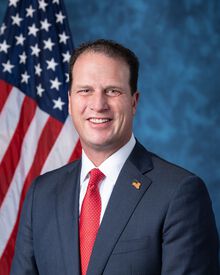



Legislative Progress
In CommitteeMr. Williams of Texas (for himself, Mr. Crenshaw, Mr. Self, …
Referred to the Subcommittee on Border Security and Enforcement.
Referred to the Committee on the Judiciary, and in addition …
Introduced in House
Stakeholder Effects
cui bono?How this legislation distributes effects. Mention counts reflect frequency, not effect magnitude.
Taxpayers, Texas taxpayers
Positive-direction: Texas taxpayers
Negative-direction: Taxpayers
Bill Structure & Actor Mappings
Who is "The Secretary" in each section?
We use a combination of our own taxonomy and classification in addition to large language models to assess meaning and potential beneficiaries. High confidence means strong textual evidence. Always verify with the original bill text.
Learn more about our methodology