To require the release to the public of all documents, reports, and other records relating to unidentified anomalous phenomena, and for other purposes.
Analysis under review: This bill has generated analysis that may be too generic or incomplete. Clause-level evidence remains available below.
Summary
What This Bill Does
The UAP Transparency Act requires the President to order all federal agencies that have documents about unidentified anomalous phenomena (UAPs, commonly known as UFOs) to declassify and publish those records on public websites within 270 days. The President must also report to Congress quarterly on which agencies are complying with this requirement.
Who Benefits and How
The general public, researchers, and journalists benefit by gaining access to previously classified UAP information. Scientists and academic institutions studying aerospace phenomena gain access to government data that could advance their research. Media companies benefit from new content opportunities as declassified UAP information becomes available for reporting and analysis.
Who Bears the Burden and How
Federal intelligence agencies (CIA, NSA, DIA) and the Department of Defense face significant compliance burdens, as they must review and declassify potentially thousands of documents within 270 days. Classification review contractors will see increased workload (and revenue) from the massive declassification effort. Defense contractors with UAP-related research programs face potential risks if their classified work is exposed to public scrutiny.
Key Provisions
- Mandates declassification of all UAP-related documents within 270 days of enactment
- Requires each federal agency with UAP records to post them on publicly accessible websites
- Establishes quarterly presidential reporting to House Oversight and Senate Homeland Security committees
- Adopts the UAP definition from the 2022 National Defense Authorization Act
- Creates no exemptions or carve-outs for specific agencies or types of classified information
Evidence Chain:
This summary is generated from the full bill text using AI analysis. Expand "Detailed Analysis" below for identified beneficiaries/burden bearers.
At a Glance
What This Bill Does
Requires the President to direct federal agencies to declassify and publicly release all documents, reports, and records relating to unidentified anomalous phenomena (UAPs).
Who Benefits
- Researchers and scientists studying UAPs
- Journalists and media organizations
- General public seeking UAP information
Who Bears Costs
- Federal agencies with UAP records (compliance burden)
- Intelligence community (potential national security concerns)
- Department of Defense
Key Policy Areas
Government Transparency, National Security, Defense, Congressional Oversight
Primary Purpose
Requires the President to direct federal agencies to declassify and publicly release all documents, reports, and records relating to unidentified anomalous phenomena (UAPs).
Policy Domains
Legislative Strategy
"Mandate government transparency and declassification of UAP information through presidential directive with Congressional oversight"
Identified Gains
- Researchers and scientists studying UAPs
- Journalists and media organizations
- General public seeking UAP information
- Congressional oversight committees
Identified Costs
- Federal agencies with UAP records (compliance burden)
- Intelligence community (potential national security concerns)
- Department of Defense
- Classification review personnel
Sponsors
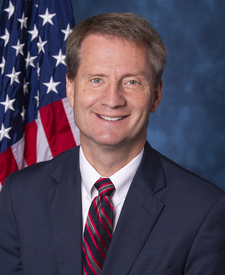
Legislative Progress
IntroducedMr. Burchett introduced the following bill; which was referred to …
Stakeholder Effects
cui bono?How this legislation distributes effects. Mention counts reflect frequency, not effect magnitude.
Classification review contractors and personnel, Defense contractors with UAP-related research programs, Department of Defense and military branches with UAP data
Positive-direction: Classification review contractors and personnel
Negative-direction: Department of Defense and military branches with UAP data
Federal intelligence agencies (CIA, NSA, DIA) with UAP records
Bill Structure & Actor Mappings
Who is "The Secretary" in each section?
- "the_president"
- → President of the United States
- "house_committee"
- → House Committee on Oversight and Accountability
- "senate_committee"
- → Senate Committee on Homeland Security and Governmental Affairs
- "federal_departments_agencies"
- → All Federal departments and agencies in possession of UAP-related documents
Key Definitions
Terms defined in this bill
Has the meaning given such term in section 1683 of the National Defense Authorization Act for Fiscal Year 2022 (50 U.S.C. 3373)
We use a combination of our own taxonomy and classification in addition to large language models to assess meaning and potential beneficiaries. High confidence means strong textual evidence. Always verify with the original bill text.
Learn more about our methodology