To support the national defense and economic security of the United States by supporting vessels, ports, and shipyards of the United States and the U.S. maritime workforce.
Analysis under review: This bill has generated analysis that may be too generic or incomplete. Clause-level evidence remains available below.
Summary
What This Bill Does
This bill, To support the national defense and economic security of the United States by supporting vessels, ports, and shipyards of the United States and the U.S. maritime workforce., changes federal law or congressional policy affecting defense agencies, service members, and defense contractors. The main policy domain is Defense, Government Operations, Trade.
Who Benefits and How
defense agencies, service members, and defense contractors may benefit from new authority, funding, eligibility, regulatory clarity, or reduced risk created by the bill.
Who Bears the Burden and How
federal implementing agencies, defense agencies, service members, and defense contractors may take on implementation duties, reporting obligations, compliance costs, or oversight responsibilities.
Key Provisions
- Section S1: 1. Short title; table of contents This Act may be cited as the Shipbuilding and Harbor Infrastructure for Prosperity and Security for America Act of 2024 or...
- Section ida7a85e80e09d4ef4b1a3180572cea034: 2. Findings Congress finds the following: Strategic sealift, made up of Government and commercial vessels and mariners, is a critical capability for executing...
- Section id83c75b2afcfe4859b4f78e39b5dbb375: 3. Sense of Congress It is the sense of Congress that the United States must— create a more favorable domestic and global maritime environment for vessels of...
- Section id35ee18a6ba5b4a2e9f22d5aebcf8c98f: 4. Definitions In this Act: The term appropriate committees of Congress means— the Committee on Armed Services, the Committee on Commerce, Science, and...
- Section id394684e353ca4c62844909b4ea4fb022: 101. Maritime Security Advisor; Maritime Security Board Chapter 504 of part A of subtitle V of title 46, United States Code, is amended— by striking the...
Evidence Chain:
This summary is generated from the full bill text using AI analysis. Expand "Detailed Analysis" below for identified beneficiaries/burden bearers with clause-level evidence links.
At a Glance
What This Bill Does
This bill, To support the national defense and economic security of the United States by supporting vessels, ports, and shipyards of the United States and the U.S. maritime workforce., changes federal law or congressional policy affecting defense agencies, service members, and defense contractors.
Key Policy Areas
Defense, Government Operations, Trade
Primary Purpose
This bill, To support the national defense and economic security of the United States by supporting vessels, ports, and shipyards of the United States and the U.S. maritime workforce., changes federal law or congressional policy affecting defense agencies, service members, and defense contractors.
Policy Domains
Whole bill
Identified Gains
- defense agencies, service members, and defense contractors
Identified Costs
- federal implementing agencies
- defense agencies, service members, and defense contractors
Sponsors

Legislative Progress
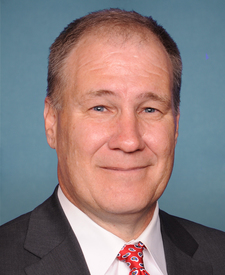
IntroducedMr. Kelly of Mississippi (for himself and Mr. Garamendi) introduced …
Impact analysis is available but no clear stakeholder effects identified. View clause-level analysis →
Bill Structure & Actor Mappings
Who is "The Secretary" in each section?
- "the_commission"
- → The commission identified in the operative section
- "secretary_of_labor"
- → Secretary of Labor
- "administrator_of_epa"
- → Administrator of the Environmental Protection Agency
- "secretary_of_defense"
- → Secretary of Defense
- "secretary_of_commerce"
- → Secretary of Commerce
- "secretary_of_treasury"
- → Secretary of the Treasury
- "secretary_of_agriculture"
- → Secretary of Agriculture
- "secretary_of_transportation"
- → Secretary of Transportation
- "secretary_of_homeland_security"
- → Secretary of Homeland Security
Key Definitions
Terms defined in this bill
an individual who— served as a full-time, credentialed United States Merchant Mariner for not less than 10 years
any foreign entity that is— designated as a foreign terrorist organization by the Secretary of State under section 219 of the Immigration and Nationality Act (8 U.S.C. 1189)
an individual who— served as a full-time, credentialed United States Merchant Mariner for not less than 10 years
an investment to construct, modernize, or expand— a shipyard of the United States that constructs or repairs civilian or military vessels
a payment in an amount that equals 50 percent of— the percentage of the remaining useful life of the vessel, calculated using 21 years as the maximum useful life of the vessel
an investment to construct, modernize, or expand— a shipyard of the United States that constructs or repairs civilian or military vessels
a payment in an amount that equals 50 percent of— the percentage of the remaining useful life of the vessel, calculated using 21 years as the maximum useful life of the vessel
the Strategic Commercial Fleet established under section 53602. The term foreign commerce means— commerce or trade between the United States, its territories or possessions, or the District of Columbia, and a foreign country
a solution to an operational challenge that can significantly leverage commercial innovation or external capital with minimal dependencies on fielded systems. The term maritime industry includes— shipbuilders and ship repair facilities
We use a combination of our own taxonomy and classification in addition to large language models to assess meaning and potential beneficiaries. High confidence means strong textual evidence. Always verify with the original bill text.
Learn more about our methodology