To build on America’s spirit of service to nurture, promote, and expand a culture of service to secure the Nation’s future, address critical needs of the Nation, and strengthen the civic fabric of American society.
Analysis under review: This bill has generated analysis that may be too generic or incomplete. Clause-level evidence remains available below.
Summary
What This Bill Does
This bill, To build on America’s spirit of service to nurture, promote, and expand a culture of service to secure the Nation’s future, address critical needs of the Nation, and strengthen the civic fabric of American society., changes federal law or congressional policy affecting defense agencies, service members, and defense contractors. The main policy domain is Defense, Education, Government Operations.
Who Benefits and How
defense agencies, service members, and defense contractors may benefit from new authority, funding, eligibility, regulatory clarity, or reduced risk created by the bill.
Who Bears the Burden and How
federal implementing agencies, defense agencies, service members, and defense contractors may take on implementation duties, reporting obligations, compliance costs, or oversight responsibilities.
Key Provisions
- Section H240A615E86E8405298E26AF681399E3D: 1. Short title This Act may be cited as the Inspire to Serve Act of 2024.
- Section HD68A35904AD5443C89C608CF45D31993: 2. Table of contents The table of contents for this Act is as follows:
- Section H395E00178B4D4D858643685121555AC1: 101. Civic education fund In this section: The term applied civics means an educational program applying service-learning methods to provide students with...
- Section HCD091EDEA1074F0BAC87206E669B32F7: 102. Service-learning fund Section 119(a)(1) of the National and Community Service Act of 1990 (42 U.S.C. 12563(a)(1)) is amended— by striking a public or...
- Section H277D76B075C54799876804B9B3396B14: 103. National civics assessment Section 1111 of the Elementary and Secondary Education Act of 1965 (20 U.S.C. 6311) is amended— in subsection (g)(2)(D), by...
Evidence Chain:
This summary is generated from the full bill text using AI analysis. Expand "Detailed Analysis" below for identified beneficiaries/burden bearers with clause-level evidence links.
At a Glance
What This Bill Does
This bill, To build on America’s spirit of service to nurture, promote, and expand a culture of service to secure the Nation’s future, address critical needs of the Nation, and strengthen the civic fabric of American society., changes federal law or congressional policy affecting defense agencies, service members, and defense contractors.
Key Policy Areas
Defense, Education, Government Operations
Primary Purpose
This bill, To build on America’s spirit of service to nurture, promote, and expand a culture of service to secure the Nation’s future, address critical needs of the Nation, and strengthen the civic fabric of American society., changes federal law or congressional policy affecting defense agencies, service members, and defense contractors.
Policy Domains
Whole bill
Identified Gains
- defense agencies, service members, and defense contractors
Identified Costs
- federal implementing agencies
- defense agencies, service members, and defense contractors
Sponsors
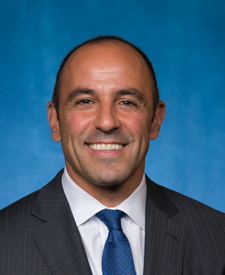
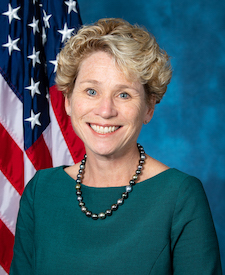

Legislative Progress
IntroducedMr. Panetta (for himself, Ms. Houlahan, and Mr. Bacon) introduced …
Impact analysis is available but no clear stakeholder effects identified. View clause-level analysis →
Bill Structure & Actor Mappings
Who is "The Secretary" in each section?
- "the_commission"
- → The commission identified in the operative section
- "secretary_of_labor"
- → Secretary of Labor
- "secretary_of_defense"
- → Secretary of Defense
- "secretary_of_commerce"
- → Secretary of Commerce
- "secretary_of_education"
- → Secretary of Education
- "secretary_of_homeland_security"
- → Secretary of Homeland Security
- "secretary_of_health_and_human_services"
- → Secretary of Health and Human Services
Key Definitions
Terms defined in this bill
an individual— who serves in a court of the United States or the Administrative Office of the United States Courts for not more than 120 days during a 12-month period
targeted efforts to— improve education in schools for economically disadvantaged students
targeted efforts to— improve education in schools for economically disadvantaged students
participation, other than military or public service, in a program that— is designed to enhance the common good and meet the needs of communities, the States, or the United States
participation, other than military or public service, in a program that— is designed to enhance the common good and meet the needs of communities, the States, or the United States
participation, other than military service or public service, in a program that— is designed to enhance the common good and meet the needs of communities, the States, or the United States
a scholarship provided to an individual in exchange for a commitment from the individual to serve in the civil service upon— completion of requirements established by the sponsoring agency
We use a combination of our own taxonomy and classification in addition to large language models to assess meaning and potential beneficiaries. High confidence means strong textual evidence. Always verify with the original bill text.
Learn more about our methodology