To amend the Internal Revenue Code of 1986 to allow individuals with direct primary care service arrangements to remain eligible individuals for purposes of health savings accounts, and for other purposes.
Analysis under review: This bill has generated analysis that may be too generic or incomplete. Clause-level evidence remains available below.
Summary
What This Bill Does
The Primary Care Enhancement Act of 2025 changes federal tax law to allow people with Health Savings Accounts (HSAs) to sign up for Direct Primary Care (DPC) service arrangements without losing their HSA eligibility. DPC is a model where patients pay a monthly membership fee (like a subscription) directly to a primary care doctor for unlimited office visits and basic care, rather than using traditional insurance for each visit. Currently, having any health coverage besides a high-deductible health plan disqualifies you from contributing to an HSA, and the IRS has treated DPC memberships as "health coverage." This bill creates an exemption for DPC arrangements up to $150 per month ($300 for family plans), with the cap adjusted for inflation after 2026.
Who Benefits and How
Direct Primary Care physicians and clinics benefit most directly, as this removes a major obstacle preventing HSA holders from becoming DPC members. By making DPC compatible with HSAs, the bill expands the potential customer base for subscription-based primary care practices. Individuals with HSAs benefit by gaining access to affordable primary care without high deductibles—they can use their HSA for catastrophic coverage while paying $150/month for unlimited primary care visits. Health insurance companies selling high-deductible plans also benefit indirectly, as making HSAs more attractive (by allowing DPC) encourages more people to choose HSA-eligible plans.
Who Bears the Burden and How
Employers who offer DPC arrangements as a workplace benefit face new administrative burdens, as the bill requires them to report DPC fees on employees' W-2 forms starting in 2026. The IRS and Treasury Department must issue new regulations defining which services qualify as "primary care" and develop guidance on the monthly fee cap, creating additional regulatory work. Traditional fee-for-service primary care practices may face increased competition from DPC models, as this change removes a tax penalty that previously discouraged HSA holders from switching to subscription-based care.
Key Provisions
- Exempts Direct Primary Care arrangements from being treated as "health plans" under HSA rules, allowing HSA holders to maintain eligibility while paying for DPC memberships
- Caps the exemption at $150 per month for individual DPC plans and $300 per month for family plans, with inflation adjustments after 2026
- Defines qualifying DPC services as primary care only—excluding procedures requiring general anesthesia, prescription drugs (except vaccines), and most laboratory services
- Requires the Treasury Secretary to issue regulations clarifying which services count as "primary care" after consulting with the Department of Health and Human Services
- Mandates employers to report DPC fees on W-2 forms when DPC is provided as an employee benefit
- Takes effect for months beginning after December 31, 2025
Evidence Chain:
This summary is generated from the full bill text using AI analysis. Expand "Detailed Analysis" below for identified beneficiaries/burden bearers.
At a Glance
What This Bill Does
Allows individuals with Health Savings Accounts (HSAs) to use Direct Primary Care (DPC) service arrangements without disqualifying their HSA eligibility.
Who Benefits
- Direct Primary Care (DPC) providers and physicians offering subscription-based primary care
- Individuals with HSAs who want to use DPC arrangements
- Health insurance companies selling high-deductible health plans (HDHPs) paired with HSAs
Who Bears Costs
- IRS/Treasury Department (must issue new guidance and update W-2 reporting requirements)
- Employers (must track and report DPC arrangement fees on W-2 forms)
- Traditional fee-for-service primary care practices (face increased competition from DPC models)
Key Policy Areas
Healthcare, Tax, Insurance
Primary Purpose
Allows individuals with Health Savings Accounts (HSAs) to use Direct Primary Care (DPC) service arrangements without disqualifying their HSA eligibility.
Policy Domains
Legislative Strategy
"Expand access to affordable primary care by removing tax barriers that prevent HSA holders from using subscription-based direct primary care services"
Identified Gains
- Direct Primary Care (DPC) providers and physicians offering subscription-based primary care
- Individuals with HSAs who want to use DPC arrangements
- Health insurance companies selling high-deductible health plans (HDHPs) paired with HSAs
Identified Costs
- IRS/Treasury Department (must issue new guidance and update W-2 reporting requirements)
- Employers (must track and report DPC arrangement fees on W-2 forms)
- Traditional fee-for-service primary care practices (face increased competition from DPC models)
Sponsors
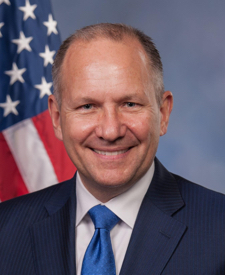
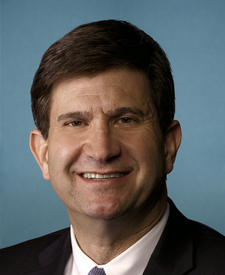
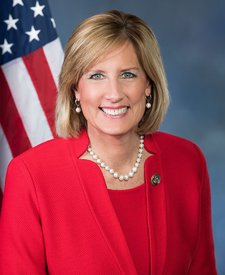


Legislative Progress
IntroducedMr. Smucker (for himself, Ms. Tenney, Mr. Schneider, Mr. Panetta, …
Stakeholder Effects
cui bono?How this legislation distributes effects. Mention counts reflect frequency, not effect magnitude.
Direct Primary Care (DPC) clinics and physicians offering subscription-based primary care
Individuals with Health Savings Accounts (HSAs) who want to use DPC services
Health insurance companies selling high-deductible health plans (HDHPs) paired with HSAs
Bill Structure & Actor Mappings
Who is "The Secretary" in each section?
- "the_secretary"
- → Secretary of the Treasury
- "secretary_of_hhs"
- → Secretary of Health and Human Services
Note: The Secretary (of the Treasury) is the primary actor, with consultation required from the Secretary of Health and Human Services for regulatory guidance on primary care services exclusions.
Key Definitions
Terms defined in this bill
Medical care that does NOT include: (I) procedures requiring general anesthesia, (II) prescription drugs (other than vaccines), and (III) laboratory services not typically administered in an ambulatory primary care setting.
An arrangement under which an individual is provided medical care (as defined in section 213(d)) consisting solely of primary care services provided by primary care practitioners (as defined in section 1833(x)(2)(A) of the Social Security Act), if the sole compensation for such care is a fixed periodic fee.
For any individual for any month, an arrangement is not a direct primary care service arrangement if the aggregate fees for all DPC arrangements exceed $150 per month ($300 for arrangements covering more than one individual).
Defined in section 1833(x)(2)(A) of the Social Security Act (referenced but not reproduced in this bill)
We use a combination of our own taxonomy and classification in addition to large language models to assess meaning and potential beneficiaries. High confidence means strong textual evidence. Always verify with the original bill text.
Learn more about our methodology