To end preferences for disadvantaged individuals and businesses in Government contracts, and for other purposes.
Analysis under review: This bill has generated analysis that may be too generic or incomplete. Clause-level evidence remains available below.
Summary
What This Bill Does
This bill removes all race- and ethnicity-based preferences from federal government contracting. It repeals the Small Business Administration's Section 8(a) program for socially and economically disadvantaged businesses, eliminates minority contracting goals at the Department of Transportation, and bans all executive agencies from considering race or ethnicity when awarding contracts.
Who Benefits and How
Small businesses that are not currently classified as socially or economically disadvantaged could see more open competition for government contracts. Federal agencies gain simplified contracting procedures by removing disadvantaged-business set-aside requirements. Businesses owned by women and veterans retain their separate preference categories.
Who Bears the Burden and How
Minority-owned small businesses that currently benefit from SBA 8(a) set-asides and race-conscious contracting goals would lose preferential access to government contracts and procurement opportunities. The Minority Business Development Agency established under the Minority Business Development Act of 2021 would be eliminated entirely.
Key Provisions
- Repeals the SBA Section 8(a) program provisions for socially and economically disadvantaged small business concerns
- Reduces the airport improvement project disadvantaged business goal from 10 percent to 5 percent and redefines eligibility to exclude race-based criteria
- Adds an explicit prohibition on racial and ethnic preferences in all government contracts and defense contracts
- Repeals the Minority Business Development Act of 2021
Evidence Chain:
This summary is generated from the full bill text using AI analysis. Expand "Detailed Analysis" below for identified beneficiaries/burden bearers.
At a Glance
What This Bill Does
Eliminates race- and ethnicity-based preferences in federal government contracting and grant programs by repealing SBA Section 8(a) disadvantaged-business provisions, removing minority contracting goals from the Department of Transportation and other agencies, and prohibiting executive agencies from considering race or ethnicity when awarding contracts.
Key Policy Areas
Government Operations, Small Business, Transportation, Defense
Primary Purpose
Eliminates race- and ethnicity-based preferences in federal government contracting and grant programs by repealing SBA Section 8(a) disadvantaged-business provisions, removing minority contracting goals from the Department of Transportation and other agencies, and prohibiting executive agencies from considering race or ethnicity when awarding contracts.
Policy Domains
Whole Bill
Identified Gains
Contextual inference, no direct clause citation- Non-minority small businesses
- Federal contracting agencies
Contextual inference, no direct clause citation
Identified Costs
Contextual inference, no direct clause citation- Minority-owned small businesses
- Minority Business Development Agency
Contextual inference, no direct clause citation
Sponsors
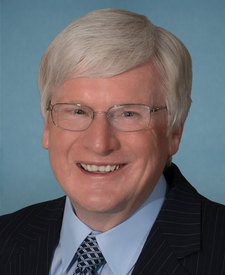


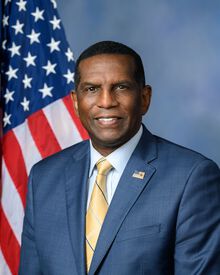

Legislative Progress
IntroducedMr. Grothman (for himself, Mrs. Luna, Mr. Owens, Mr. Tiffany, …
Stakeholder Effects
cui bono?How this legislation distributes effects. Mention counts reflect frequency, not effect magnitude.
Minority-owned businesses in airport contracting, Minority-owned businesses seeking federal contracts, Minority-owned defense subcontractors
Executive agencies, SBA
Positive-direction: SBA
Negative-direction: Executive agencies
Bill Structure & Actor Mappings
Who is "The Secretary" in each section?
- "the_secretary"
- → Secretary of Transportation
- "the_administrator"
- → Administrator of the Small Business Administration
Key Definitions
Terms defined in this bill
Redefined to mean a concern owned and controlled by women or a qualified HUBZone small business concern, removing race-based criteria.
We use a combination of our own taxonomy and classification in addition to large language models to assess meaning and potential beneficiaries. High confidence means strong textual evidence. Always verify with the original bill text.
Learn more about our methodology