To appropriate certain amounts to provide assistance under the Robert T. Stafford Disaster Relief and Emergency Assistance Act in response to Hurricane Helene, and for other purposes.
Analysis under review: This bill has generated analysis that may be too generic or incomplete. Clause-level evidence remains available below.
Summary
What This Bill Does
This bill appropriates $10 billion to FEMA for Hurricane Helene disaster relief under the Stafford Act. To pay for it, the bill rescinds $10 billion in unobligated funds that were previously allocated to the IRS under the Inflation Reduction Act of 2022. It also bars any of the disaster relief funds from being used to provide benefits to undocumented immigrants.
Who Benefits and How
Communities and individuals affected by Hurricane Helene are the primary beneficiaries, receiving $10 billion in federal disaster assistance for recovery. U.S. citizens and lawful residents in disaster areas benefit from the explicit prioritization of funds for their relief. Taxpayers benefit from a budget-neutral approach, as the spending is offset by rescinding existing IRS funds rather than adding to the deficit.
Who Bears the Burden and How
The Internal Revenue Service loses $10 billion in previously appropriated funding for enforcement, operations, and modernization, potentially reducing its capacity to audit tax returns, improve taxpayer services, and upgrade technology systems. Undocumented immigrants in disaster-affected areas are explicitly excluded from receiving any benefits -- including food, shelter, healthcare, legal services, and transportation -- funded by this bill. Tax compliance could decrease if IRS enforcement capacity is diminished.
Key Provisions
- Appropriates $10 billion to FEMA for Hurricane Helene disaster relief
- Rescinds $10 billion in unobligated IRS funds from the Inflation Reduction Act to offset the cost
- Prohibits use of any funds for benefits to individuals without lawful immigration status, including food, shelter, healthcare, legal services, and transportation
Evidence Chain:
This summary is generated from the full bill text using AI analysis. Expand "Detailed Analysis" below for identified beneficiaries/burden bearers.
At a Glance
What This Bill Does
Appropriates $10 billion to FEMA for Hurricane Helene disaster relief while offsetting the cost by rescinding $10 billion in unobligated IRS funding from the Inflation Reduction Act, and prohibits any funds from being used to assist undocumented immigrants.
Key Policy Areas
Disaster Relief, Taxation, Immigration, Government Operations
Primary Purpose
Appropriates $10 billion to FEMA for Hurricane Helene disaster relief while offsetting the cost by rescinding $10 billion in unobligated IRS funding from the Inflation Reduction Act, and prohibits any funds from being used to assist undocumented immigrants.
Policy Domains
Whole Bill
Identified Gains
Contextual inference, no direct clause citation- Hurricane Helene disaster victims
- U.S. citizens and lawful residents in disaster areas
Contextual inference, no direct clause citation
Identified Costs
Contextual inference, no direct clause citation- Internal Revenue Service
- Undocumented immigrants in disaster areas
- Federal tax compliance system
Contextual inference, no direct clause citation
Sponsors



Legislative Progress
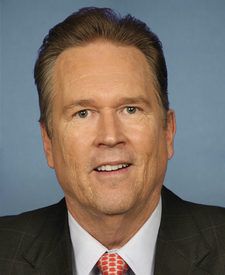
IntroducedMr. Ogles (for himself, Mr. Dunn of Florida, Mr. Bean …
Stakeholder Effects
cui bono?How this legislation distributes effects. Mention counts reflect frequency, not effect magnitude.
Hurricane Helene disaster victims, Undocumented immigrants
Positive-direction: Hurricane Helene disaster victims
Negative-direction: Undocumented immigrants
Bill Structure & Actor Mappings
Who is "The Secretary" in each section?
- "the_administrator"
- → Administrator of the Federal Emergency Management Agency
We use a combination of our own taxonomy and classification in addition to large language models to assess meaning and potential beneficiaries. High confidence means strong textual evidence. Always verify with the original bill text.
Learn more about our methodology