Providing for congressional disapproval under chapter 8 of title 5, United States Code, of the rule submitted by the Department of Labor relating to the Adverse Effect Wage Rate.
Summary
What This Bill Does
H.J.Res.154 is a Congressional Review Act disapproval resolution. It targets the Department of Labor rule relating to Adverse Effect Wage Rate Methodology for H-2A nonimmigrant farmworkers in non-range occupations and provides that the rule shall have no force or effect. The targeted wage rule affects the wage floor that H-2A agricultural employers must pay to avoid undercutting U.S. farmworker wages. The practical result is not a new replacement rule; it is a congressional veto of the agency action, which can also restrict the agency from issuing a substantially similar rule without new statutory authority.
Who Benefits and How
H-2A farm employers benefit because disapproval would remove or prevent the regulatory obligations created by the rule. Members of Congress opposing the rule benefit because the CRA provides a direct vehicle to nullify the agency action. Regulated parties benefit from clearer congressional opposition to the rule and less near-term implementation risk. Labor contractors benefit if disapproval prevents higher or revised wage calculations for temporary agricultural labor.
Who Bears the Burden and How
Department of Labor rulemaking staff must respond to congressional disapproval and may be constrained from issuing a substantially similar rule. H-2A farmworkers bear the burden if protections, standards, or program changes in the rule are blocked. Congressional oversight committees must handle the policy consequences of removing the rule without passing a replacement. Domestic farmworkers may lose wage protection if the updated methodology is blocked.
Key Provisions
- Provides congressional disapproval of the Department of Labor rule relating to Adverse Effect Wage Rate Methodology for H-2A nonimmigrant farmworkers in non-range occupations.
- Blocks the rule by declaring that it shall have no force or effect.
- Uses the Congressional Review Act rather than ordinary notice-and-comment rulemaking.
- Restricts the agency's ability to issue a substantially similar rule unless Congress authorizes it.
Evidence Chain:
This summary is generated from the full bill text using AI analysis. Expand "Detailed Analysis" below for identified beneficiaries/burden bearers.
At a Glance
What This Bill Does
Uses the Congressional Review Act to disapprove the Department of Labor rule relating to Adverse Effect Wage Rate Methodology for H-2A nonimmigrant farmworkers in non-range occupations, causing that rule to have no force or effect.
Key Policy Areas
Administrative Law, Congressional Review Act
Primary Purpose
Uses the Congressional Review Act to disapprove the Department of Labor rule relating to Adverse Effect Wage Rate Methodology for H-2A nonimmigrant farmworkers in non-range occupations, causing that rule to have no force or effect.
Policy Domains
Resolution provisions
Identified Gains
Contextual inference, no direct clause citation- H-2A farm employers
- Members of Congress opposing the rule
- Regulated parties
- Congressional oversight committees
Contextual inference, no direct clause citation
Identified Costs
Contextual inference, no direct clause citation- Department of Labor rulemaking staff
- H-2A farmworkers
- Congressional oversight committees
- Program administrators
Contextual inference, no direct clause citation
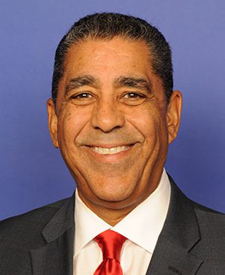
Sponsors




Legislative Progress
In CommitteeReferred to the House Committee on the Judiciary.
Introduced in House
Stakeholder Effects
cui bono?How this legislation distributes effects. Mention counts reflect frequency, not effect magnitude.
Bill Structure & Actor Mappings
Who is "The Secretary" in each section?
We use a combination of our own taxonomy and classification in addition to large language models to assess meaning and potential beneficiaries. High confidence means strong textual evidence. Always verify with the original bill text.
Learn more about our methodology