Supporting the Local Radio Freedom Act.
Summary
What This Bill Does
This resolution supports the Local Radio Freedom Act position. Its practical meaning is opposition to a new federal performance royalty, tax, fee, or other charge on local broadcast radio stations for playing sound recordings over the air. It does not amend copyright law by itself, but it signals congressional support for preserving the current cost structure for local radio and for treating free broadcast airplay as promotional value for artists and labels.
Who Benefits and How
Local radio stations benefit because the resolution supports avoiding a new royalty or performance fee on over-the-air broadcasts. Small-market broadcasters benefit because they are more vulnerable to new fixed copyright costs than large national media companies. Local advertisers benefit indirectly if radio stations avoid new costs that could raise advertising rates or reduce local programming. Community listeners benefit if local stations can continue carrying news, weather, emergency alerts, sports, and music without a new copyright charge.
Who Bears the Burden and How
Recording artists seeking a terrestrial performance royalty bear the burden because the resolution opposes that new revenue stream. Record labels may lose leverage in efforts to secure additional broadcast-performance payments. Copyright-policy advocates must overcome a congressional statement favoring local radio's current treatment. Congressional judiciary offices may face continued lobbying from both radio broadcasters and music-rights holders.
Key Provisions
- Provides congressional support for the Local Radio Freedom Act position.
- Blocks momentum for a new performance fee, tax, royalty, or charge on local broadcast radio.
- Protects small and local broadcasters from added copyright costs in the over-the-air radio model.
- Uses a sense resolution to shape copyright-policy negotiations without directly amending the Copyright Act.
Evidence Chain:
This summary is generated from the full bill text using AI analysis. Expand "Detailed Analysis" below for identified beneficiaries/burden bearers.
At a Glance
What This Bill Does
Supports the Local Radio Freedom Act position that Congress should not impose a new performance fee or royalty on local broadcast radio stations for over-the-air music broadcasts.
Key Policy Areas
Communications, Copyright, Small Business
Primary Purpose
Supports the Local Radio Freedom Act position that Congress should not impose a new performance fee or royalty on local broadcast radio stations for over-the-air music broadcasts.
Policy Domains
Resolution provisions
Identified Gains
Contextual inference, no direct clause citation- Local radio stations
- Small-market broadcasters
- Local advertisers
- Community listeners
Contextual inference, no direct clause citation
Identified Costs
Contextual inference, no direct clause citation- Recording artists seeking terrestrial royalties
- Record labels
- Copyright-policy advocates
- Congressional judiciary offices
Contextual inference, no direct clause citation
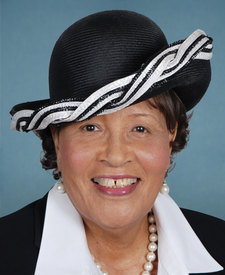
Sponsors




Legislative Progress
In CommitteeReferred to the House Committee on the Judiciary.
Submitted in House
Stakeholder Effects
cui bono?How this legislation distributes effects. Mention counts reflect frequency, not effect magnitude.
Local radio stations, Small-market broadcasters
Record labels, Recording artists seeking terrestrial royalties
Bill Structure & Actor Mappings
Who is "The Secretary" in each section?
We use a combination of our own taxonomy and classification in addition to large language models to assess meaning and potential beneficiaries. High confidence means strong textual evidence. Always verify with the original bill text.
Learn more about our methodology