A resolution expressing support for declaring 2026 the "Year of Math" in the United States.
Analysis under review: This bill has generated analysis that may be too generic or incomplete. Clause-level evidence remains available below.
Summary
What This Bill Does
This Senate resolution declares support for a Year of Math in the United States, coinciding with the US hosting the International Congress of Mathematicians in 2026. It is a ceremonial resolution that does not create new programs, funding, or legal requirements.
Who Benefits and How
The mathematics and statistics academic community benefits from increased visibility and recognition. STEM education advocates benefit from official Senate acknowledgment that math underpins national security and economic prosperity. The resolution provides symbolic support that could help promote math education initiatives.
Who Bears the Burden and How
This is a non-binding resolution with no mandates, appropriations, or compliance requirements. No group faces any new costs, restrictions, or obligations.
Key Provisions
- Expresses support for declaring a Year of Math in the United States
- Celebrates US selection to host the International Congress of Mathematicians 2026
- Recognizes mathematics as foundational to all STEM disciplines and critical to national security and economic prosperity
Evidence Chain:
This summary is generated from the full bill text using AI analysis. Expand "Detailed Analysis" below for identified beneficiaries/burden bearers with clause-level evidence links.
At a Glance
What This Bill Does
Expresses Senate support for declaring a Year of Math in the United States and celebrates the US hosting the International Congress of Mathematicians 2026.
Key Policy Areas
Education, Science & Technology
Primary Purpose
Expresses Senate support for declaring a Year of Math in the United States and celebrates the US hosting the International Congress of Mathematicians 2026.
Policy Domains
Senate Resolution
Identified Gains
- Mathematics and statistics academic community
- STEM education advocates
- International Congress of Mathematicians 2026
Sponsors

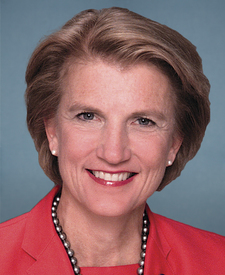
Legislative Progress
In CommitteeMr. Hickenlooper (for himself and Mrs. Capito) submitted the following …
Referred to the Committee on Commerce, Science, and Transportation. (text: …
Introduced in Senate
Stakeholder Effects
cui bono?How this legislation distributes effects. Mention counts reflect frequency, not effect magnitude.
Mathematical sciences academic community, STEM education organizations
Bill Structure & Actor Mappings
Who is "The Secretary" in each section?
- "the_senate"
- → United States Senate
We use a combination of our own taxonomy and classification in addition to large language models to assess meaning and potential beneficiaries. High confidence means strong textual evidence. Always verify with the original bill text.
Learn more about our methodology