Honoring the life of Dr. Paul Farmer by recognizing the duty of the Federal Government to adopt a 21st century global health solidarity strategy and take actions to address past and ongoing harms that undermine the health and well-being of people around the world.
Analysis under review: This bill has generated analysis that may be too generic or incomplete. Clause-level evidence remains available below.
Summary
What This Bill Does
This Senate resolution honors the late Dr. Paul Farmer, a renowned global health advocate, by declaring that the United States should adopt a comprehensive 21st century global health strategy. The resolution calls for dramatically increasing U.S. global health spending to $125 billion annually (meeting the UN target of 0.7% of gross national income), addressing economic policies that harm developing countries, and issuing reparations for slavery, colonialism, and climate damage. As a non-binding "sense of the Senate" resolution, it establishes a moral framework but does not create enforceable legal obligations or appropriate actual funds.
Who Benefits and How
Developing countries would be the primary beneficiaries through multiple channels: receiving $125 billion annually for health system investments focused on Dr. Farmer's "Five S's" framework (staff, space, stuff, systems, and social support), gaining debt cancellation across bilateral and private creditors, and obtaining greater decision-making power in international institutions like the IMF and World Bank. Community health workers in poor countries would benefit from professionalized programs with adequate compensation and training. African Americans would receive reparations for slavery and ongoing discrimination, while former colonized nations and climate-vulnerable Global South countries would receive reparations for historical harms and disproportionate climate impacts. Global health NGOs and civil society organizations would gain increased funding and formal participation in governance decisions.
Who Bears the Burden and How
U.S. taxpayers would bear the largest burden through the $125 billion annual commitment, representing a massive increase from current foreign aid levels to meet the 0.7% GNI target that only six other countries have achieved. Private creditors holding developing country debt would face revenue losses from debt cancellation initiatives. Multinational corporations would face higher compliance burdens from international tax reforms designed to prevent tax avoidance and illicit financial flows from developing countries. Employers benefiting from low global wages would face increased labor costs from proposed global minimum wage standards set at local living-income thresholds. International financial institutions like the IMF, World Bank, and WTO would undergo governance reforms that reduce the influence of wealthy nations in favor of more equitable representation for low- and middle-income countries.
Key Provisions
- Increases annual global health spending to $125 billion to close 100% of the essential health coverage financing gap for low-income countries and 30% for lower-middle income countries, delivered through Dr. Farmer's "accompaniment" model that prioritizes local control and national health plans
- Supports professionalized community health worker programs with adequate compensation, comprehensive training, and sustainable retention, alongside investments in medical schools, teaching hospitals, and health infrastructure at all levels
- Mandates debt cancellation for low- and middle-income countries across bilateral, multilateral, and private creditors to free resources for health and social services
- Calls for democratizing global governance institutions (IMF, World Bank, WTO) to give developing countries equal representation and decision-making power in policies that affect them
- Supports a UN Convention on Tax and other measures to eliminate tax avoidance, tax evasion, and illicit financial flows from developing countries through fundamental international tax reform
- Establishes the Federal Government's duty to issue reparations (including apology, financial awards, and guarantees of non-repetition) for slavery and its ongoing impacts on African Americans, for colonialism and imperialism's damage to sovereignty and self-determination, and for disproportionate U.S. responsibility for climate breakdown affecting the Global South
- Promotes global labor rights including a global minimum wage set at local living-income thresholds and adoption of new progress indicators that measure social and ecological health instead of GDP
Evidence Chain:
This summary is generated from the full bill text using AI analysis. Expand "Detailed Analysis" below for identified beneficiaries/burden bearers.
At a Glance
What This Bill Does
A Senate resolution honoring Dr. Paul Farmer and declaring the Federal Government's duty to adopt a 21st century global health solidarity strategy, increase global health spending to $125 billion annually, address economic harms to developing countries, and issue reparations for slavery, colonialism, and climate breakdown.
Who Benefits
- Low-income and lower-middle income countries (health system financing)
- Developing countries (debt relief, tax justice, labor rights)
- African Americans (reparations for slavery)
Who Bears Costs
- U.S. taxpayers (estimated $125 billion annual commitment represents significant increase in foreign aid to meet 0.7% GNI target)
- Creditor nations and institutions (debt cancellation)
- Multinational corporations (tax avoidance reforms, global minimum wage)
Key Policy Areas
Global Health, Foreign Aid, International Development, Human Rights, Climate Justice, Tax Policy, Labor Rights, Reparations
Primary Purpose
A Senate resolution honoring Dr. Paul Farmer and declaring the Federal Government's duty to adopt a 21st century global health solidarity strategy, increase global health spending to $125 billion annually, address economic harms to developing countries, and issue reparations for slavery, colonialism, and climate breakdown.
Policy Domains
Legislative Strategy
"Non-binding Senate resolution establishing moral and policy framework for transformative global health investment, economic justice reform, and historical reparations, likely intended to shape future legislative priorities and international commitments"
Identified Gains
- Low-income and lower-middle income countries (health system financing)
- Developing countries (debt relief, tax justice, labor rights)
- African Americans (reparations for slavery)
- Former colonized nations (reparations for colonialism)
- Global South countries (climate reparations)
- People living in poverty worldwide (health services)
- Women and children in developing countries (targeted health services)
- Community health workers (professionalization and compensation)
- Global health NGOs and civil society organizations (governance participation)
Identified Costs
- U.S. taxpayers (estimated $125 billion annual commitment represents significant increase in foreign aid to meet 0.7% GNI target)
- Creditor nations and institutions (debt cancellation)
- Multinational corporations (tax avoidance reforms, global minimum wage)
- International financial institutions (governance democratization may reduce wealthy nation influence)
- Private creditors holding developing country debt (debt cancellation)
Sponsors
Legislative Progress
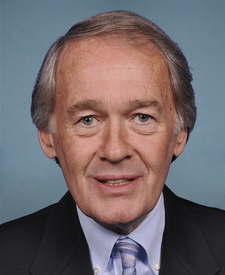
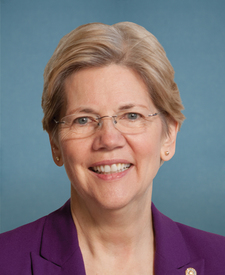
In CommitteeMr. Markey (for himself and Ms. Warren) submitted the following …
Stakeholder Effects
cui bono?How this legislation distributes effects. Mention counts reflect frequency, not effect magnitude.
African American communities eligible for reparations, U.S. taxpayers funding increased foreign aid to 0.7% GNI
Positive-direction: African American communities eligible for reparations
Negative-direction: U.S. taxpayers funding increased foreign aid to 0.7% GNI
Former colonized nations eligible for reparations, Global South countries receiving climate reparations
Low-income and lower-middle income countries receiving health system support
Medical training institutions and teaching hospitals in developing countries
Pharmaceutical and medical device companies developing treatments for neglected diseases
Private creditors holding developing country debt
Bill Structure & Actor Mappings
Who is "The Secretary" in each section?
- "the_federal_government"
- → United States Federal Government
- "the_federal_government"
- → United States Federal Government
- "the_federal_government"
- → United States Federal Government
Note: No actor conflicts in this resolution - 'the Federal Government' consistently refers to the United States Federal Government throughout all sections
Key Definitions
Terms defined in this bill
A framework by Dr. Paul Farmer for health system needs: (1) Staff - human resources for service delivery, (2) Space - infrastructure for care delivery, (3) Stuff - tools and resources for care, (4) Systems - leadership, governance, and information systems, (5) Social support - resources beyond direct healthcare
A term used by Dr. Paul Farmer referring to localizing investments in support of national public-sector and local priorities in developing countries, ensuring funding directly supports national health plans, public institutions, local priorities, and donor coordination
Health technologies such as diagnostics, treatments, and vaccines that remain accessible to all, particularly for neglected diseases of poverty
Groups specifically identified as needing focused health service delivery: people living in poverty, women, and children
Programs where community health workers are recruited, adequately compensated, comprehensively trained, supported for long-term retention, positioned as bridges to care, and tasked with appropriate patient ratios and manageable scope of work
We use a combination of our own taxonomy and classification in addition to large language models to assess meaning and potential beneficiaries. High confidence means strong textual evidence. Always verify with the original bill text.
Learn more about our methodology