PROTECT Students Act of 2025
Analysis under review: This bill has generated analysis that may be too generic or incomplete. Clause-level evidence remains available below.
Summary
What This Bill Does
The PROTECT Students Act of 2025 dramatically increases federal oversight and accountability for higher education institutions, with a particular focus on for-profit colleges. The bill establishes outcome-based eligibility requirements tied to graduate earnings and debt levels, expands student protections against predatory practices, and creates new enforcement mechanisms to crack down on institutional fraud and abuse.
Who Benefits and How
Students and prospective students benefit significantly from stronger consumer protections: they gain expanded loan discharge rights when defrauded, automatic discharge if their school closes, the ability to sue institutions in court (no more forced arbitration), and access to better information about program outcomes and institutional spending. Student loan borrowers who were misled by their schools can more easily get their loans discharged. State attorneys general and regulators gain enhanced authority to police out-of-state online programs. Federal taxpayers benefit from requirements that institutions repay the government when their students' loans are discharged due to institutional misconduct.
Who Bears the Burden and How
For-profit colleges face the heaviest burden: they must meet strict debt-to-earnings standards or lose federal aid eligibility, spend at least 30% of tuition on instruction (limiting marketing expenditures), submit to enhanced oversight from a new multi-agency coordination committee, and face liability for student loan discharges. Online Program Managers (OPMs) and student recruitment companies face new reporting requirements and restrictions on incentive-based pay. Private equity owners of colleges must personally sign participation agreements and can be held liable for recoupment. Accrediting agencies must conduct additional risk assessments of institutions and programs.
Key Provisions
- Programs where graduates earn less than high school diploma holders or have debt-to-earnings ratios above 8% (annual) or 20% (discretionary) will lose federal student aid eligibility after failing for 2 of 3 consecutive years
- Bans forced arbitration clauses and creates private right of action for students against institutions that engaged in fraud or misrepresentation
- Expands automatic closed school loan discharge to students enrolled up to 180 days before closure
- Creates new FSA enforcement unit with Chief Enforcement Officer and authority to conduct secret shopping investigations
- Establishes For-Profit Education Oversight Coordination Committee with 10+ federal agencies sharing information
- Requires institutions to spend at least 30% of tuition revenue on instruction, with reporting on marketing vs. educational spending
- Revokes the "bundled services" loophole that allowed commissioned recruitment, requiring annual auditor verification of compliance
Evidence Chain:
This summary is generated from the full bill text using AI analysis. Expand "Detailed Analysis" below for identified beneficiaries/burden bearers.
At a Glance
What This Bill Does
To increase accountability and oversight of institutions of higher education, particularly for-profit colleges, by establishing new standards for debt-to-earnings outcomes, strengthening borrower protections, enhancing enforcement mechanisms, and requiring greater transparency in institutional spending and practices.
Who Benefits
- Students and prospective students (especially at for-profit institutions) - protected from predatory practices and low-value programs
- Student loan borrowers - expanded discharge rights and easier claims processes
- State attorneys general and regulators - enhanced authority over out-of-state institutions
Who Bears Costs
- For-profit colleges and universities - face new outcome standards, spending requirements, enhanced oversight
- Third-party servicers (Online Program Managers, lead generators) - face new reporting requirements and restrictions
- Private equity owners of for-profit colleges - required to sign participation agreements and liable for recoupment
Key Policy Areas
Higher Education, Consumer Protection, Student Financial Aid, Federal Oversight and Enforcement
Primary Purpose
To increase accountability and oversight of institutions of higher education, particularly for-profit colleges, by establishing new standards for debt-to-earnings outcomes, strengthening borrower protections, enhancing enforcement mechanisms, and requiring greater transparency in institutional spending and practices.
Policy Domains
Legislative Strategy
"Comprehensive regulatory tightening targeting for-profit colleges through outcome-based eligibility requirements, enhanced enforcement, greater transparency, and stronger borrower protections to reduce predatory practices and protect taxpayer funds."
Identified Gains
- Students and prospective students (especially at for-profit institutions) - protected from predatory practices and low-value programs
- Student loan borrowers - expanded discharge rights and easier claims processes
- State attorneys general and regulators - enhanced authority over out-of-state institutions
- Federal taxpayers - reduced losses from fraudulent or low-performing institutions
Identified Costs
- For-profit colleges and universities - face new outcome standards, spending requirements, enhanced oversight
- Third-party servicers (Online Program Managers, lead generators) - face new reporting requirements and restrictions
- Private equity owners of for-profit colleges - required to sign participation agreements and liable for recoupment
- Accrediting agencies - must conduct additional risk assessments
- Department of Education - must establish new enforcement unit, complaint system, and oversight committees
Sponsors
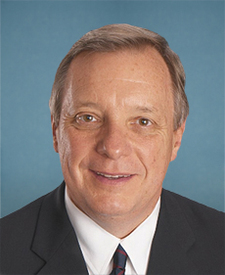
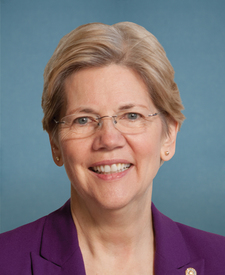
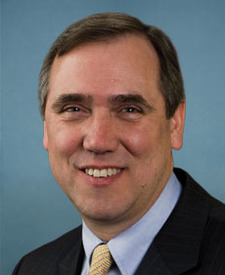
Legislative Progress
In CommitteeMr. Durbin (for himself, Ms. Warren, and Mr. Merkley) introduced …
Read twice and referred to the Committee on Health, Education, …
Introduced in Senate
Stakeholder Effects
cui bono?How this legislation distributes effects. Mention counts reflect frequency, not effect magnitude.
Accrediting agencies, Executives from failed or sanctioned for-profit colleges, For-profit and nonprofit colleges using arbitration clauses
Positive-direction: Prospective students, Prospective students and families, Student loan borrowers who were defrauded, Students and borrowers with complaints, Students and former students, Students at closed or failing institutions, Students at for-profit and career-focused institutions, Students at for-profit institutions
Negative-direction: Accrediting agencies, Executives from failed or sanctioned for-profit colleges, For-profit and nonprofit colleges using arbitration clauses, For-profit career colleges advertising job placement rates, For-profit college chains seeking to hire experienced managers, For-profit colleges, For-profit colleges and career training programs, For-profit colleges and third-party servicers, For-profit colleges at risk of closure, For-profit colleges using commissioned recruiters, For-profit colleges with high marketing/low instruction spending, For-profit colleges with low-earning graduates, For-profit colleges with predatory practices, For-profit institutions subject to oversight, For-profit institutions with high marketing spending, Institutions and loan servicers receiving complaints, Institutions found to have defrauded students, Institutions with borrower defense liabilities, Institutions with compliance issues or violations, Large online institutions operating across state lines, Loan servicers and institutions, Low-quality institutions relying on accreditation
Department of Education - Federal Student Aid, Department of Education certification staff, IRS and Social Security Administration
Department of Education - Federal Student Aid, Taxpayers face effects in multiple directions
Higher education defense attorneys, Independent auditors
College marketing and advertising firms
Lead generation companies and third-party recruiters
Bill Structure & Actor Mappings
Who is "The Secretary" in each section?
- "the_secretary"
- → Secretary of Education
- "the_commissioner"
- → Commissioner of the Internal Revenue Service / Commissioner of the Social Security Administration
- "the_secretary"
- → Secretary of Education
- "the_secretary"
- → Secretary of Education
- "chief_operating_officer"
- → Chief Operating Officer of the Performance-Based Organization (Federal Student Aid)
- "chief_enforcement_officer"
- → Chief Enforcement Officer (new position within FSA)
- "the_secretary"
- → Secretary of Education
Note: No significant actor conflicts - "The Secretary" consistently refers to Secretary of Education throughout the bill.
Key Definitions
Terms defined in this bill
A new interagency committee composed of heads of DOE, CFPB, DOJ, SEC, DOD, VA, FTC, DOL, IRS, and FSA enforcement unit to coordinate oversight of for-profit institutions.
An individual making a complaint, or report of suspicious activity, through the complaint tracking system.
Entities that contract with institutions related to delivery of Title IV funds, recruitment/retention of students, compliance with cohort default rate requirements, and development/delivery of instructional content.
The rate calculated for a cohort of students by taking the annual loan payment divided by the median annual earnings for such cohort.
For a cohort of students who completed an eligible program, their total annual payment on loans borrowed to enroll in the institution, measured 2-4 years after completion.
The rate calculated by taking the annual loan payment divided by the discretionary earnings (median earnings minus 150% of poverty level) for such cohort.
The amount by which the median annual earnings exceed the median earnings for working adults with not more than a high school diploma.
A loan made, insured, or guaranteed under Title IV that has an outstanding balance for cost of attendance at an institution of higher education.
We use a combination of our own taxonomy and classification in addition to large language models to assess meaning and potential beneficiaries. High confidence means strong textual evidence. Always verify with the original bill text.
Learn more about our methodology