Safe Schools Improvement Act
Analysis under review: This bill has generated analysis that may be too generic or incomplete. Clause-level evidence remains available below.
Summary
The Safe Schools Improvement Act would require every state that receives federal education funding under Title IV of the Elementary and Secondary Education Act to ensure that all local school districts establish anti-bullying and anti-harassment policies. These policies must specifically prohibit bullying based on race, color, national origin, sex (including sexual orientation, gender identity, and intersex traits), disability, and religion. Schools would need to provide annual notice to students and parents about prohibited conduct, create grievance procedures, and collect annual data on bullying incidents. States must submit biennial reports to the Secretary of Education, who would conduct independent evaluations and report to Congress every two years. The bill explicitly preserves existing civil rights protections and free speech rights.
Evidence Chain:
This summary is generated from the full bill text using AI analysis. Expand "Detailed Analysis" below for identified beneficiaries/burden bearers.
At a Glance
What This Bill Does
Requires states receiving Title IV grants to mandate anti-bullying policies in all local educational agencies, with enumerated protections for students based on race, color, national origin, sex (including sexual orientation, gender identity, and sex characteristics), disability, and religion.
Who Benefits
- Students targeted by bullying, particularly LGBTQ+ students and students of color
- Parents seeking grievance mechanisms
Who Bears Costs
- Local educational agencies required to develop new policies and data collection systems
- States required to produce biennial reports
Key Policy Areas
{'domain': 'Education', 'evidence': 'Amends Elementary and Secondary Education Act Title IV to add Part G on Safe Schools improvement'}, {'domain': 'Civil Rights', 'evidence': 'Enumerates protected categories including sexual orientation, gender identity, and intersex traits'}
Primary Purpose
Requires states receiving Title IV grants to mandate anti-bullying policies in all local educational agencies, with enumerated protections for students based on race, color, national origin, sex (including sexual orientation, gender identity, and sex characteristics), disability, and religion.
Policy Domains
Legislative Strategy
"Establishes federal minimum standards for anti-bullying policies by conditioning existing Title IV grant funding on compliance"
Sponsors
Legislative Progress
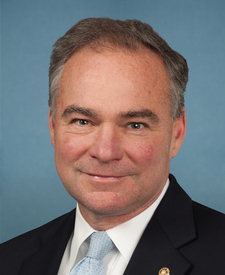
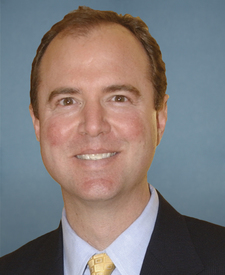
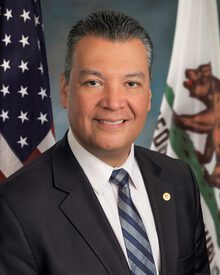
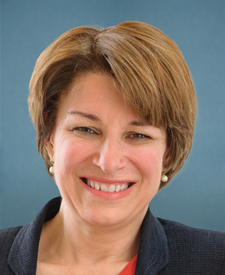
In CommitteeMr. Kaine (for himself, Ms. Baldwin, Mr. Bennet, Mr. Blumenthal, …
Read twice and referred to the Committee on Health, Education, …
Introduced in Senate
Stakeholder Effects
cui bono?How this legislation distributes effects. Mention counts reflect frequency, not effect magnitude.
Local educational agencies, Public school students, Students experiencing bullying
Positive-direction: Public school students, Students experiencing bullying, Students targeted by bullying based on protected characteristics, Students with disabilities
Negative-direction: Local educational agencies
Department of Education, National Center for Education Statistics, State educational agencies
Bill Structure & Actor Mappings
Who is "The Secretary" in each section?
- "commissioner"
- → Commissioner for Education Statistics
- "the_secretary"
- → Secretary of Education
Key Definitions
Terms defined in this bill
Conduct that adversely affects the ability of one or more students to participate in or benefit from the school's educational programs or activities by placing a student in fear of harm
We use a combination of our own taxonomy and classification in addition to large language models to assess meaning and potential beneficiaries. High confidence means strong textual evidence. Always verify with the original bill text.
Learn more about our methodology