Fairness in Veterans' Education Act of 2025
Summary
What This Bill Does
The Fairness in Veterans' Education Act fixes a narrow GI Bill repayment problem. Section 3327 of title 38 already governs repayment of contributions that service members made toward educational assistance. This bill changes the timing and method so covered Armed Forces members can still receive the repayment even when they are not eligible for a monthly housing stipend that would otherwise serve as the payment channel.
Who Benefits and How
Armed Forces members who contributed toward educational assistance benefit because the bill protects repayment when their Post-9/11 GI Bill situation does not generate a monthly housing-stipend payment. Veterans using Post-9/11 Educational Assistance benefit from a cleaner statutory mechanism that separates contribution repayment from housing-stipend eligibility. Education-benefit counselors benefit because VA payment timing and method are less ambiguous for members in programs or statuses without a housing allowance. Military students in distance-learning, active-duty, or otherwise non-housing-stipend circumstances benefit because repayment no longer depends entirely on receiving that stipend.
Who Bears the Burden and How
VA education benefits staff must identify covered individuals, calculate repayment timing, and issue payment through the revised mechanism. The Department of Veterans Affairs must update claims systems, guidance, and notices for contribution repayments that are no longer routed through housing-stipend payments. Federal taxpayers bear the cost of repayments owed under the amended education-benefit rule. Education institutions may need to help students understand the difference between tuition benefits, housing stipends, and contribution repayments.
Key Provisions
- Amends section 3327 of title 38 to change repayment timing for Armed Forces members' Post-9/11 educational-assistance contributions.
- Provides a payment mechanism for covered individuals who are not eligible for a monthly housing stipend.
- Protects repayment access for service members and veterans whose education-benefit status does not include housing-stipend payments.
- Requires VA education-benefit administration to handle repayment separately from the housing-stipend channel when necessary.
Evidence Chain:
This summary is generated from the full bill text using AI analysis. Expand "Detailed Analysis" below for identified beneficiaries/burden bearers with clause-level evidence links.
At a Glance
What This Bill Does
Requires repayment of certain Armed Forces members' Post-9/11 Educational Assistance contributions, including a payment mechanism for individuals who are not eligible for a monthly housing stipend.
Key Policy Areas
Veterans, Education, Military
Primary Purpose
Requires repayment of certain Armed Forces members' Post-9/11 Educational Assistance contributions, including a payment mechanism for individuals who are not eligible for a monthly housing stipend.
Policy Domains
Bill provisions
Identified Gains
- Armed Forces members with education contributions
- Veterans using Post-9/11 Educational Assistance
- Education-benefit counselors
- Military students without housing stipends
Identified Costs
- VA education benefits staff
- Department of Veterans Affairs claims systems
- Federal taxpayers
- Education institutions
Sponsors

Legislative Progress
ReportedPlaced on Senate Legislative Calendar under General Orders. Calendar No. …
Reported by Mr. Moran, with an amendment
Committee on Veterans' Affairs. Reported by Senator Moran with an …
Committee on Veterans' Affairs. Ordered to be reported with an …
Introduced in Senate
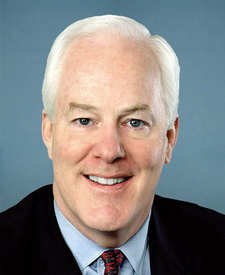
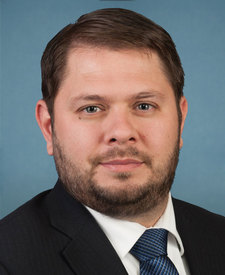
Mr. Banks (for himself, Mr. Gallego, and Mr. Cornyn) introduced …
Read twice and referred to the Committee on Veterans' Affairs.
Mr. Banks (for himself and Mr. Gallego) introduced the following …
Stakeholder Effects
cui bono?How this legislation distributes effects. Mention counts reflect frequency, not effect magnitude.
Bill Structure & Actor Mappings
Who is "The Secretary" in each section?
- "secretary"
- → Secretary of Veterans Affairs
We use a combination of our own taxonomy and classification in addition to large language models to assess meaning and potential beneficiaries. High confidence means strong textual evidence. Always verify with the original bill text.
Learn more about our methodology